The day you pick an IA topic, it feels like relief.
Then, three days later, you spot a “better” idea. Or your data doesn’t work. Or your teacher asks one calm question and your entire plan collapses.
If you’re wondering how many times you can change your IA topic, you’re not alone. The honest answer is: there’s no universal “IB limit”… but there is a practical limit set by time, evidence, and your teacher’s approval process. And for most students, that practical limit arrives much sooner than they expect.
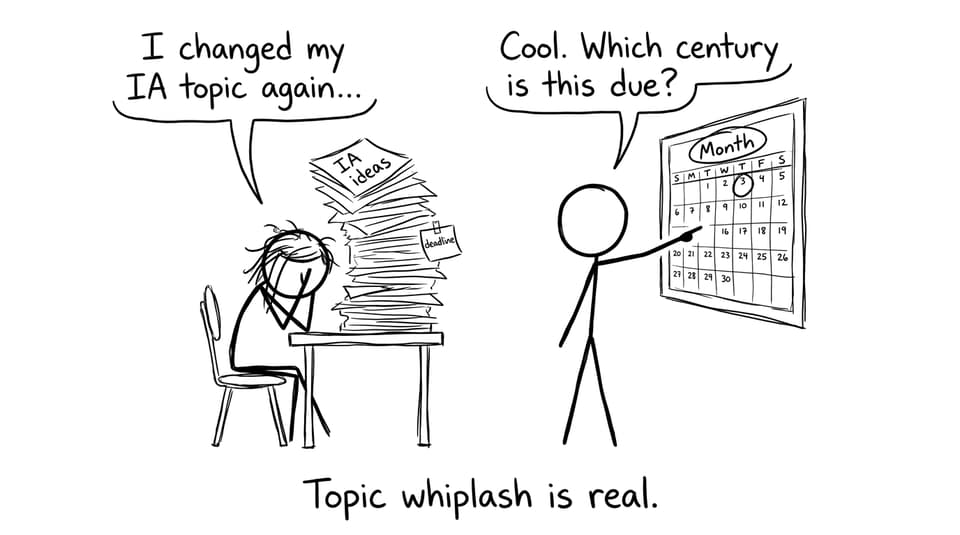
The realistic answer: you can change your IA, but you can’t reset the clock
In most schools, you can change an IA topic more than once. The IB doesn’t publish a neat counter like “two changes only.” What actually governs changes is:
-
your school’s internal deadlines
-
whether your teacher will still supervise the new direction
-
whether your new topic can produce valid analysis fast
A useful way to think about it: every topic change either refines your existing work or restarts it. Refinements are usually safe. Full restarts are expensive.
If you’re still deciding what a strong topic looks like in the first place, start with How to Choose the Perfect IA Topic for IB Students and then compare your idea against the subject expectations in IB IA Guides.
A quick checklist before you change your IA topic
Before you scrap your IA idea, pause and run this five-question filter:
-
Is the problem actually the topic, or just the research question?
-
Do you have (or can you realistically get) usable data/evidence in time?
-
Have you checked the rubric expectations for your subject?
-
Did your teacher say “no,” or did they say “narrow it”?
-
Can you salvage 50% of your current work by refining instead of restarting?
If you want a fast way to test feasibility, use RevisionDojo’s AI Chat to pressure-test your variables, method, and scope, then build your background knowledge quickly with Study Notes and Flashcards.
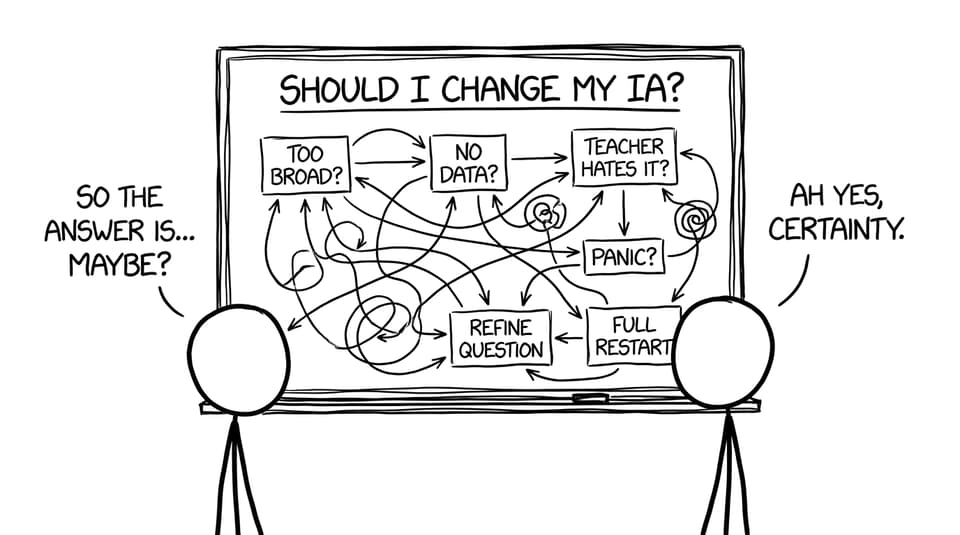
When changing your IA topic is normal (and even smart)
Most high-scoring students don’t “fall in love” with their first idea. They iterate early.
Early-stage flexibility: the first week
In the first week, changing your IA topic (or at least testing multiple directions) is normal. You’re still scouting: What’s measurable? What’s analysable? What’s too broad?
This is the phase where you should aim to generate 2-4 options and quickly eliminate weak ones. If you need inspiration, browsing the Coursework Exemplars library can help you see what “scoped and doable” looks like across subjects.
The decision window: around two weeks
A common sweet spot is to lock the IA topic within about two weeks, then immediately lock the research question shortly after. That’s enough time to explore without drifting.
To tighten your question, use How to Write a Strong IA Research Question. If you’re in ESS specifically, How Do I Choose a Good ESS IA Topic? is a strong calibration tool.
When changing your IA topic becomes risky
The danger isn’t “changing your mind.” The danger is changing your mind after you’ve invested in evidence collection, analysis structure, and draft writing.
Here’s what frequent late changes usually cost:
-
lost data (your old dataset stops matching your new question)
-
shallow analysis (you never stay with a problem long enough to evaluate it)
-
timeline collapse (you trade steady progress for repeated fresh starts)
If you’re deep into drafting and your IA feels weak, it may be better to fix it without restarting. RevisionDojo’s Grading tools can help you identify which criterion is leaking marks, while the #IA tag hub can guide targeted improvements (data use, analysis depth, word count control, and more).
The best alternative to changing your IA topic: change the scope
Many “I need a new topic” moments are actually “my question is too big.”
Instead of switching themes, try one of these scope fixes:
Shrink the question, keep the theme
Example move: “climate change and water quality” becomes “nitrate levels vs dissolved oxygen in one site, across two conditions.”
Keep the method, change the comparison
If your method works but your angle doesn’t, keep the data collection design and adjust what you compare.
Use exemplars to calibrate, not copy
Use IB Coursework Examples: IA, EE and TOK Exemplars to compare structure and depth. Then write in your own voice, with your own evidence.
If you’re balancing coursework with exam practice, protect your routine with a small daily loop using RevisionDojo’s Questionbank, Mock Exams, and Predicted Papers. Coursework stress is real, but exam readiness still needs reps.
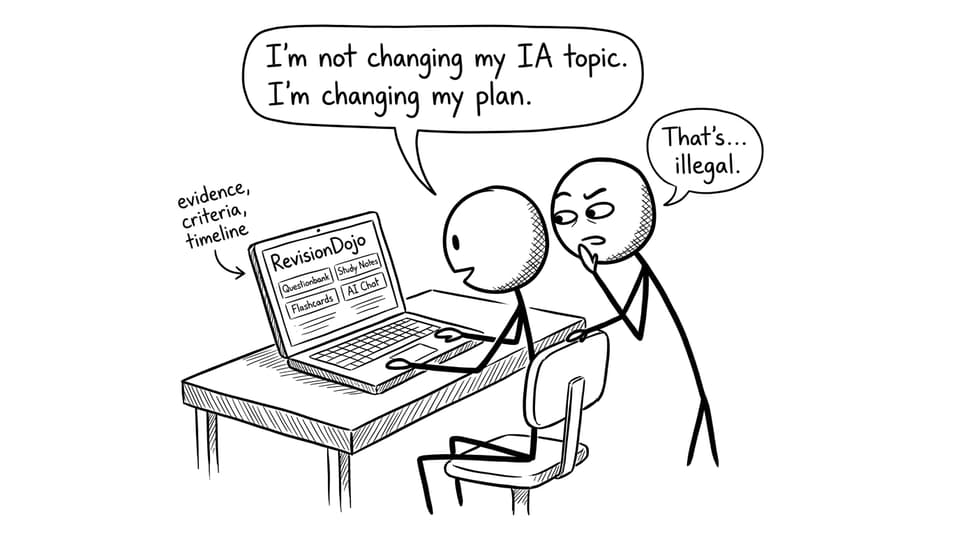
Closing: lock the IA sooner, and make the work calmer
You can change your IA topic more than once, but every change spends the one resource you never get back: time.
Aim to explore early, lock your IA topic within roughly two weeks, and then improve through smarter scoping rather than repeated restarts. When you need certainty, build it the same way exam confidence is built: evidence, structure, and feedback loops.
If you want that support in one place, RevisionDojo is built for the full IB load: Study Notes to clarify ideas, Flashcards to retain key phrasing, AI Chat to debug your plan, Grading tools to align with the rubric, a Coursework Library to calibrate quality, and Questionbank, Mock Exams, and Predicted Papers so your exams don’t pause while your IA continues. And if you need a human eye, RevisionDojo Tutors can help you lock a topic you can actually finish.