
When exam season gets close, something subtle happens in an IB classroom. The same student who normally asks thoughtful questions starts asking shorter ones. The kind that sound like: “Is this the right answer?” or “Can you just show me how you’d write it?”
That shift matters. Not because curiosity is bad, but because pressure quietly rewires priorities. In IB assessment prep, the temptation is rarely dramatic cheating. It is usually a smaller bargain: borrowing phrasing, leaning too hard on collaboration, or letting AI produce work that no longer feels like yours.
Academic honesty and integrity are not “extra” rules layered on top of IB success. They are the foundation that makes success real. And while teachers set the culture, students benefit most when integrity becomes a practical system they can follow on tired days.
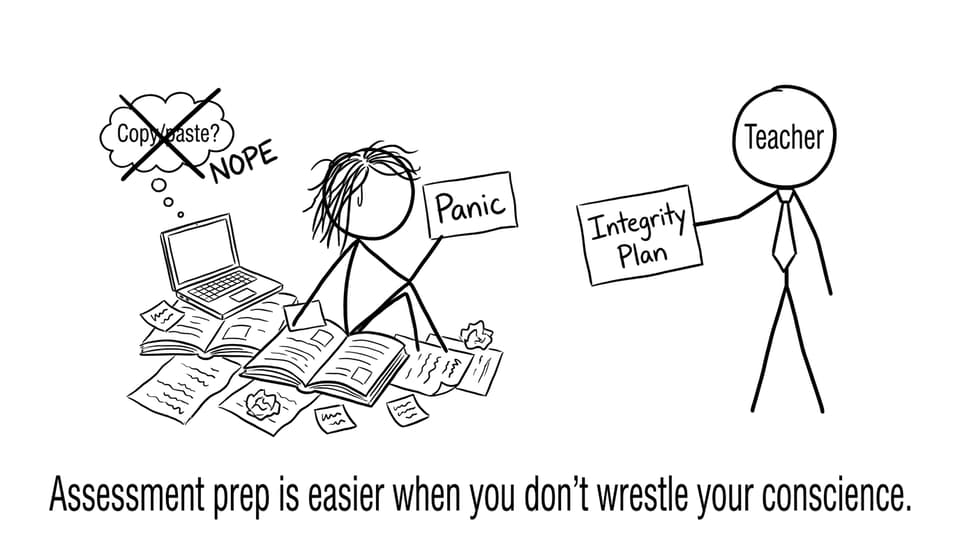
Quick checklist: honest IB assessment prep that actually works
Use this as your reset before your next revision session or timed practice:
-
Learn the difference between collaboration and collusion (and say it out loud).
-
Cite early, not at the end (sources logs beat memory).
-
Separate notes, quotes, and draft wording so you do not accidentally copy.
-
Use AI like a tutor, not a ghostwriter.
-
Practice exam-style questions under timed conditions so panic does not drive shortcuts.
-
Use one platform to track practice, feedback, and progress so your work shows a clean learning trail.
If you want the “one place” version, RevisionDojo is designed for IB students preparing for exams: Questionbank, Study Notes, Flashcards, AI Chat, Grading tools, Predicted Papers, Mock Exams, Coursework Library, and Tutors.
Why academic honesty matters in IB assessment prep
IB is not only assessing what you know. It is assessing what you can do: explain, apply, evaluate, and communicate clearly under constraints. That is why integrity is not just moral--it is practical.
When you revise honestly, you build two advantages that shortcuts can’t replicate:
-
Confidence you can reproduce your performance. If you can’t recreate it without the scaffold, it is not exam-ready.
-
A voice that sounds like you. Examiners and teachers notice when work suddenly becomes too polished, too generic, or oddly detached.
If you want a student-friendly map of what counts as integrity problems (including common “accident” scenarios), keep this open: How to Uphold Academic Integrity in IB Assessments.
What teachers can do (and what students should copy as habits)
Teachers shape culture, but the goal is simpler: help IB students build habits that survive stress. Here are strategies that feel small in the moment and huge in May.
Teach the “why” before teaching the rules
Rules without meaning get followed only when someone is watching. In IB exam prep, nobody is watching at 11:48 p.m. except future-you.
The best teachers explain academic honesty as a form of ownership:
-
Your work is a record of your thinking.
-
Your citations are a record of your respect.
-
Your process is a record of your growth.
Students can reinforce that “why” with an integrity-first revision routine: learn with RevisionDojo Study Notes, then prove understanding using practice that feels like the exam.
Model transparency in everyday teaching
One underrated teacher move is saying the quiet part out loud:
-
“This example is adapted from a published source.”
-
“Here’s why I trust this data.”
-
“Watch how I paraphrase without keeping the sentence shape.”
It normalizes the idea that citing is not a punishment. It is professional behavior.
Students can mirror that transparency by building a “sources log” alongside revision. Even in exam-focused work, you often use definitions, diagrams, or summaries from somewhere. Track them early, then you never have to scramble.
Reduce misconduct by reducing panic
Most integrity issues happen when time management collapses. Teachers help by designing prep that is staged and calm:
-
short checkpoints,
-
drafts and feedback loops,
-
clear boundaries for peer support.
Students can build the same calm structure with deliberate practice. A strong option is topic-filtered drilling in a question bank, because it replaces vague “revise more” with proof. Start here: IB Question Bank: Thousands of Practice Questions or go directly to the tool: RevisionDojo Questionbank.
Make collaboration safe (and clearly bounded)
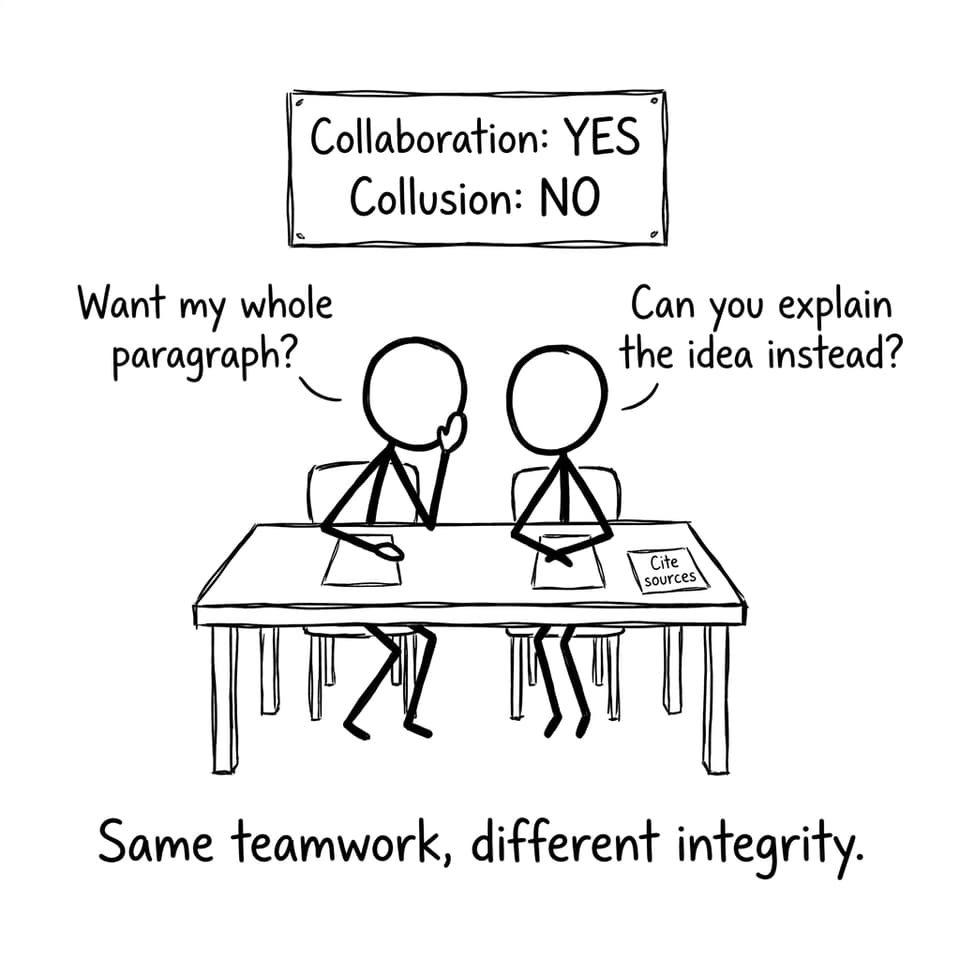
In IB, collaboration can be academically healthy, but it needs guardrails. Teachers can set a simple classroom rule:
- Share thinking, not sentences.
Students should take that rule into revision groups. If someone offers a paragraph, ask for an explanation instead. If someone shares a model answer, turn it into a checklist of features (structure, command terms, evidence type) rather than reusable wording.
If you want a broader classroom culture approach, this guide connects the dots well: Building a Culture of Academic Honesty in IB Classrooms.
Teach ethical AI use in IB assessment prep
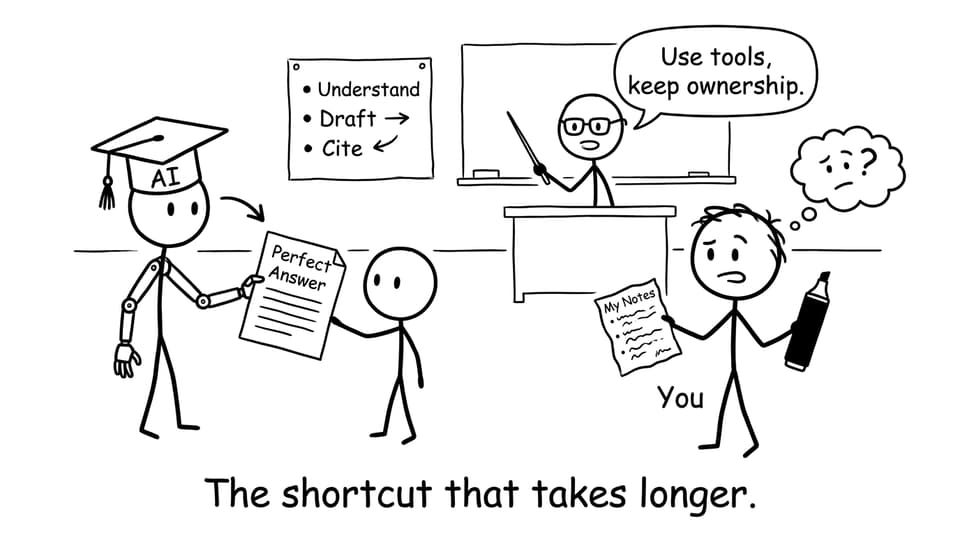
Banning AI usually just moves the behavior underground. The better approach is clarity: what is allowed, what is risky, and what “ownership” looks like.
A practical student rule:
-
Use AI to explain, quiz, plan, or give feedback.
-
Do not use AI to produce final assessed writing you will submit as your own.
RevisionDojo’s AI Chat can function like a tutor: ask it to explain why a mark scheme rewards certain phrasing, then immediately test yourself with Questionbank practice. That pattern keeps the work yours.
Use feedback systems that reward process, not just results
Teachers can foster integrity by grading in ways that highlight thinking:
-
show students what “criterion alignment” looks like,
-
give feedback tied to skills, not vibes,
-
require small reflection notes: “What changed in my approach?”
Students can create that same feedback loop through tools that make progress visible. RevisionDojo’s Grading tools and Coursework Library help students improve coursework ethically because the platform encourages iteration: drafts, feedback, improvements, and clear next steps.
For schools, there is a whole-school version of this idea: RevisionDojo for Schools and the implementation guide How IB Schools Can Use RevisionDojo to Streamline Exam Preparation.
A simple “integrity-first” IB prep routine students can follow
Here is a student routine teachers can teach (and students can run alone):
-
10 minutes: review one concept using Study Notes.
-
25 minutes: do a focused Questionbank set.
-
10 minutes: write an “error rule” (one sentence that prevents the mistake next time).
-
10 minutes: convert the error into Flashcards.
Over weeks, this builds honest evidence: your understanding improves because you did the work, not because you borrowed it.
If you need a ready structure close to exams, this is a strong sprint plan: IB Last 24 Hours Study Plan.
FAQ
What if I think I crossed the line during IB assessment prep?
Start by getting specific, because vague guilt leads to more vague choices. Ask yourself what exactly happened: did you copy phrasing, submit something you did not create, or collaborate beyond what was allowed? Next, preserve your evidence trail: drafts, notes, and any sources you used. Then talk to your teacher early, not after submission, because integrity is easier to restore before the final version exists. In IB, honesty about the process often matters as much as the product, and teachers can help you rebuild work the right way. Finally, switch your revision method to something that proves learning under pressure, such as timed Questionbank practice and error-log reviews.
How can teachers make academic honesty feel less like a threat?
Teachers can treat integrity as a skill set rather than a courtroom. That means teaching students how to paraphrase, how to cite quickly, and how to use AI responsibly long before deadlines. It also means designing assessment prep that reduces panic: staged drafts, clear collaboration rules, and frequent low-stakes practice. When students know what “good” looks like, they are less tempted to borrow shortcuts. Teachers can also model transparency by citing their own sources and explaining how they evaluate reliability. Over time, the classroom message shifts from “don’t get caught” to “build work you can stand behind,” which aligns with the IB learner profile.
Is using a question bank “too close” to copying in IB exam prep?
No, because exam-style practice is fundamentally different from submitting assessed work written by someone else. A question bank is training: you attempt, you get feedback, you fix patterns, and you retry under timed conditions. The key is to use it actively, not passively. Do the question first, then check the mark scheme logic, then rewrite your answer in your own words, then reattempt later. That loop builds authentic skill and makes your final performance reproducible. RevisionDojo’s Making the Most of IB Question Banks and Practice Papers explains how to keep practice ethical and effective.
What is the safest way to use AI during IB revision?
Use AI in roles that support thinking rather than replace it. Ask for explanations of concepts, examples of how command terms change what is required, or feedback on why your answer may miss marks. Avoid asking for “a full perfect response” that you might accidentally internalize word-for-word. Keep a clear boundary: your submission should be your writing, your structure, and your reasoning. If your school expects disclosure of AI support, follow that policy carefully and keep notes on how you used it. The safest pattern is: AI to clarify, then Questionbank to test, then Flashcards to retain.
Closing: integrity is a study strategy, not just a policy
In the hardest weeks of IB, integrity is what keeps your learning stable. It turns revision into something you can trust, and it turns your results into something you can own.
If you want a calm, exam-focused system that makes honest work easier to sustain, build your routine inside RevisionDojo: start with Study Notes, lock in memory with Flashcards, prove skill with the Questionbank, and use AI Chat, Grading tools, Mock Exams, Predicted Papers, the Coursework Library, and Tutors to keep your IB assessment prep both ethical and effective.
