
Preparing for IB exams rarely fails because students are lazy. It fails because the system is noisy.
One teacher assigns a practice set in one place. Another sends a PDF somewhere else. A student keeps a half-working spreadsheet of weak topics. Everyone is trying, but the workflow leaks time. And in the IB, time is not a nice-to-have. It is the difference between calm repetition and last-minute panic.
RevisionDojo was built for that exact moment: when an IB school wants exam preparation to feel less like herding cats and more like running a simple, repeatable loop. For students, it means less guesswork and more targeted practice. For teachers, it means fewer admin hours and clearer insight into what the cohort actually needs.
If your school is already partnered, you can explore the full school program here: RevisionDojo for Schools. If you’re a student, you can start from the main IB hub and work outward from your subjects: International Baccalaureate (IB).
A simple IB exam-prep checklist (that schools can actually run)
Most IB exam plans look good on paper and fall apart on Wednesday. The fix is to make the plan runnable when everyone is tired.
Here’s a school-friendly checklist that fits inside a normal teaching week:
-
Align by paper and topic (not vague subject goals) using a shared resource map.
-
Teach with one core content source so students stop rewriting the same notes.
-
Assign targeted practice from a single bank and track what’s done.
-
Use fast feedback loops so mistakes become actions, not regrets.
-
Simulate exam conditions weekly with timed sets and review patterns.
-
Intervene early using analytics, before the gap becomes a crisis.
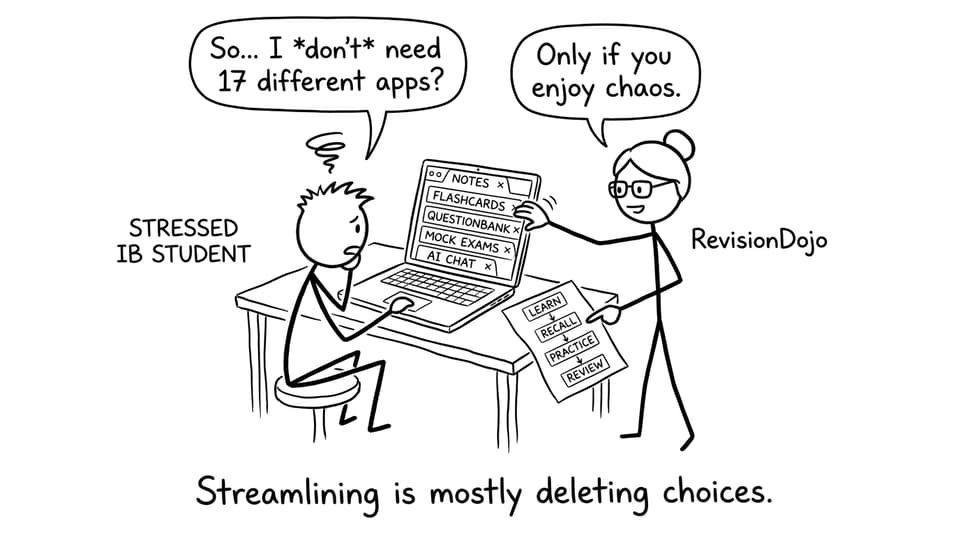
RevisionDojo supports this loop end-to-end across IB subjects with Questionbank, Study Notes, Flashcards, AI Chat, Grading tools, Predicted Papers, Mock Exams, Coursework Library, and Tutors.
Why IB schools use RevisionDojo to streamline exam preparation
Schools don’t adopt a platform because it’s shiny. They adopt it because it removes friction.
In the IB, friction usually shows up in three places: inconsistent resources, slow feedback, and invisible progress. RevisionDojo is designed to make those problems smaller.
One platform across IB subjects (less tool-switching, more learning)
The IB is demanding partly because it’s broad. Students juggle languages, sciences, humanities, math, and often a sense that they are behind in at least one of them.
RevisionDojo reduces that load by centralizing the work. Students can move from learning to practice without jumping platforms: Study Notes for understanding, Flashcards for daily recall, and the Questionbank for exam-style application.
To see how the workflow fits together, share this with students at the start of term: RevisionDojo App: The Smarter Way to Prep for IB Exams.
And if you want the official product pages for quick onboarding, these help:
Faster feedback (because IB marks are about precision)
A lot of IB students “know the topic” and still lose marks. Not because they are missing knowledge, but because they are missing the IB’s definition of a correct response.
RevisionDojo narrows that gap by pairing practice with feedback that is aligned to mark-scheme logic. Students practice more precisely, and teachers spend less time repeating the same corrections.
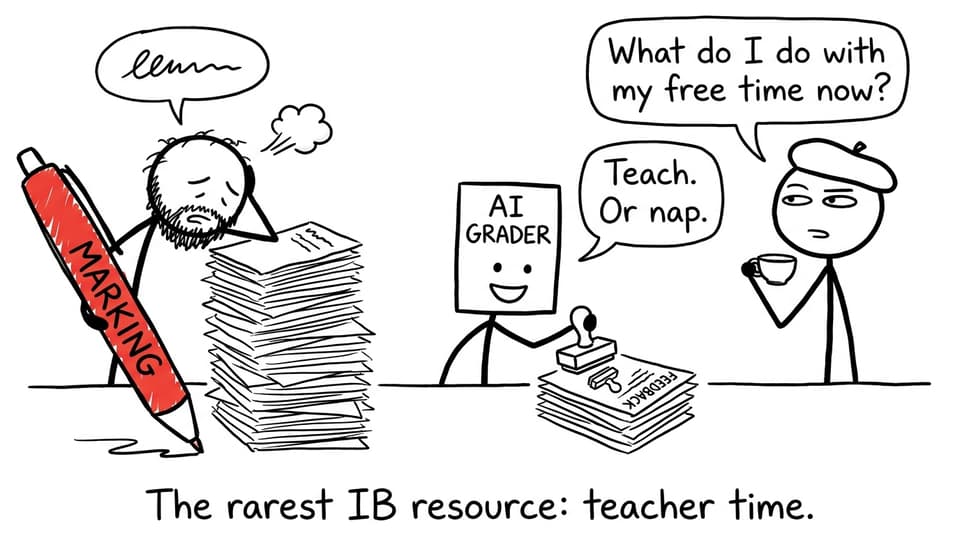
This matters at scale. When a cohort is practicing consistently, the teacher’s job shifts from constant marking to coaching: which misconceptions are spreading, which command terms are being misread, and which topics need reteaching.
Analytics that make intervention normal (not dramatic)
In many IB schools, intervention happens late because the evidence arrives late: a mock grade, a worried parent email, a student finally admitting they’re stuck.
RevisionDojo makes progress more visible through tracking and analytics, so support becomes routine. Schools can spot patterns across classes and year groups: a weak paper section, a recurring misconception, or a group of students who are practicing but not improving.
That visibility is what streamlining really means. Not “study harder,” but “study where it changes results.”
How IB schools can integrate RevisionDojo into the exam cycle
Integration works best when it feels like a rhythm, not a rollout.
Onboard once, then repeat the loop weekly
A practical approach:
-
Week 1: Introduce RevisionDojo as the single home for IB exam prep. Students pick subjects, teachers show where assignments will live, and everyone runs one short practice set.
-
Weeks 2-6: Repeat a weekly pattern: learn (notes), recall (flashcards), apply (question practice), review (feedback + mistake log).
-
Weeks 7+: Add timed practice using Mock Exams and Predicted Papers, then use analytics to choose the next week’s priorities.
If your students struggle with pacing and pressure, assign this as a companion read: How to Study for IB Mocks (Without Burning Out).
Standardize timed practice without adding stress
The IB rewards calm performance under constraints. That skill is trainable.
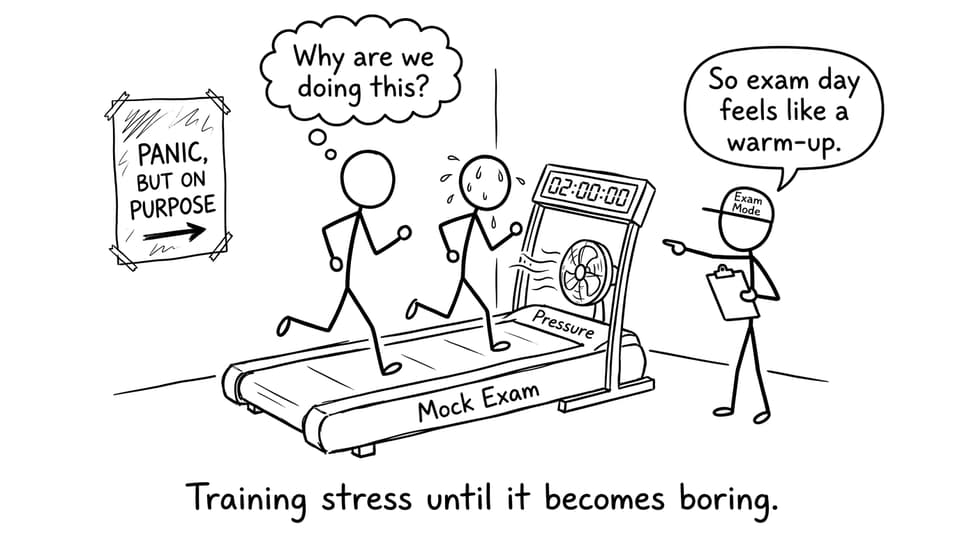
RevisionDojo supports exam simulation through Mock Exams and Predicted Papers so students can practice timing, stamina, and decision-making before it counts. The goal is not to scare anyone. The goal is to make exam day feel familiar.
A useful explainer for students who misunderstand predicted sets: IB Predicted vs Specimen Papers: What They Mean.
Keep coursework from hijacking IB exam preparation
Every IB student knows the feeling: you sit down to revise, then remember an IA draft exists, and suddenly the whole night disappears.
RevisionDojo helps schools manage that spillover with Grading tools and a Coursework Library that supports rubric-aware improvement. When coursework feedback loops are faster, students can return to exam prep sooner, and teachers can focus feedback where it matters most.
If you want a mindset reset around grades and momentum, this is worth reading: IB Predicted Grades Don’t Define You (Here’s What Does).
What this feels like for an IB student (the part you actually care about)
If your school uses RevisionDojo well, your revision stops being a daily negotiation.
You log in and the next step is obvious: a Study Notes section to clarify today’s topic, Flashcards to keep yesterday alive, and Questionbank practice to prove you can score marks, not just recognize content. When you get stuck, AI Chat helps you unblock fast. When you need deeper help, Tutors are there for targeted strategy.
That’s the hidden benefit of streamlining: it protects your attention. In the IB, attention is the real fuel.
Closing: a calmer IB exam season is built months earlier
The best IB students don’t have better stress. They have better systems.
When an IB school uses RevisionDojo to streamline exam preparation, the hidden win is not just higher scores. It’s fewer wasted hours, clearer next steps, and a revision culture that feels steady instead of frantic. Students practice with purpose using Questionbank, keep knowledge alive with Flashcards, learn faster with Study Notes, get unstuck with AI Chat, prove readiness with Mock Exams and Predicted Papers, improve coursework with Grading tools and the Coursework Library, and get targeted support from Tutors.
If your school wants a single, coherent way to run IB exam preparation across departments, start here: RevisionDojo for Schools.