

A quiet advantage most IB students ignore
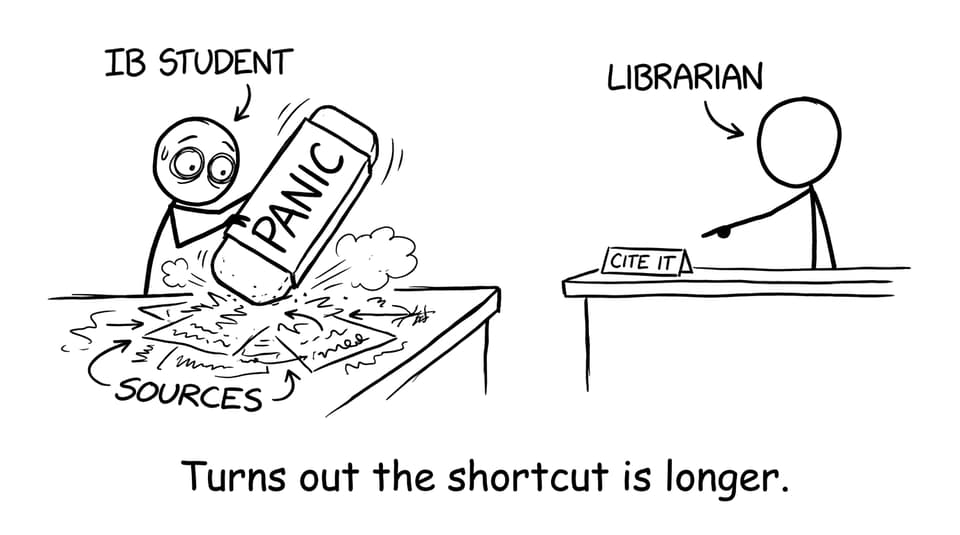
The most stressful IB moments rarely start with a bad grade. They start with a shortcut that felt harmless at 11:47 p.m.
A paragraph that was “basically my words.” A friend’s outline that was “just for structure.” A tool that was “only helping me phrase it better.” In the moment, it feels like survival. Later, it feels like risk.
A culture of academic honesty in the IB isn’t built by fear. It’s built by predictability: you know what’s allowed, you know what good practice looks like, and you have tools that make doing the right thing easier than doing the sketchy thing. That matters even more when you’re preparing for IB exams, because exam prep is where habits harden.
IB academic honesty quick checklist (save this)
Use this checklist to keep your IB work clean, confident, and examiner-proof:
-
Label your sources early (links, page numbers, screenshots, DOI if relevant).
-
Separate “notes” from “draft wording” so you don’t accidentally copy phrasing.
-
Know the line between collaboration and collusion before group study starts.
-
Use AI like a tutor, not a ghostwriter (explain, quiz, plan, don’t submit its writing).
-
Practice exam-style questions under timed conditions so panic doesn’t push you into shortcuts.
-
Do one honesty check before every submission: “Could I explain how I made this?”
If you want a structured revision loop that supports this (learn, recall, apply, review), RevisionDojo is designed for exactly that: start from the RevisionDojo for IB hub and build your routine around understanding, practice, and feedback.
Why academic honesty is the heart of the IB (and of your exam results)
The IB runs on trust. Not the naive kind, but the practical kind. Examiners assume your thinking is yours, your evidence is real, and your wording reflects your understanding.
When a school builds a culture of honesty, something subtle happens: students spend less energy hiding and more energy improving. That shift matters for IB exams. Honest practice produces accurate feedback, and accurate feedback is what raises grades.
This is also why tools matter. Practice platforms can either tempt copying or reward learning. RevisionDojo leans hard into the second: the Questionbank gives you high-volume exam-style practice without needing anyone else’s work, and you can confirm your understanding using clear explanations rather than borrowed paragraphs. Explore the Questionbank feature when you want “my work, my brain, my score.”
IB classroom culture starts with clarity (not suspicion)
Most integrity problems in the IB don’t start with villains. They start with vagueness.
Students get unclear guidance about what “too much help” looks like. Teachers assume everyone shares the same definitions. Then deadlines arrive, and people improvise.
If you’re an IB student preparing for exams, you can create clarity for yourself even if your classroom doesn’t:
-
Ask one direct question before big tasks: “What help is allowed, and what must be my own wording and analysis?”
-
Keep a simple “assist log”: who helped, what tool you used, what sources informed your thinking.
-
Build your own boundary rule: ideas can be discussed; sentences are written alone.
Clarity also reduces anxiety, and anxiety is a major driver of misconduct in IB settings.
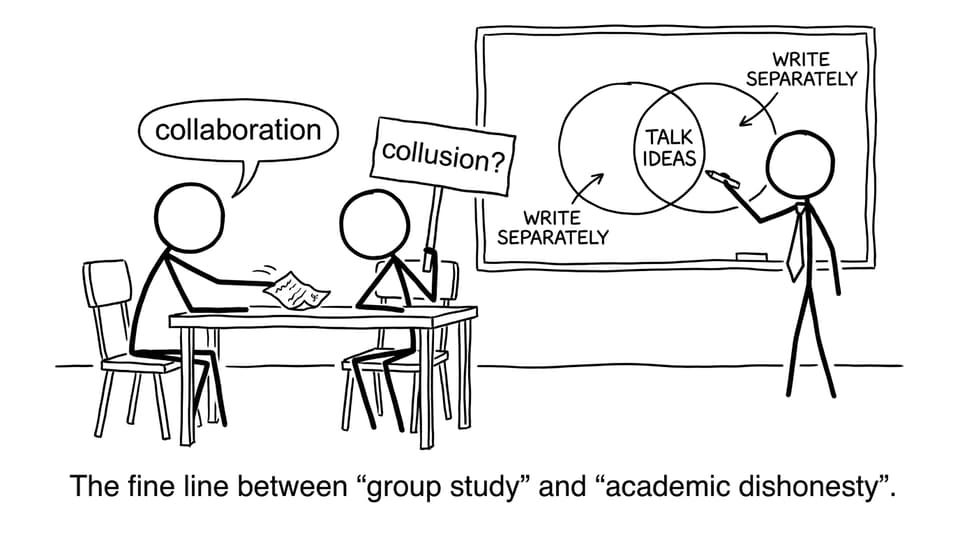
Collaboration vs collusion in IB: the line is thinner than you think
Study groups are one of the best parts of the IB. They’re also where accidental misconduct happens.
A good rule: collaboration is shared understanding; collusion is shared output.
Practical examples that usually stay on the safe side in IB study:
-
Comparing approaches to a math problem, then redoing it separately.
-
Debating interpretations of a poem, then writing your own analysis.
-
Quizzing each other with flashcards you created.
Examples that drift into danger:
-
Sharing full paragraphs, full outlines, or “template sentences.”
-
Dividing up a task and stitching writing together as if it’s one voice.
-
“I’ll write yours if you write mine” arrangements, even if you tweak words.
When you want collaboration without the risk, use tools that keep the work individual. For daily recall, RevisionDojo’s IB Flashcards with spaced repetition are built for solo mastery while still letting you discuss concepts with friends.
IB academic honesty and AI: how to use help without losing ownership
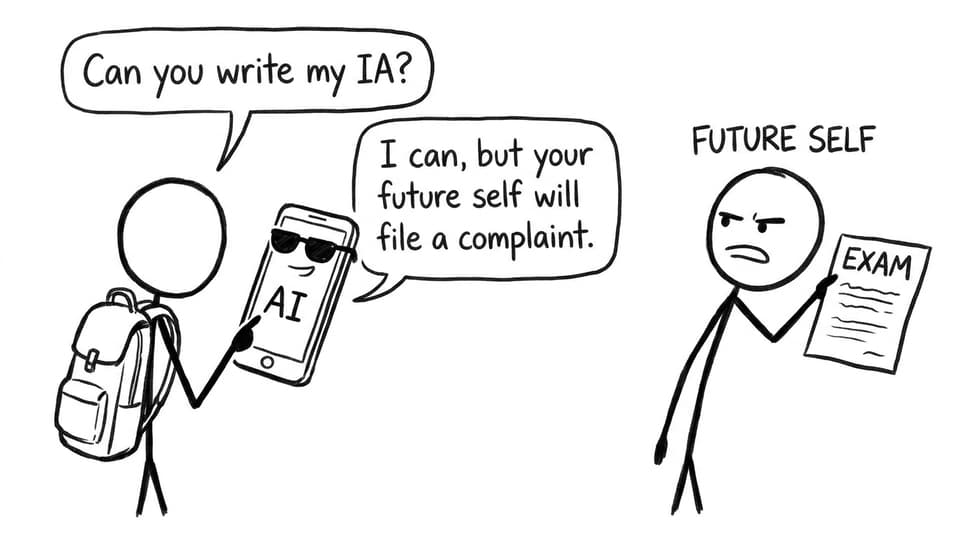
AI is now part of the academic landscape. The honest approach in IB isn’t pretending it doesn’t exist; it’s using it transparently and responsibly.
For exam prep, AI can be a powerful tutor:
-
Explain a concept you missed.
-
Generate practice questions.
-
Help you plan a revision schedule.
-
Give feedback on whether your answer addresses the command term.
Where it becomes a problem is when AI becomes the author of assessed writing, or when you can’t explain the choices made in “your” submission.
On RevisionDojo, AI Chat is most useful when you treat it like a patient teacher: ask it to clarify, then you do the thinking. Pair that with Study Notes and you get a clean workflow: learn the concept, check understanding, then prove it with practice. If you want a stronger routine for that loop, read RevisionDojo App: The Smarter Way to Prep for IB Exams.
Honest exam prep in IB is a system, not a promise
When people say “I’ll be honest,” they usually mean it. The problem is they haven’t built a system that still works under pressure.
Here’s a simple IB-friendly system that makes honesty the default:
Learn (fast, clean, source-aware)
Start with clear explanations so you don’t need to borrow wording later. RevisionDojo’s Study Notes feature helps because notes are structured by topic, which makes it easier to keep your own notes separate from your final writing.
If you want to understand why digital notes help you stay organized (and reduce accidental copying), this is useful: Digital IB Study Notes: Access Anywhere, Anytime.
Recall (daily, small, honest)
Use flashcards to force retrieval. When you can recall in your own words, you don’t need to “borrow” someone else’s.
For a practical approach, see IB Flashcard System: Active Recall for Better Memory.
Apply (exam-style practice, no shortcuts)
Use exam-style questions frequently. This is where honesty becomes measurable: you either can do it or you can’t yet.
RevisionDojo’s Comprehensive IB Question Bank is built for high-volume practice with feedback, which means you improve without needing to “find answers” elsewhere.
Review (feedback loops, not shame)
The goal isn’t to feel bad. The goal is to spot patterns: misunderstood command terms, shallow evaluation, weak definitions, messy steps.
Then you redo the skill while it’s still fresh.
Simulate (timed, realistic, ethical)
Timed practice reduces panic, and panic is the enemy of academic honesty in the IB.
RevisionDojo’s Mock Exams and Predicted Papers help you rehearse the real constraints: time, stamina, and decision-making. Start here: IB Predicted Papers and, for strategy, IB Predicted vs Specimen Papers: What They Mean.
What to do if something goes wrong (without making it worse)
Even in a strong IB culture, mistakes happen. The healthiest response is fast, honest, and specific.
-
Pause submission if you can. Don’t “hope it’s fine.”
-
Document what happened: what source, what section, what kind of help.
-
Tell your teacher early with a concrete plan (rewrite, re-cite, re-do data handling).
-
Treat it as skill-building: learn paraphrasing, build citation habits, change your workflow.
The point of academic honesty in the IB is not perfection. It’s credibility.
Closing: Make honesty your unfair advantage in IB
In the IB, academic honesty is not just about avoiding consequences. It’s about building a reputation with yourself: I can trust my own preparation.
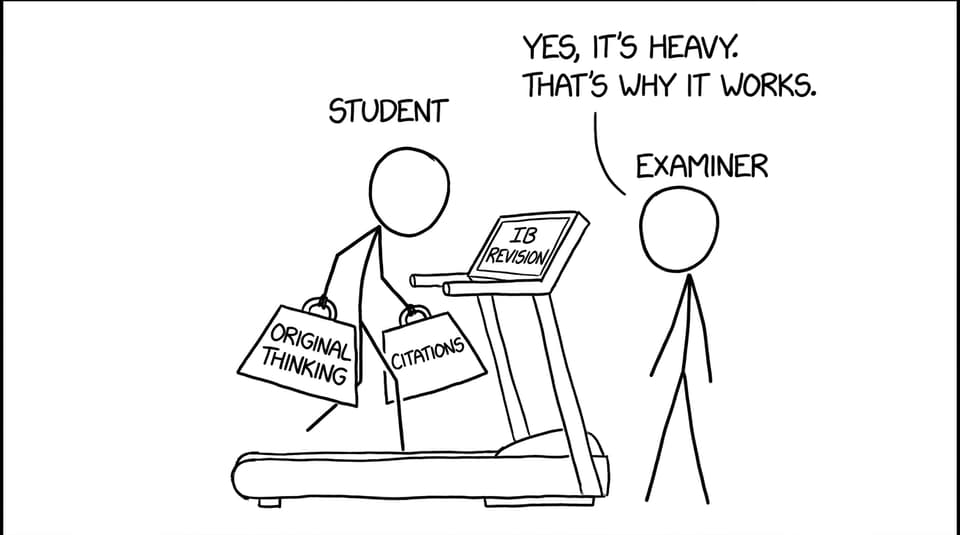
When your work is authentically yours, feedback becomes accurate. When feedback is accurate, revision becomes efficient. And when revision is efficient, IB exams become less about luck and more about readiness.
If you want an integrity-friendly study system that still aims high, build your routine inside RevisionDojo: Study Notes for clarity, Flashcards for daily recall, Questionbank for exam-style practice, AI Chat for targeted help, Grading tools to learn what marks require, plus Predicted Papers and Mock Exams to rehearse performance under pressure. Your future self doesn’t need perfection, only honest, repeated practice.