


The busiest season in the IB isn’t always the week before exams. It’s the quiet Tuesday in October when your teen is trying to write a university essay, finish an IA draft, remember CAS reflections, and still show up to class looking normal.
From the outside, it can look like procrastination. From the inside, it’s usually overload: too many important things, all at once, with no obvious order.
If you’re an IB student preparing for exams, or a parent supporting one, here’s the reassuring truth: balance isn’t about doing everything. It’s about choosing the smallest system that keeps the important things moving.

A quick balance checklist (printable in your head)
Use this when the IB + applications calendar starts to blur:
-
Pick one academic priority for the week (the subject/paper that moves your grade most).
-
Pick one application priority (personal statement draft, activities list, references, etc.).
-
Time-block 3 focused study sessions and 2 application sessions.
-
Do one timed practice session to keep exam instincts alive.
-
Protect sleep with a fixed stop time.
-
End the week with a 20-minute reset: what’s due next, what slipped, what to cut.
If you want a larger map of the admissions side, keep this guide open: How to Apply to University as an IB Student: Step-by-Step.
Why balancing IB and applications feels uniquely hard
The IB is built on long projects (IAs, EE, TOK, CAS) plus high-stakes exams. University applications are also long projects, just dressed up as “a few essays.”
The collision creates three sneaky problems:
-
Deadline clustering: everything is “soon,” but not the same soon.
-
Context switching: calculus brain to reflective writing brain to lab write-up brain.
-
Identity pressure: exams measure performance; applications feel like they measure you.
So the goal isn’t superhuman discipline. It’s reducing switching costs and making progress visible.
Build a two-lane weekly plan (study lane + applications lane)
A workable week has two lanes running in parallel, not one chaotic highway.
Keep the IB lane predictable
For the IB lane, consistency beats intensity. A simple loop works:
-
Learn a small concept (10-20 min)
-
Practice questions on that exact concept (25-45 min)
-
Review mistakes and write 2-3 “error rules” (10 min)
RevisionDojo is designed around that loop: Study Notes for clarity, Flashcards for daily recall, Questionbank for exam-style practice, AI Chat when you’re stuck, and Grading tools to tighten responses.
Start here if you need the full system view: RevisionDojo for IB.
If you’re not sure how to train with questions, this is the most useful baseline: IB Question Bank: How to Use It Effectively.
Make the applications lane small and scheduled
Applications expand to fill the space you give them. So don’t give them infinite space.
Try two scheduled blocks per week:
-
Block A (45-60 min): drafting (messy is allowed)
-
Block B (30-45 min): editing and admin (forms, documents, portals)
Parents can help most by protecting these blocks from interruption and by removing friction (printing, scanning, reminders), not by steering the content.
Use a shared calendar, but don’t turn it into surveillance
A calendar is supposed to reduce stress, not become a second examiner.
Three rules that keep it healthy:
-
Only track real deadlines (tests, IA drafts, recommendation requests, submission dates).
-
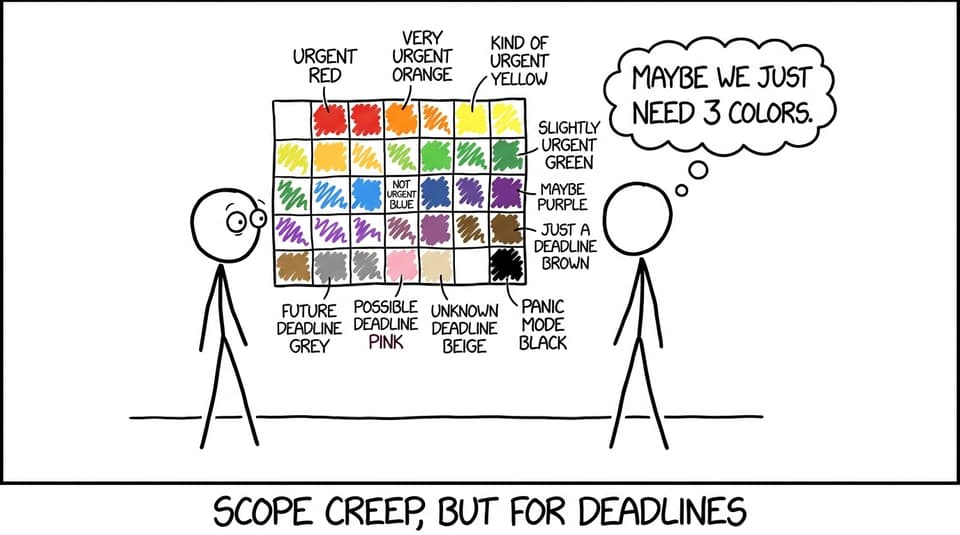
Color limit: three (IB, applications, life). More colors doesn’t mean more control.
-
Weekly review beats daily checking. One Sunday planning session prevents nightly arguments.
If extracurriculars are part of the story, keep them realistic: How to Balance IB and Extracurriculars Without Burning Out.
The most helpful parent move: protect ownership
University applications work best when the student’s voice stays intact. The parent’s role is closer to “editor of clarity” than “author.”
A good script is:
-
“Do you want feedback on structure, or just encouragement?”
-
“Which part feels hardest to start?”
-
“What would ‘done for today’ look like?”
If you want a deeper guide to the parent role (without taking over), use: What Role Should I Play in My Child’s University Planning During IB?.

Keep IB exam prep “ticking over” with timed practice
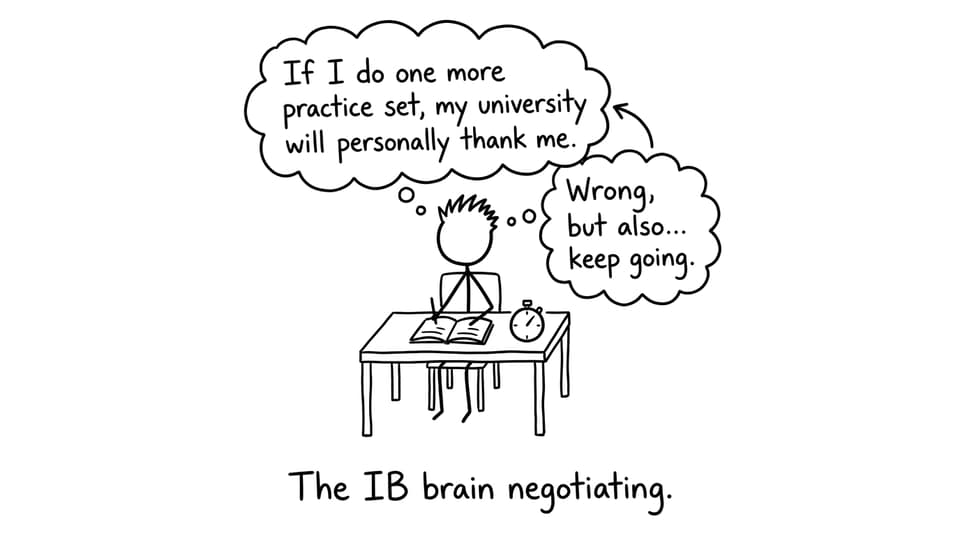
When applications heat up, the IB often becomes passive: rereading notes, highlighting, hoping. That feels productive but usually isn’t.
Instead, keep one timed session per week, even if it’s short:
-
25-40 minutes: timed questions
-
20 minutes: review mistakes
-
10 minutes: flashcards on the mistakes
RevisionDojo makes this easier with Mock Exams and Predicted Papers that simulate the real exam feel without you having to build everything from scratch.
Helpful reads for exam-season structure:
Closing: balance is a system, not a personality trait
Balancing IB demands with university applications isn’t about being naturally organized. It’s about building a small, repeatable system that keeps both lanes moving: steady exam practice, scheduled application blocks, and a home environment that protects ownership and sleep.
If you want one place that supports the entire IB workflow, from Study Notes and Flashcards to Questionbank practice, AI Chat support, Grading tools, Predicted Papers, Mock Exams, a Coursework Library, and Tutors, start at RevisionDojo. Your future self will feel the difference in the calm you build now.