
The night you realize you can't do everything (and that's the point)
The moment usually arrives quietly.
It's 11:47 p.m. You've just finished a club meeting that ran long, you still haven't opened your Chemistry notes, and your phone reminds you that CAS reflections exist. Somewhere in the back of your mind, a simple question starts to grow teeth: How am I supposed to balance IB and extracurriculars and still do well on exams?
This is the uncomfortable truth about IB: the program doesn't just test what you know. It tests how you choose.
Most students try to "work harder" first. They stay later. They say yes more often. They add another productivity app and call it a plan. But the students who end up calm near exams usually do something less dramatic and more effective: they build a system that makes trade-offs visible.
That's what this guide is for. Not to tell you to quit everything. But to help you keep what matters, protect your grades, and still show up to the things that make school feel like life.
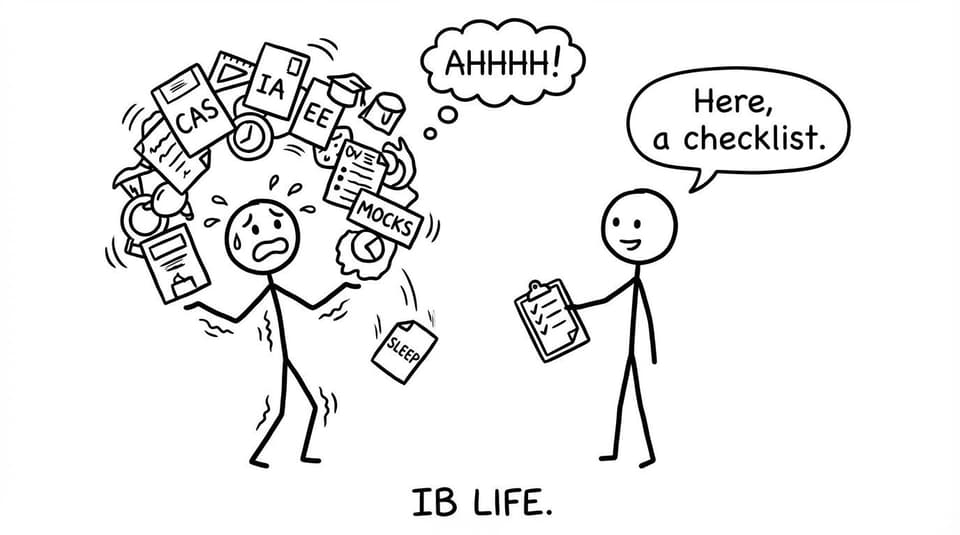
A simple checklist for balancing IB and extracurriculars
If you want the shortest version of the strategy, here it is:
- Pick your "non-negotiables" (2-3 activities max that truly matter).
- Anchor your week around IB deadlines (IAs, tests, mocks, exam blocks).
- Time block your study in small, repeatable sessions.
- Use active practice (questions, flashcards, timed work), not rereading.
- Create a "minimum viable week" for busy periods.
- Say no early (or renegotiate roles) before the calendar collapses.
- Review every Sunday: what worked, what broke, what to adjust.
Throughout this post, I'll show you how to apply this specifically to IB exam preparation, and how RevisionDojo tools can shorten the work without lowering the standard.
Why balancing IB and extracurriculars feels uniquely hard
Balancing IB and extracurriculars isn't hard because you're disorganized. It's hard because the program creates a perfect storm:
- Your workload is multi-lane: six subjects plus TOK plus EE plus CAS.
- Deadlines aren't linear. They clump.
- A lot of tasks are "invisible" until they're suddenly urgent (draft feedback, research time, data collection).
- Studying isn't just time-based; it's energy-based. A 40-minute session after training is not the same as 40 minutes on a Saturday morning.
The best systems for IB students assume this. They don't rely on motivation. They rely on structure.
The big idea: you can't balance everything, only your priorities
A useful way to think about "balance" is this: balance isn't equal time. It's intentional imbalance.
In some weeks, your extracurriculars lead and your IB study stays in maintenance mode. In other weeks (mock season, IA deadlines, final revision), the academics lead and everything else scales back.
The goal is not to keep every plate spinning at the same height. The goal is to stop pretending every plate weighs the same.
Choose your "two wins" per term
Try this question:
If this term goes well, what are the two things I want to be proud of?
For many IB students, it's something like:
- "I want to improve my HL subject grades before mocks."
- "I want to keep one meaningful extracurricular that I actually enjoy."
Two wins forces clarity. Three starts to blur. Five becomes fantasy.
Use time blocking that fits IB reality (not influencer schedules)
Time blocking works for IB students when blocks are small, repeatable, and tied to a specific output.
Instead of "Study Biology," your block becomes:
- "Do 12 topic questions on enzymes, review mistakes, make 5 flashcards."
That's measurable. It ends.
A practical weekly template:
- Mon-Thu: 2 blocks of 35-45 minutes (one hard subject, one lighter review)
- Fri: 1 short block (flashcards + planning)
- Sat: 2-3 deeper blocks (timed practice + error review)
- Sun: 60 minutes to plan + 60-90 minutes to close weak spots
For active, high-yield practice, use RevisionDojo's Questionbank to drill what your syllabus actually tests: Questionbank.
And when you need quick understanding (not a long textbook detour), lean on concise revision material: Study Notes.
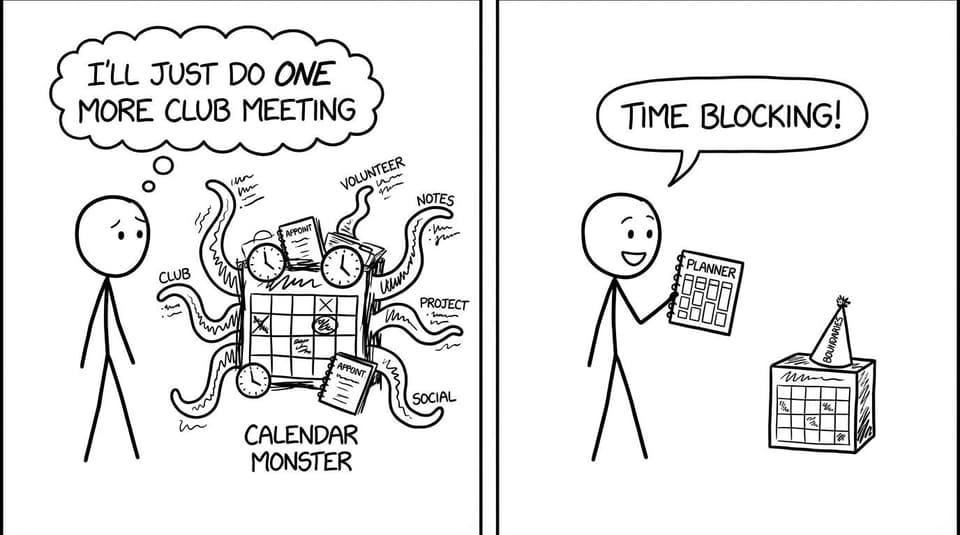
Build a "minimum viable week" for busy extracurricular seasons
Every IB student has weeks where extracurriculars explode: tournaments, performances, Model UN conferences, competitions.
The mistake is trying to keep your normal study schedule anyway. The smarter move is to switch to a pre-written "minimum viable week" that protects your exam readiness.
Here's one that works:
- Daily (15-20 min): Flashcards (spaced repetition)
- 3x per week (30-40 min): Question practice on one weak topic
- 1x per week (45-60 min): Timed mini-test + review
RevisionDojo's Flashcards are designed for exactly this low-friction maintenance: Flashcards.
If you're using the program's full workflow, you can also build a short timed session using exam simulation tools and keep your pacing sharp before it slips.
Make your IB study "practice-first" so it takes less time
One quiet reason balancing IB and extracurriculars fails is that many students study in the most time-expensive way: rereading, rewriting notes, highlighting.
Those methods feel responsible, but they don't create exam performance quickly.
A practice-first loop looks like this:
- Attempt questions (even if you're shaky).
- Get feedback aligned to marking expectations.
- Repair one mistake pattern.
- Retest.
RevisionDojo is built around that loop. Start with the IB hub to keep everything in one place: All your IB revision needs, in one place.
Then deepen practice using the Questionbank article if you want a strategy guide: Comprehensive IB Question Bank: Thousands of Practice Questions.
The point is simple: if your study produces exam-ready answers faster, extracurriculars stop feeling like the enemy.
Protect the "hidden" IB workload: coursework and drafts
The biggest scheduling trap in IB isn't exams. It's coursework.
IAs and the EE don't behave like normal homework. They expand to fill whatever time you give them. They also create emotional friction because progress is messy: research dead-ends, unclear feedback, data that doesn't cooperate.
Two rules help:
- Start earlier than you think, but in small steps.
- Shorten feedback cycles so you don't spend weeks going in the wrong direction.
RevisionDojo's Grading tools exist for that second rule: fast, rubric-aligned feedback that helps you iterate. When you're ready to tighten the quality of drafts and reduce uncertainty, explore: RevisionDojo for Schools (overview of grading + tools).
And if you need inspiration or a reality check on what "good" looks like, the Coursework Library is the fastest way to see strong examples and structure.
A realistic weekly plan that balances IB and extracurriculars
Below is a sample week that assumes you have practices/meetings 3-4 afternoons.
Monday to Thursday (busy days)
- After school: extracurriculars
- Evening Block A (40 min): one weak topic using Questionbank
- Evening Block B (20 min): Flashcards
- Stop time: fixed (protect sleep)
Friday (recovery + reset)
- 20 min: flashcards
- 20 min: plan weekend blocks + list next deadlines
Saturday (performance day)
- Block 1 (60-75 min): timed practice (Exam Mode or a custom test)
- Block 2 (45 min): review mistakes, create "error rules"
- Block 3 (45 min): rebuild weak concept using Study Notes
If you want a guide for running timed simulations, use: How to Use RevisionDojo's Mock Exam Builder to Simulate IB Conditions.
Sunday (maintenance + momentum)
- 60 min: coursework block (IA/EE)
- 60 min: mixed-topic questions
- 15 min: calendar review and next week's time blocks
If you want an external example of how RevisionDojo structures a 30-day routine (the logic transfers well), see: MYP eAssessments: 30-Day Study Plan That Works.
The "say no" script that saves your IB grades
Saying no is a skill. In IB, it's also a strategy.
A good no is specific and respectful:
- "I can stay on the team, but I can't lead the extra project this month."
- "I can attend one meeting a week, not three, until mocks are done."
- "I can help, but only with tasks that take under 30 minutes."
Your future self will thank you for every boundary you set before the panic starts.
The calm ending: balance comes from constraints, not willpower
Balancing IB and extracurriculars doesn't happen when you finally become a perfectly disciplined person. It happens when you build constraints that protect what matters: fewer priorities, clearer time blocks, and a study method that produces results without stealing your whole life.
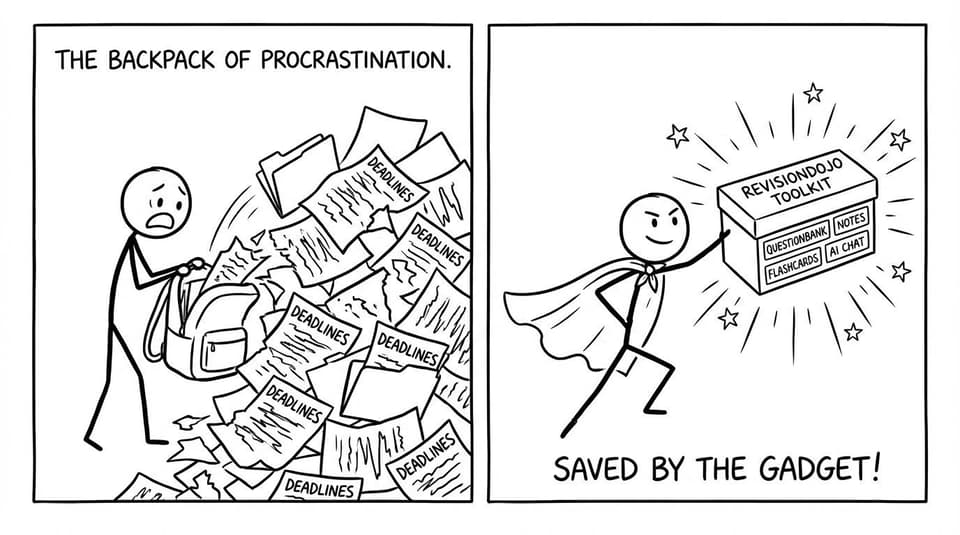
If you want that system in one place, RevisionDojo is built for the full IB loop: Study Notes for clarity, Flashcards for retention, Questionbank for daily practice, AI Chat for quick explanations, Grading tools for coursework drafts, Predicted Papers and Mock Exams for simulation, a Coursework Library for examples, and Tutors when you need a real human to steady the plan.
Start by opening the IB hub, choose one subject you want to improve, and set one small, repeatable block for tomorrow. Balance is just that, repeated.