


If you have ever revised a topic and thought, “This is not just theory; this is someone’s life,” you are already thinking like IB Geography wants you to think. Environmental risks are not only about dramatic hazard photos or headline numbers. They are about whether people can keep living safely, earning an income, and accessing essentials when the environment shifts beneath them.
In IB Geography, this sits neatly inside Global Risks and Resilience: environmental risk is the potential for harm from hazards, environmental degradation, and climate change. Human security shifts the lens from borders to people, their lives, livelihoods, and wellbeing.
A quick IB Geography checklist: how to frame any answer
Use this mini-structure in IB Geography exam responses to stay focused:
-
Name the risk (climate change, disasters, pollution, degradation)
-
Link to a human security dimension (food, water, health, shelter, livelihoods)
-
Explain vulnerability (who is most exposed and why)
-
Add resilience (adaptation, disaster risk reduction, governance)
For syllabus-aligned support, start with IB Geography Resources and the 6 Global Risks and Resilience hub.
Climate change: the “risk multiplier” in IB Geography
Climate change matters in IB Geography because it intensifies other hazards. Warmer temperatures can increase the frequency and severity of heatwaves, droughts, flooding rainfall, and stronger storms. Human security falls when harvests fail, water systems become unreliable, and housing is repeatedly damaged.
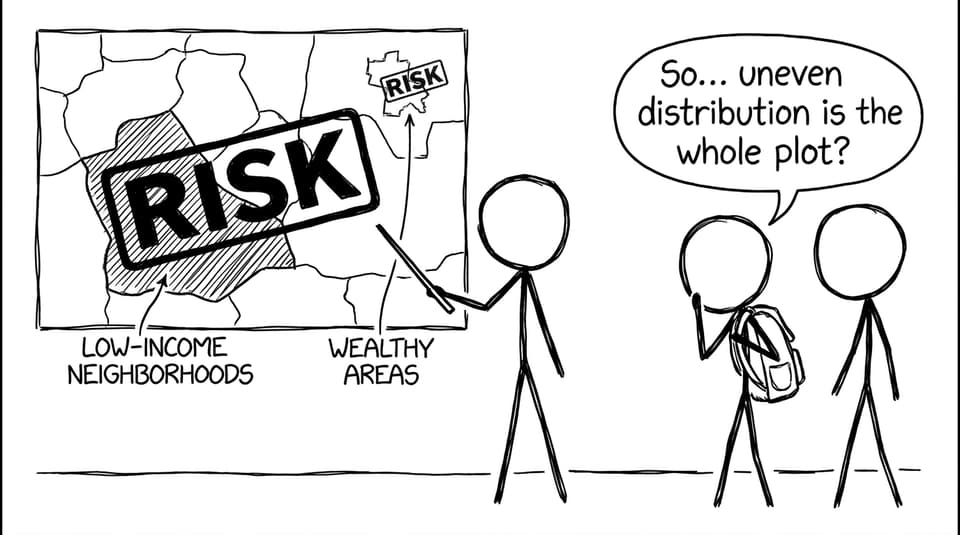
The key evaluative point: impacts are not evenly shared. Low-income communities often have fewer resources for resilient infrastructure, insurance, or relocation, so the same event causes deeper and longer-lasting insecurity.
To practise exam-style responses on this exact unit, use 6.2 Environmental risks Questionbank and the matching Lessons for 6.2 Environmental risks.
Disasters: sudden shocks, long recoveries
Earthquakes, cyclones, floods, and wildfires can produce immediate loss of life and displacement. But IB Geography marks often come from what you add next: damaged roads, hospitals, schools, and power networks slow recovery and can lock places into repeated vulnerability.
If you want a strong comparison angle for essays, skim Notes for D.3.1 Case Studies of Geophysical Hazards and connect it back to vulnerability factors.
Food and water security: the nexus effect
Environmental risks often hit human security through basics: food and water. Drought reduces yields and livestock productivity. Flooding can destroy farmland and contaminate water supplies, increasing disease risk.
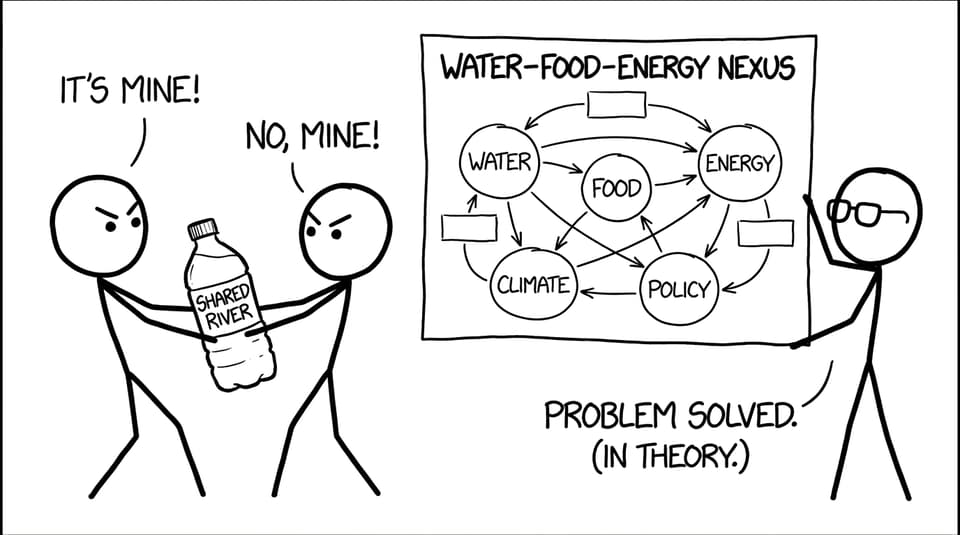
In IB Geography, the best way to show complexity is the Water-Food-Energy nexus: stress in one system cascades into the others. Water scarcity can reduce agricultural output and limit energy production; energy shortages can disrupt pumping and treatment of water.
Build this into your revision with What Is the Water-Food-Energy Nexus? and deeper detail in IB Geography 3.2.1 the Water-food-energy Nexus Notes.
Health and livelihoods: the quiet erosion
Some threats are not headline events. Pollution, extreme heat, and shifting disease patterns increase respiratory and waterborne illnesses. Environmental degradation also undermines livelihoods for people who depend directly on ecosystems: farmers, fishers, and pastoralists. When income collapses, migration pressures grow, cities become overcrowded, and social instability can rise.
A strong IB Geography move is to state clearly: environmental risk becomes a human security crisis when vulnerability is high and resilience is low.
Environmental justice: who bears the burden?
In IB Geography, examiners reward awareness that risks are unevenly distributed. People who contribute least to emissions or degradation often face the harshest impacts. This raises environmental justice questions about responsibility, financing adaptation, and fair access to protection.
To strengthen evaluation and solutions, read What Is the Role of Resilience in Managing Global Risks? and connect it to Notes for D.2.3 Risk Factors and Vulnerabilities.
Conclusion: write like IB Geography, revise like RevisionDojo
Environmental risks threaten human security by weakening access to food, water, health, shelter, and livelihoods, often in connected, cascading ways. In IB Geography, your edge comes from linking hazards to vulnerability and finishing with realistic resilience strategies.
When you are ready to turn understanding into exam performance, RevisionDojo pulls everything together: Study Notes for clear explanations, Flashcards for definitions, a Questionbank for exam practice, AI Chat for quick clarification, Grading tools for feedback, plus Predicted Papers, Mock Exams, a Coursework Library, and Tutors when you need targeted help. Start with All #IB Geography Posts and keep your IB Geography revision focused on what earns marks.