

Economies of scale feel like that rare study session where everything clicks: you do more, and it somehow costs you less energy per page. In IB Business Management, that same logic can make growth look irresistible. But scale has a turning point. Keep expanding without control, and the exact thing that used to lower unit costs starts raising them.
This post breaks down how IB Business Management students should explain economies and diseconomies of scale in exam answers, and (more importantly) how these ideas shape real business decision-making.
A quick exam-ready checklist (use this in any response)
-
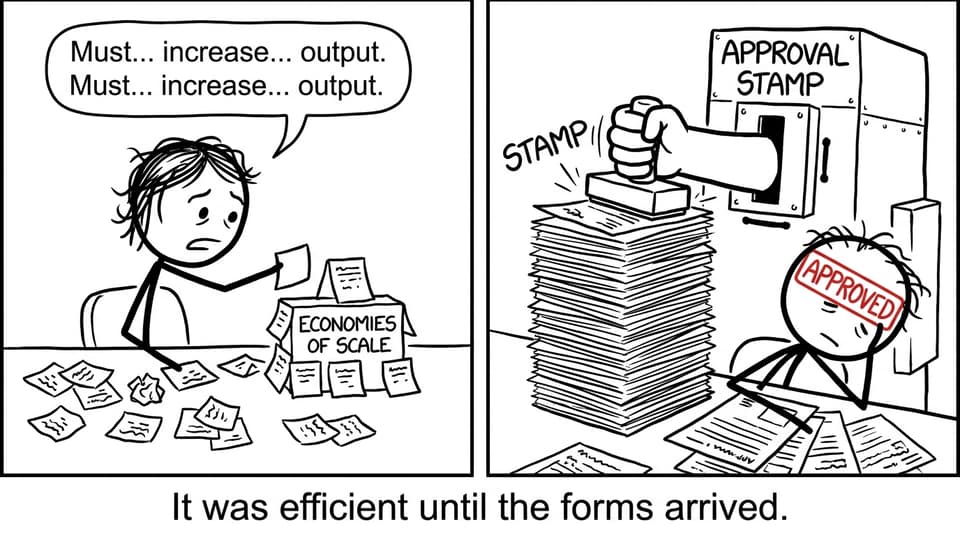
Define economies of scale: falling average costs as output rises.
-
Explain why: spreading fixed costs, technical efficiency, purchasing power, specialization.
-
Define diseconomies of scale: rising average costs as the firm becomes too large.
-
Explain why: coordination issues, poor communication, bureaucracy, motivation problems.
-
Link to decisions: growth, pricing, automation, location, structure.
If you want the syllabus-aligned version of this topic, start with 1.5.1 Internal and External Economies and Diseconomies of Scale and the matching 1.5.1 Notes.
How economies of scale shape business decisions
In IB Business Management, economies of scale are rarely just “costs go down.” They are a reason to commit to big decisions.
Expansion decisions
When managers expect average cost per unit to fall, they’re more likely to scale capacity: larger facilities, more shifts, bigger distribution, or acquisitions. The logic is simple: if the cost base is largely fixed, higher output spreads those fixed costs thinner.
This is why the “grow or stay small” choice sits at the center of 1.5 Growth and evolution. Growth is not just ambition. It’s a cost strategy.
Technology and automation decisions
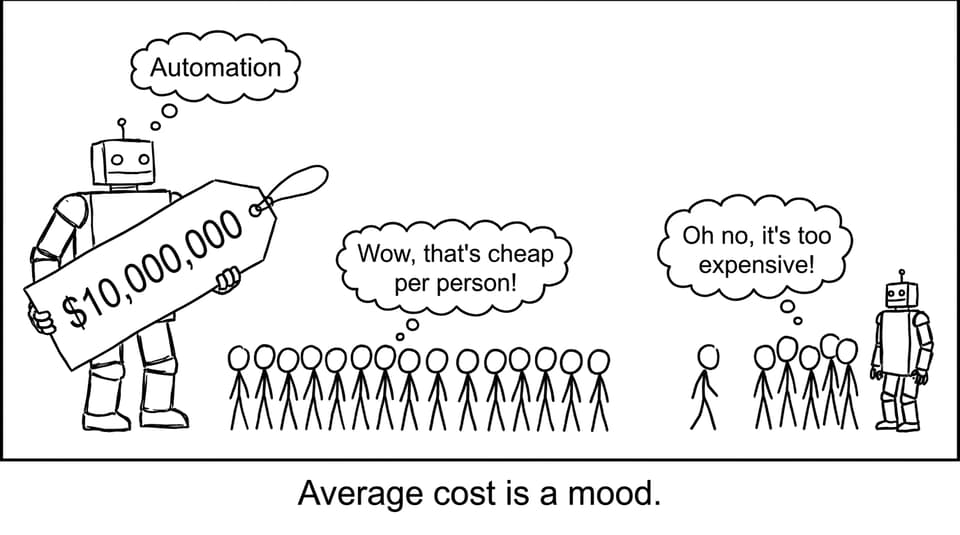
Economies of scale can justify expensive automation. A machine that looks unaffordable at 1,000 units can look brilliant at 1,000,000 units because the fixed cost is spread across far more output.
To connect this to cost behavior in IB Business Management, revise costs using 3.3 Costs and revenues Questionbank and 3.3 Costs and revenues Lessons.
Pricing decisions
Economies of scale often unlock a brutal advantage: the ability to lower prices while protecting margins. In exam terms, that can raise market share, create barriers to entry, and strengthen long-run competitiveness.
For a deeper economics-of-scale explanation you can quote in your own words, see What Are Economies of Scale, and Why Do They Matter for Competitive Advantage?.
How diseconomies of scale change the “keep growing” story
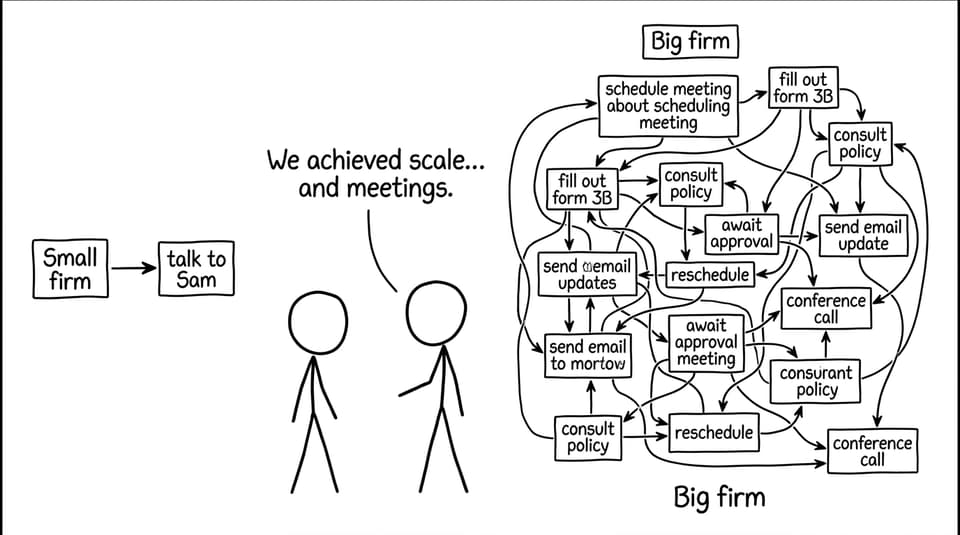
Scale can quietly flip from strength to drag. The business is larger, but decisions move slower, information gets distorted, and effort gets duplicated.
Organisational structure decisions
When diseconomies appear, firms often redesign how they’re managed: decentralising, creating smaller divisions, clarifying responsibilities, and reducing layers of approval. This is where IB Business Management links operations to HR and leadership: structure affects cost.
A helpful refresher on how functions interact is Business functions Notes.
Location and coordination decisions
A growing firm may spread across regions to reach customers or reduce distribution costs. But being “everywhere” can increase transport costs, oversight costs, and misalignment between sites. At some point, the firm pays for its own complexity.
If you want a clean explanation you can adapt, read What Are Diseconomies of Scale, and Why Do Large Firms Sometimes Struggle with Rising Costs?.
How to write this in an IB-style way
In IB Business Management, examiners reward answers that move from definition to decision. A strong mini-structure is:
-
Define economies or diseconomies of scale.
-
Explain the cause (fixed costs, bureaucracy, coordination).
-
Apply to the decision (expand, automate, lower price, restructure).
-
Evaluate the risk (at what point could costs rise again?).
For extra practice and feedback loops, use the full IB Business Management Resources hub: Questionbank, Study Notes, Flashcards, AI Chat, Grading tools, Predicted Papers, Mock Exams, Coursework Library, and Tutors.
Conclusion: scale is a strategy, not a trophy
In IB Business Management, economies of scale explain why firms grow. Diseconomies of scale explain why smart firms sometimes stop. Your exam answers should show that decision-makers are balancing cost advantages against complexity costs, then choosing actions like expansion, automation, restructuring, or pricing changes.
If you want to turn this topic into reliable marks, build a quick routine in RevisionDojo: learn the definitions in the IB Business Management Glossary, practise application with the Questionbank, then use AI Chat and Grading tools to tighten your evaluation under time pressure.