


The first term IB Digital Society experience usually begins with a simple question: what makes a society digital? It soon expands into something more demanding. You start examining how data, algorithms, media, networks and artificial intelligence affect identity, power, ethics and everyday life.
Expect a discussion-heavy course with regular reading, source analysis, short written responses and real-world case studies. The course is built around inquiry, so the main challenge is connecting technical understanding with consequences for people and communities.
The precise order varies by school because teachers can integrate concepts, content and contexts in different ways. Even so, most first terms follow a recognizable arc: learn the framework, investigate digital systems, practise evidence-based analysis and begin thinking like an independent researcher.
Your first-term overview
By the end of a typical first term, you should expect to have:
- Learned the difference between concepts, content and contexts
- Investigated named digital systems through real examples
- Practised identifying stakeholders, impacts and implications
- Compared sources with different claims or perspectives
- Written short analytical or evaluative responses
- Started a reusable case-study bank
- Encountered the inquiry project
- Understood how SL and HL expectations differ
The IB Digital Society resources hub brings the syllabus, Study Notes, Flashcards and Questionbank practice into one place.
Weeks 1-2: learning the course's language
The opening lessons often feel familiar. You discuss platforms, smartphones, recommendation systems or generative AI. These are technologies you already encounter, so ordinary experience can initially seem sufficient.
Then the vocabulary arrives.
Digital Society separates its framework into three connected dimensions. Concepts include change, expression, identity, power, space, systems, and values and ethics. Content includes data, algorithms, computers, networks, media, AI, and robots and autonomous technologies. Contexts include cultural, economic, environmental, health, human knowledge, political and social settings.
Your teacher might examine a recommendation system through algorithms as content, power as a concept and politics as a context. You must explain how the system works, who controls it, whose behaviour it influences and what tensions follow.
Start with the Digital Society introduction materials, then explore the separate course concepts. This distinction helps prevent every interesting idea from being placed in the same category.
Weeks 3-5: your first integrated inquiries
Once the framework is familiar, the pace tends to rise. Your class may investigate data collection, AI, media or computers. There is no universal first unit, so these examples are representative rather than prescribed.
A lesson might begin with biometric identification in public spaces. You could study what data the system collects, consider accuracy and consent, compare government and citizen perspectives, and evaluate implications for security and privacy. One system can occupy several lessons because each lesson changes the analytical lens.
A chronological transcript of each class creates information but hides important connections. Instead, organize notes under headings such as:
- Named digital system and how it functions
- Relevant concept and context
- Main stakeholders
- Benefits and harms
- Evidence and source limitations
- Possible future developments
Use the syllabus-aligned Digital Society Study Notes to fill genuine knowledge gaps. The goal is to understand enough content to analyze consequences accurately.
Weeks 6-8: writing becomes the real work
The most important shift happens when class discussion becomes assessed writing. Having a thoughtful opinion helps, but an IB response needs visible reasoning.
A strong paragraph identifies a specific digital system, explains a mechanism, analyzes an impact and reaches a qualified judgment. Instead of saying algorithms are powerful, explain how a ranking algorithm prioritizes signals, changes what users see and shifts influence toward the platform or creators who understand those signals.
Source work also becomes more disciplined. You may distinguish claims from evidence, recognize perspective, compare accounts or identify omissions. Current news can provide examples, but publication does not make a source complete or neutral.
The workload may feel uneven. One week could require reading and discussion; another might contain source annotation, research and a timed response. Spend 20-30 minutes after each lesson cleaning your notes and recording one usable example. This is advice, not an official workload requirement.
The guide to inquiry in IB Digital Society shows how questions, sources, impacts and reflection connect. Use the Digital Society Questionbank to convert that understanding into written practice.
Weeks 9-12: connecting topics and assessment
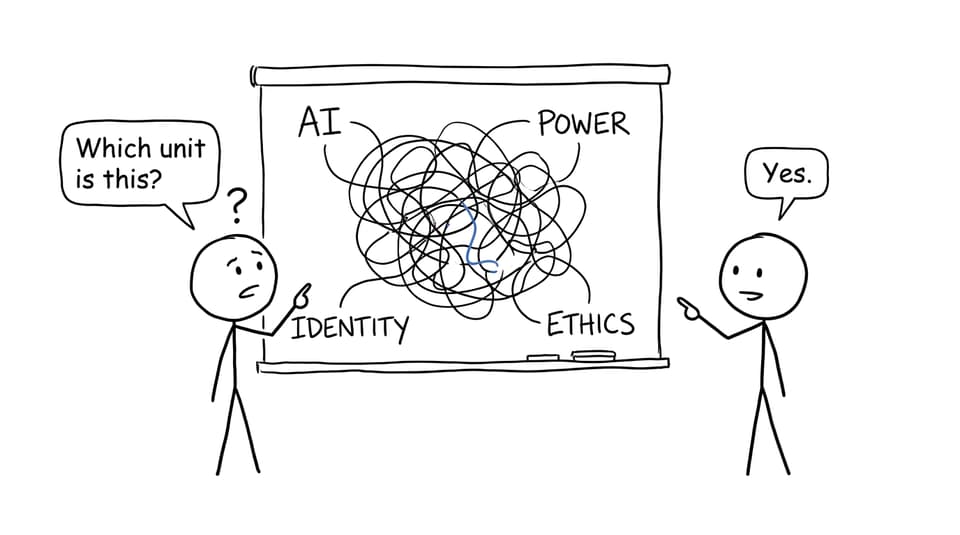
Later in the term, the course starts feeling less like separate units and more like a web. A study of AI can become an inquiry into data, identity, economic incentives, human knowledge and ethics. This integration is intentional.
You may complete a unit test, source-based task, presentation or extended response. Schools design their own first-term assessments, so no format is guaranteed. Whatever the task, marks increasingly depend on application and evaluation rather than definitions alone.
You may also receive an introduction to the internal assessment. Both SL and HL students complete an inquiry project about the impacts and implications of a digital system for people and communities. The final submission includes an inquiry process document, recorded multimedia presentation and references. Some schools introduce topic exploration early; others wait.
Do not feel pressured to choose a permanent topic immediately. Notice which systems produce focused, researchable questions. Review the IB Digital Society assessment overview and bookmark the Digital Society IA guide for formal planning.
What changes at HL
HL students study the common core while addressing challenges and interventions involving global well-being, governance and human rights, and sustainable development. Teachers may introduce these areas early or integrate them later.
The difference is not simply more terminology. HL work asks students to sustain longer reasoning, evaluate interventions and consider recommendations. The SL and HL comparison explains how the assessment pathways differ.
What surprises new students most
It is not computer science
You need accurate knowledge of digital systems, but programming is not central. The subject asks how technologies shape people, institutions and communities. Describing an algorithm without evaluating power or consequences completes only part of the task.
Knowing the news is not enough
Current awareness helps, but examples must support analysis. Explain why an example supports a claim, how the system produces an outcome and where the evidence remains uncertain.
Several answers can be defensible
Digital Society often involves competing values. Privacy may conflict with security, while innovation may conflict with accountability. Your judgment still needs evidence, perspective and clear criteria.
Examples accumulate quickly
Articles, platforms and policy cases can blur together. Keep one evolving case-study bank rather than scattered bookmarks. A few well-understood examples are more valuable than dozens you barely remember.
A sustainable weekly routine
A calm first term does not require hours of daily revision. It requires continuity.
After each lesson, summarize the digital system and its mechanism in three sentences. At the end of the week, connect it to two concepts and one context. Then write a paragraph containing a stakeholder, evidence and a counterpoint. Use Flashcards for terminology, AI Chat to test explanations and Grading tools to see where analysis becomes description.
As assessments approach, add Mock Exams and Predicted Papers for realistic timing. When coursework becomes demanding, RevisionDojo's Coursework Library and Tutors can support your understanding of quality, structure and feedback without removing ownership of your work.
The first term is not about mastering every digital controversy. It is about learning a method: focus the question, understand the system, test sources, trace impacts and make a justified judgment. RevisionDojo is the ultimate IB resource for building that method because its Questionbank, Study Notes, Flashcards, AI Chat, Grading tools, Predicted Papers, Mock Exams, Coursework Library and Tutors support every stage.