


The decision that quietly changes your whole year
The first time most students feel the SL vs HL difference in IB Digital Society isn’t in class. It’s later, at home, when two people read the same headline about misinformation or surveillance and write two completely different answers.
One response explains what’s happening clearly. The other does that, then keeps going: who benefits, who loses, what trade-offs are hiding, and what interventions might actually work.
That gap is the real story behind IB Digital Society SL vs HL. Same foundation. Different depth. Different pressure. And if you’re preparing for exams, understanding those differences early saves you weeks of unfocused revision.
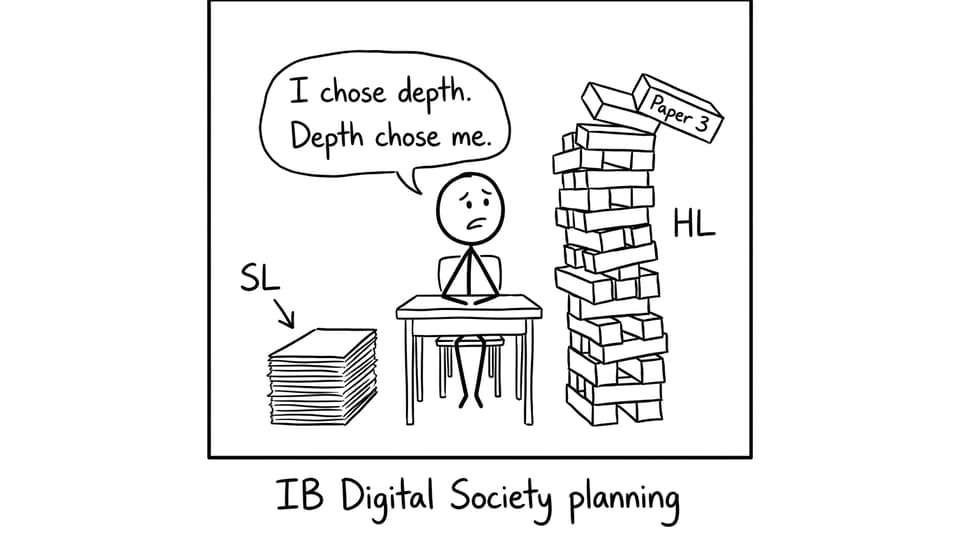
Quick checklist: SL or HL for IB Digital Society?
Use this fast filter before you decide (or before you plan revision for IB Digital Society):
-
Do you enjoy evaluating solutions, not just describing problems?
-
Can you handle longer timed writing and sustained argument?
-
Are you willing to research case studies more independently?
-
Are you balancing multiple heavy HLs already?
If you’re unsure, start by scanning the course structure in the IB Digital Society Resources hub and compare it to your weekly capacity.
What SL and HL share in IB Digital Society
It helps to begin with what doesn’t change.
In IB Digital Society, both SL and HL students:
-
Study the same core concepts and contexts
-
Use inquiry as the central approach (you investigate digital systems, you don’t memorize tech trivia)
-
Analyse impacts and implications for people and communities
-
Complete an Internal Assessment inquiry project
If you want a clean starting point for the common foundation, the IB Digital Society Revision Notes (SL/HL) page is a solid map of what both levels must know.
The biggest practical difference: teaching hours and depth
The simplest difference between SL and HL in IB Digital Society is time:
-
SL: approximately 150 hours
-
HL: approximately 240 hours
Those extra hours change how you’re expected to think. HL students generally have more room (and more demand) to handle complexity: competing stakeholder perspectives, uncertainty in evidence, and the tension between innovation and harm.
A good way to feel this difference is to revise one concept like “change” and see how far your explanation can stretch. RevisionDojo’s guide on understanding change in Digital Society shows what exam-ready thinking looks like when you go beyond description.
HL extension in IB Digital Society: challenges and interventions
This is the difference students actually notice.
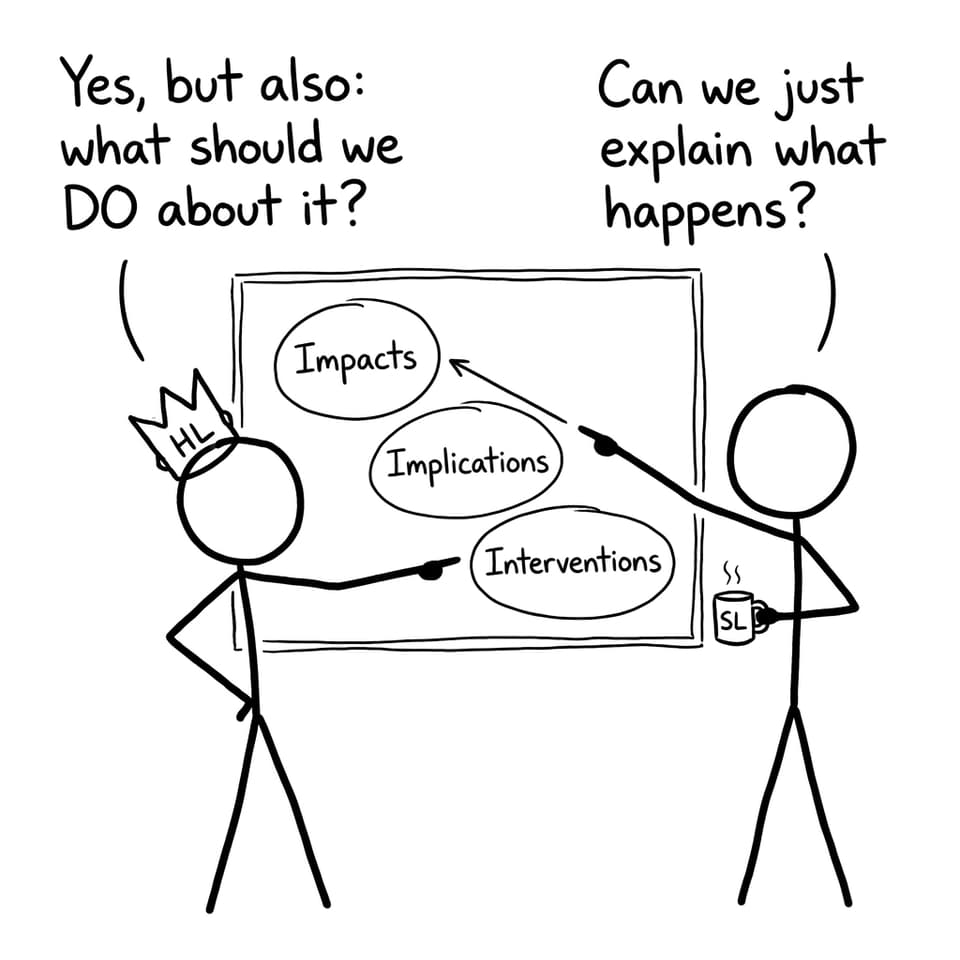
HL includes an extension focused on:
-
Challenge topics (large-scale, complex digital issues like misinformation, bias, surveillance, and harms that spread across systems)
-
Interventions (attempts to reduce harm or redesign outcomes, such as regulation, platform design changes, education campaigns, or governance reforms)
In other words, HL pushes you to answer a harder question: not only “what is happening?” but “what should be done, and why that approach rather than another?”
That makes HL responses more evaluative by default. You’re expected to judge effectiveness, consider trade-offs, and justify recommendations.
If you want to strengthen the inquiry mindset that both SL and HL need (and HL demands more consistently), read Inquiry in IB Digital Society, Explained Simply.
Exam and assessment differences (what changes on exam day)
Both levels sit written exams and complete the IA. But HL has an additional external assessment paper.
RevisionDojo’s IB Digital Society assessment table summarizes it clearly:
-
Paper 1: SL 1h 30m, HL 2h 15m
-
Paper 2: SL 1h 15m, HL 1h 15m
-
Paper 3: HL only 1h 15m
-
Internal Assessment: both have 30 hours allocated (weighting differs)
You can see these details on the IB Digital Society Resources hub.
For exam prep, that HL Paper 3 reality changes how you should revise IB Digital Society: you need more timed practice, more structured evaluation, and a stronger habit of writing conclusions that actually commit to a judgment.
How writing expectations shift from SL to HL
Both SL and HL reward clear use of concepts and real-world examples. But the center of gravity shifts.
In IB Digital Society SL, strong writing usually means:
-
Accurate explanation of a digital system
-
Clear impacts and implications
-
Relevant examples connected to course concepts
In IB Digital Society HL, strong writing adds:
-
Comparison of perspectives and stakeholder incentives
-
Evaluation of interventions (effectiveness, feasibility, ethics)
-
Justified recommendations (with explicit trade-offs)
If you want a reusable set of lenses for both levels, RevisionDojo’s breakdown of key themes in IB Digital Society helps you move from “I know the case study” to “I can use it in any question.”
Workload and how to revise smarter for IB Digital Society
HL is heavier, but not just because there’s “more.” It’s heavier because you’re asked to be more independent: building a case study bank, updating examples, and practicing evaluation under time.
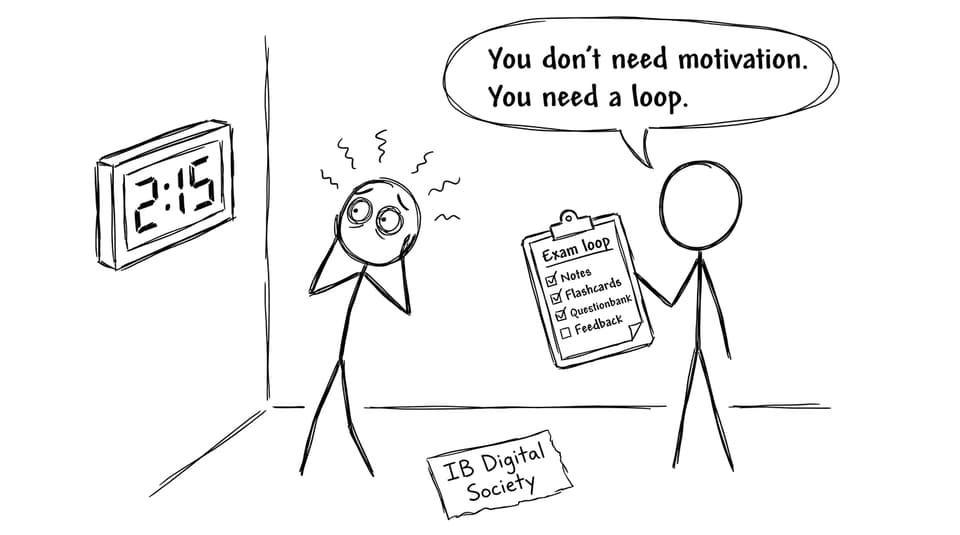
A calm way to handle this is to run a loop:
-
Learn fast with IB Digital Society Revision Notes (SL/HL)
-
Keep definitions and key language fresh with Digital Society Flashcards
-
Convert knowledge into marks with the RevisionDojo Questionbank
-
Get unstuck and improve drafts using Jojo AI study support
If you want an exam-focused mindset reset, IB Digital Society: Ultimate Survival Guide is built around exactly these patterns.
FAQ
Is IB Digital Society HL “better” than SL for university?
Universities generally respect both levels of IB Digital Society, because the subject is relevant and skill-heavy: analysis, evaluation, research, and writing about real systems. HL can signal that you handled extra depth and an additional exam paper, which may help in competitive contexts. But the advantage disappears if HL pulls your overall grades down or drains time from other subjects. A strong SL grade plus strong overall performance usually beats a shaky HL experience. Choose the level that you can perform in consistently, not the one that sounds more impressive in theory. If you’re unsure, talk to a teacher and compare your current workload honestly.
What is the biggest difference between IB Digital Society SL vs HL in exams?
The biggest exam difference in IB Digital Society is that HL students sit an additional external paper and generally face longer exam time in Paper 1. That changes the skill profile: HL needs more stamina, more structured evaluation, and faster decision-making under pressure. Practically, HL students should do more timed writing earlier, not just near the end of the year. SL students can focus more on clarity, concept accuracy, and building a small reliable case study bank. Both levels benefit from practice questions, but HL students typically need more repetition with evaluation and “recommendation” style endings. RevisionDojo’s ecosystem helps because you can move from notes to practice to feedback without losing momentum.
How do I choose between SL and HL in IB Digital Society?
Start with the kind of thinking you enjoy when the topic gets messy. If you like arguing about what should happen next (policy, platform design, governance), HL often fits because interventions are central. If you prefer explaining what a system is doing and why it matters, SL may fit better and still feels rigorous. Next, look at your timetable: HL time is real, and it competes with other HLs, coursework, and your IA workload. Then consider writing confidence: HL asks for sustained, evaluative responses, not just smart points. Finally, test yourself with one timed response and ask for feedback using RevisionDojo’s tools, especially the Questionbank plus grading support, so your decision is based on evidence.
Closing: make the level choice, then build the loop
The truth about IB Digital Society SL vs HL is simple: both levels teach you to see the invisible rules shaping modern life, but HL asks you to evaluate the fixes as well as the harms.
Whichever level you take, the fastest path to exam confidence is a repeatable system: learn with RevisionDojo Study Notes, lock recall with Flashcards, build marks with the Questionbank, and tighten your writing using AI Chat and Grading tools. Add Predicted Papers and Mock Exams when you’re ready for realism, and lean on the Coursework Library and Tutors when you need deeper feedback.
Pick your level, then stop improvising. Build your IB Digital Society loop inside RevisionDojo and let consistency do the heavy lifting.