

If you have ever stared at an Imperial College entry page at 1:13 a.m. and felt your stomach drop, you are not alone. The question is usually simple, almost innocent: does Imperial College like IB better?
What makes it hard is what the question is really asking: am I on the right track, or am I quietly wasting two years? The IB can feel like that sometimes. Beautiful in theory. Heavy in practice. And when you are aiming for a place that lives and breathes science, engineering, medicine, and business, you want reassurance that the effort counts.
Here is the honest answer: Imperial is very comfortable with the IB, and it values what the IB is designed to build. But Imperial does not “like” any qualification in the way students imagine. It likes evidence: evidence you can handle the course, especially at Higher Level.
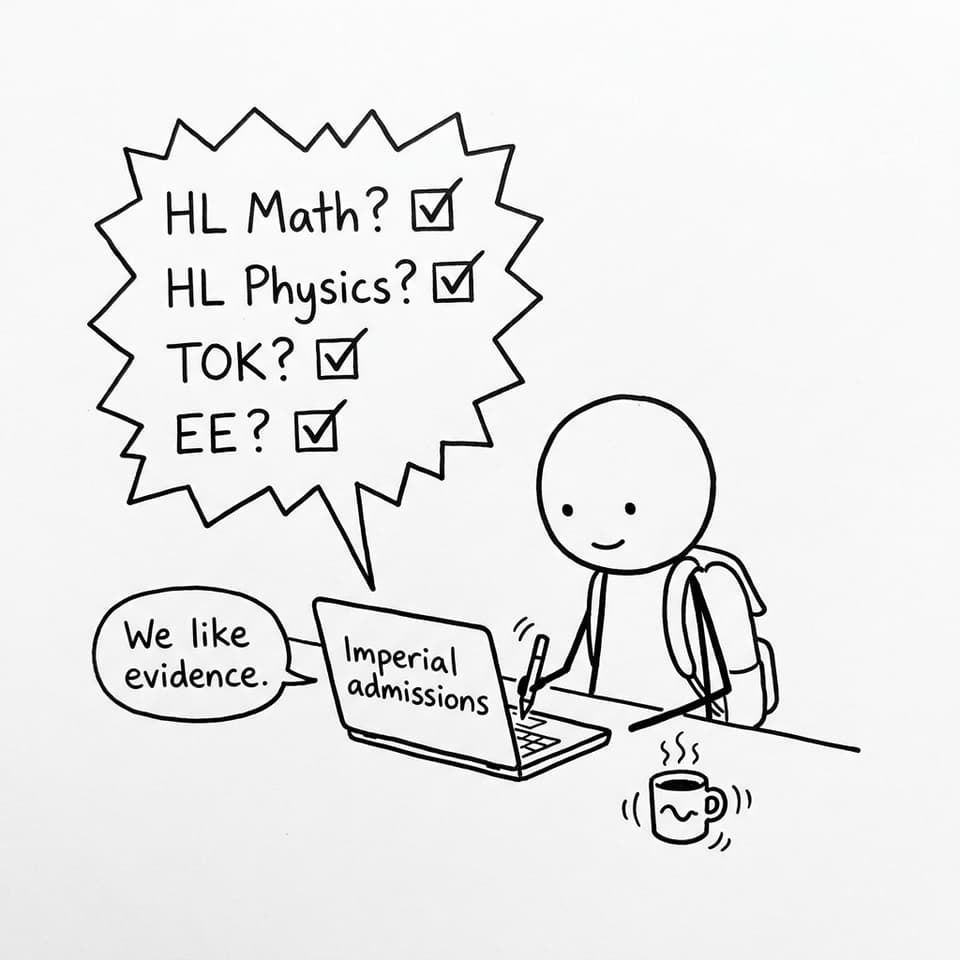
Quick checklist: what Imperial actually looks for in IB applicants
Use this as your fast filter before you spiral:
-
You meet (or exceed) the typical IB total points for your course (often around 38-40+ for competitive options).
-
Your Higher Level IB subjects match the course requirements (often non-negotiable for STEM).
-
Your HL grades show strength where it matters (6s and 7s in relevant HLs).
-
Your application shows you can think independently (this is where IB components like the Extended Essay and TOK can help).
-
You can sustain performance under exam pressure (timed practice matters as much as content).
If you want one place to run that whole loop, start here: RevisionDojo for IB.
So, does Imperial College like IB better?
Imperial likes applicants who are already behaving like the students it wants to teach. That is why the IB often fits well.
The IB signals breadth and rigor at the same time: you are doing languages alongside sciences, math alongside writing, deadlines alongside final exams. Imperial courses are intense and fast. So anything that proves you can manage workload, ambiguity, and steep learning curves is useful.
That said, it is not a guaranteed advantage. If an A-level student has the required subjects and top grades, Imperial will take them seriously too. The “preference” is less about the name of the qualification and more about the way IB performance can demonstrate readiness.
A good mental model is this:
-
Imperial does not reward you for suffering through the IB.
-
Imperial rewards you for showing, through the IB, that you can meet its academic demands.
Why the IB aligns with Imperial’s academic style
Imperial’s courses are built around problem-solving, precision, and learning quickly. The IB trains those habits in a few specific ways.
The IB forces you to build range without losing depth
Imperial STEM degrees can feel narrow on paper, but the thinking required is not. You might solve a Physics problem, justify approximations, interpret data, and communicate conclusions, all in one sitting. The IB gets you used to switching modes.
If you are trying to get faster at switching from “understand” to “apply,” run a simple loop:
-
Read a tight explanation
-
Recall it from memory
-
Apply it in exam-style questions
That is exactly how Study Notes and the Questionbank are designed to work together.
The Extended Essay is a quiet signal of independence
The IB Extended Essay is not just a 4,000-word project. It is proof you can:
-
define a question,
-
select methods,
-
interpret sources or data,
-
and finish something long without constant supervision.
Imperial values that kind of independence because university learning is full of it. Even when you have lectures, you still need to drive your own progress.
TOK trains the habit Imperial tutorials rely on
TOK can be annoying when you want to do “real” work. But the habit it builds is serious: explain why a claim is justified. Imperial assessments often reward structured reasoning, not just correct answers.
This is also why feedback matters so much in IB prep: you are not only learning content, you are learning the shape of high-scoring reasoning. RevisionDojo’s RevisionDojo App workflow for IB exam prep is basically that idea made practical.
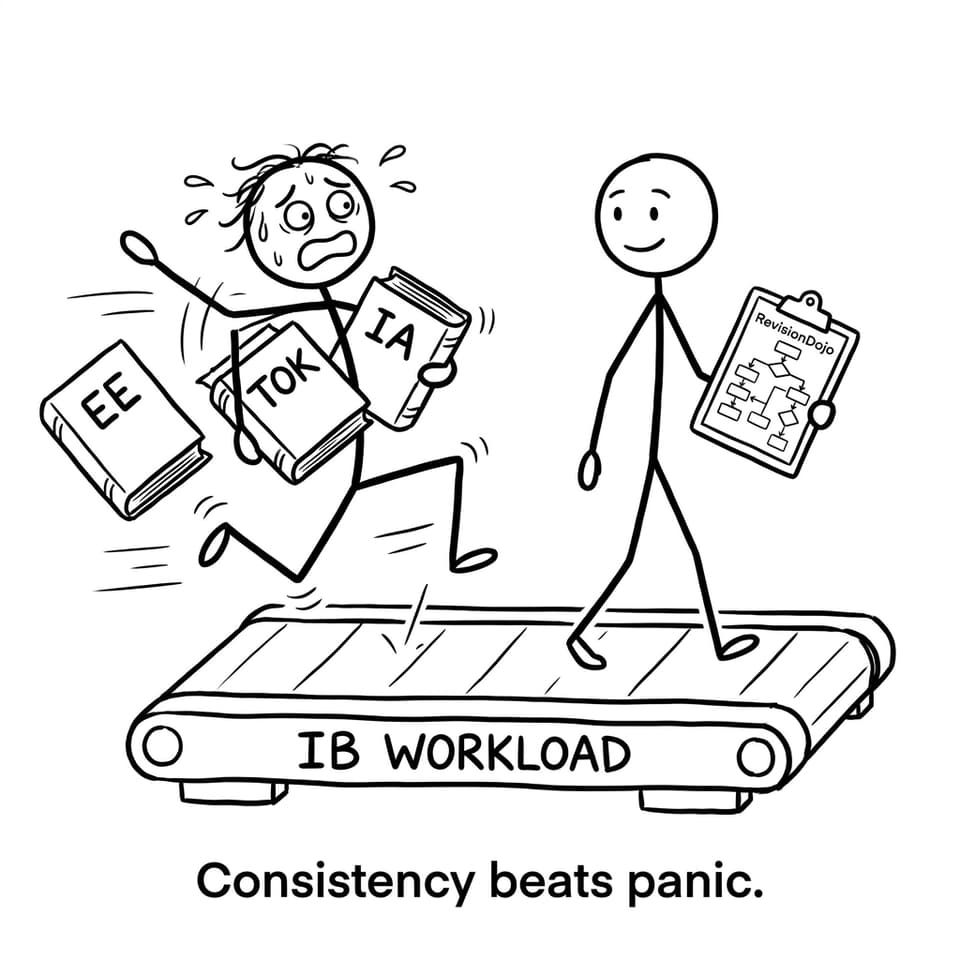
IB predicted grades and typical Imperial expectations
For many students, the stress point is not final exams. It is predicted grades.
Imperial courses are competitive, and many successful applicants sit in the high 30s to low 40s on the IB scale, depending on course.
A useful next step is to stop guessing and start measuring. If you have practice marks, you can estimate how close you are to your target using the IB Grade Calculator.
If your predicted grades are not where you want them, it does not mean you are “not Imperial material.” It usually means your system is not producing evidence fast enough. This is a helpful reset: IB Predicted Grades Don’t Define You (Here’s What Does).
The subject combination problem (and how to think about it)
Imperial is famously specific about prerequisites. Your IB subject choices are not a personality test. They are a proof-of-competence test.
STEM applicants: HL choices often matter more than total points
For engineering, physics, computing, and related degrees, Higher Level Mathematics and relevant sciences are often central. Imperial wants to know you can handle the mathematical language of the degree.
So if you are building an IB plan for Imperial, ask these questions early:
-
Does my course require a specific HL?
-
If not required, what HL best demonstrates readiness?
-
Am I scoring at least a 6-7 trajectory in the subjects that matter most?
Non-STEM routes still benefit from the IB’s rigor
Imperial’s business-related routes and interdisciplinary options still value analytical strength. The IB can help you show that through subjects like Economics and Mathematics, plus strong writing where relevant.
A practical RevisionDojo plan to hit Imperial-level IB grades
Ambitious goals require boring consistency. Not heroic weekends.
Here is a system many IB students can sustain without burning out.
Learn fast (so you stop rereading)
-
Use Digital IB Study Notes to get clean explanations.
-
Turn each section into 3-5 recall prompts.
-
If you get stuck, ask one precise question to AI rather than losing an hour.
Remember daily (so you stop “forgetting by Friday”)
-
Run flashcards for 7-12 minutes daily.
-
Keep the streak small enough that you do it even on bad days.
Apply relentlessly (because Imperial admissions is about proof)
-
Do targeted practice in the Questionbank.
-
Tag weak questions so you retest them within 48 hours.
-
Read the markscheme logic, not just the answer.
For strategy, this is worth bookmarking: IB Question Bank: How to Use It Effectively.
Simulate exam conditions weekly (so timing stops being a surprise)
The fastest way to feel calmer is to make the pressure familiar.
-
Sit one timed block per week.
-
Review for mistake patterns.
-
Then drill those patterns immediately.
If you want full-paper rehearsal, use IB Predicted Papers. If you want more guidance on running realistic sittings, read Online IB Mock Exams: Practice Anywhere, Anytime.
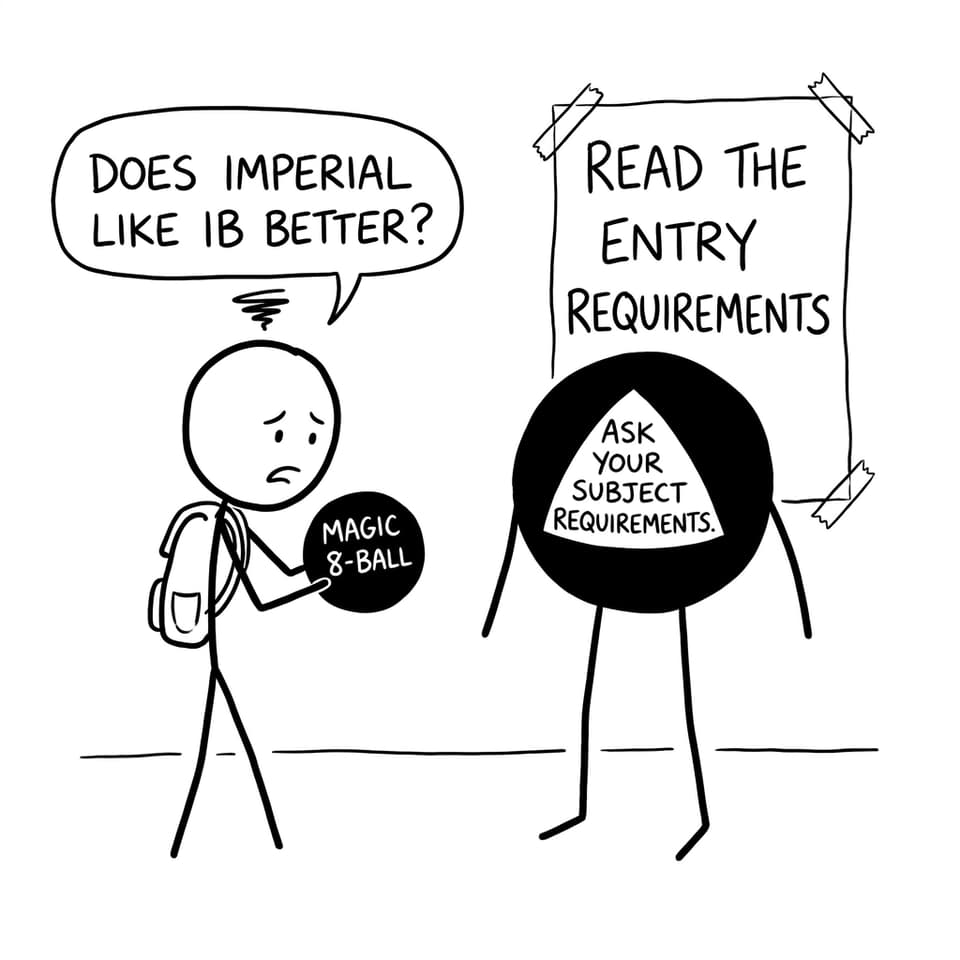
The bottom line: Imperial doesn’t “like IB”: it likes what IB can prove
If you are an IB student aiming for Imperial, the goal is not to win a debate about qualifications. The goal is to build a record of high-level performance that makes Imperial’s decision easy.
That comes down to three things: the right HL subjects, the right grades, and a revision system that turns time into results.
If you want that system in one place, RevisionDojo is built to be the ultimate IB resource: Study Notes when you need clarity, Flashcards when you need memory, Questionbank when you need exam skill, AI Chat when you are stuck, Grading tools when you need rubric-level feedback, plus Predicted Papers, Mock Exams, a Coursework Library, and Tutors when you need a human diagnosis.
Start here, keep it simple, and let the evidence build: RevisionDojo for IB.