




Do I Need to Memorize the Equations for IB Science?
The night before a science exam, most IB students do the same strange ritual: you stare at a page of equations like it’s a foreign language, then try to decide whether you’re supposed to learn them or just recognize them.
That anxiety is rational. Equations feel like the border between “I understand the topic” and “I can actually score marks.” And the question that keeps returning, quietly at first, then loudly at 2 a.m., is: Do I Need to Memorize the Equations for IB Science?
Here’s the calmer truth: you rarely need to memorize everything, but you do need to build the ability to move with equations under time pressure. That means knowing what’s provided, what’s assumed, and what your brain should be able to recall instantly.

Quick checklist: what to memorize vs what to master
Use this as a decision filter before you make yet another “formula list”:
-
Memorize equations you use weekly and can’t afford to hunt for (or that are not provided).
-
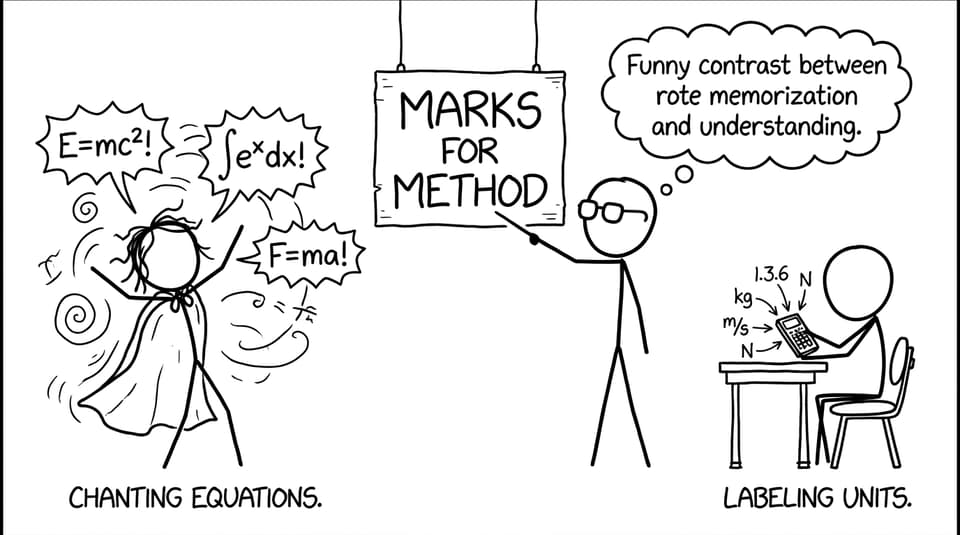
Master the meaning of symbols, units, and rearrangements (this earns method marks).
-
Practice finding equations quickly in permitted reference materials (speed is a skill).
-
Train application with exam-style questions, not just copying formulas.
If you want a structured routine around this, the study loop in How to Study for IB Exams: Step-by-Step Guide pairs well with equation-heavy subjects.
The real skill: not memorization, but retrieval under pressure
Students often treat equations like vocabulary: “If I can recite it, I’m safe.” But IB science questions rarely reward recital. They reward selection, substitution, unit handling, and interpretation.
In other words, even if you’re still asking Do I Need to Memorize the Equations for IB Science?, the deeper question is: Can I retrieve the right relationship quickly and use it accurately?
That’s why high scorers spend less time rewriting equation sheets and more time doing:
-
targeted practice from a Questionbank
-
daily Flashcards for formulas and variable meanings
-
timed sets via Mock Exams and Predicted Papers
-
quick clarification using AI Chat when a symbol or condition is confusing
You can build that system inside RevisionDojo, then check your written steps with its Grading tools when answers require explanations.
Subject-by-subject: do you need to memorize equations?
IB Physics: memorize the core, navigate the booklet fast
Physics is where the question Do I Need to Memorize the Equations for IB Science? feels most urgent because the equations are everywhere.
Yes, many equations are provided in a data booklet, but the best students still memorize a small “core toolkit” because it saves time and reduces mistakes. Think fundamentals you use constantly (for example, relationships that underpin mechanics and energy).
Your edge is speed and confidence with the reference material. RevisionDojo has several guides worth using alongside practice:
-
How to Use the IB Physics Data Booklet Effectively (2026 Exams)
-
IB Physics Equations: What to Memorize and What to Understand
If you want a clean reference you can practice with at home, bookmark the IB Physics Data Booklet - Formula Reference.
IB Chemistry: memorize the relationships you use to reason
Chemistry often gives you the feeling that you “should” memorize everything because every topic has its own symbols and constants. In practice, chemistry rewards understanding relationships: proportionalities, mole logic, energy and temperature links, and gas behavior.
So, Do I Need to Memorize the Equations for IB Science? In Chemistry, you should memorize the few equations that let you start a problem immediately, then practice applying them across many question styles.
The fastest way to make that stick is to turn each formula into:
-
one Flashcard for the equation
-
one Flashcard for what each symbol means
-
one “anchor question” you solve regularly in the Questionbank
That trio trains recall and application together.
IB Biology: fewer equations, but they must be automatic
Biology is not equation-heavy, but the formulas that do appear tend to be high-impact. Many students lose easy marks because they hesitate, misplace symbols, or forget what the variables represent.
If you take Biology, you can usually stop chasing a giant formula sheet. Instead, memorize the key equations you are expected to use and focus harder on processes, definitions, and data interpretation.
This is a perfect use case for spaced repetition. If your memory fades quickly, use the approach in Spaced Repetition for IB: Scientific Study Method.
ESS: memorize the ones that structure your explanations
ESS sits in the middle: some calculations, lots of interpretation. Memorizing a few core relationships helps because they often act like scaffolding for explanations (especially when you need to describe flows, productivity, efficiency, or population change).
More than other subjects, ESS also rewards clear written reasoning. That’s where RevisionDojo’s Study Notes and Coursework Library can keep your language precise, and Tutors can help if your explanations stay vague.
How to memorize equations without wasting your life
If you decide an equation is “worth memorizing,” do it in a way that builds exam performance.
Use the 3-layer method
-
Layer 1 (meaning): What does the equation say in plain language?
-
Layer 2 (units): What units must each variable have so the equation makes sense?
-
Layer 3 (trigger): What kind of question tells you to use it?
Then apply it immediately: do 5-10 topic-specific questions in the Questionbank. If you want a broader routine around that, You're Not Lazy, Your IB Study Method Is Broken explains a system that prioritizes marks over motivation.
Don’t memorize in isolation
Writing formulas repeatedly can feel productive, but it doesn’t train selection under pressure. Instead, treat every memorized equation as a “tool” that must be used in context.
RevisionDojo makes this loop simple:
-
Learn the concept in Study Notes
-
Recall with Flashcards
-
Apply with Questionbank
-
Ask AI Chat about the one confusing step
-
Check your method using Grading tools
Exam technique: how to use equations for maximum marks
When the clock is loud and your brain is fuzzy, use a repeatable sequence:
-
List the givens with units.
-
Choose the relationship (or find it quickly if provided).
-
Rearrange before substituting to reduce algebra mistakes.
-
Substitute with units shown (this protects method marks).
-
Check reasonableness (orders of magnitude, direction, limits).
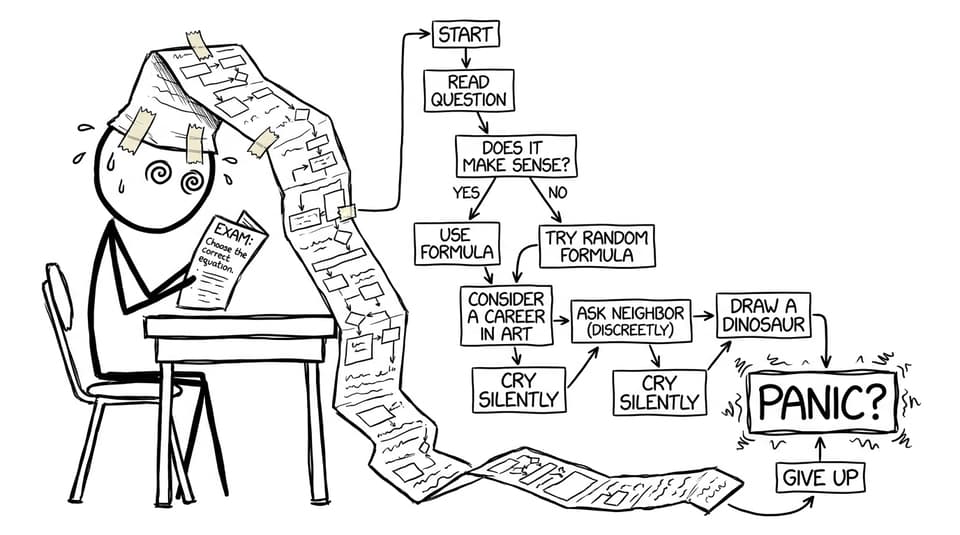
If you freeze mid-question, the reset steps in IB Exam Panic: What to Do If You Don't Understand can save a surprising number of points.
Closing: make equations feel like tools, not threats
So, Do I Need to Memorize the Equations for IB Science? Not all of them. But you do need a system that turns equations into something calmer: familiar tools you can reach for without drama.
If you want that system in one place, RevisionDojo is built for it: Study Notes to learn cleanly, Flashcards to lock recall, a Questionbank to train application, AI Chat to unblock confusion fast, and Mock Exams plus Predicted Papers to make timing normal. Add Grading tools for feedback, a Coursework Library when internal work stacks up, and Tutors when you need a human explanation.
Your goal isn’t to become an equation museum. It’s to walk into the exam able to choose, use, and explain, on purpose.