


Globalization sounds like a neat story: borders soften, ideas travel, money flows, and everyone gets richer.
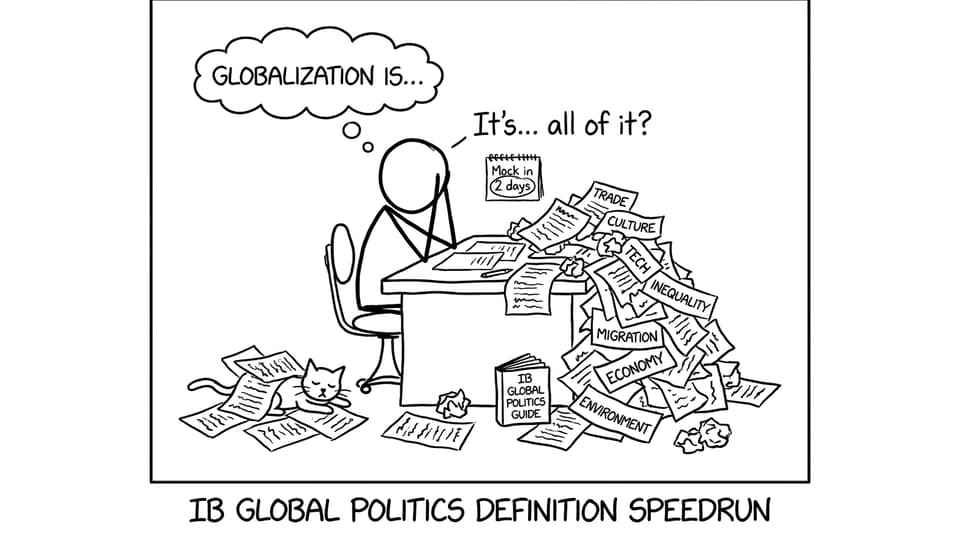
Then you read one more case study and realize the plot twist: the same forces that build a middle class in one place can hollow out jobs in another. That tension is exactly why this topic shows up so often in IB Global Politics. Globalization doesn’t “cause” development in a simple way. It reshapes who has power, who carries risk, and who gets to define what progress even means.
A quick exam checklist for IB Global Politics
Use this mini-checklist to keep your answer balanced and evaluative:
-
Define globalization (economic, cultural, technological interconnectedness)
-
Define development beyond GDP (human development, equality, sustainability)
-
Explain two ways globalization can promote development
-
Explain two ways globalization can hinder development
-
Evaluate conditions: institutions, regulation, bargaining power, and governance
If you need tight definitions for your intro, start with the IB Global Politics Glossary, then deepen your framing using What Is Development in Global Politics? and What Is Interdependence in Global Politics?.
How globalization can support development in IB Global Politics
In IB Global Politics, the “positive” side of globalization is usually about access: access to markets, capital, technology, and knowledge.
Trade and investment can accelerate growth
When countries connect to global markets, they can export goods, attract foreign direct investment, and join global supply chains. In the best cases, that creates jobs, expands tax revenue, and builds infrastructure.
But for exam marks, don’t stop at “more trade = more growth.” Add the political layer: who negotiates the terms, and who captures the value? That’s how you shift from description into analysis.
For more course-aligned detail, revise the Globalization and development and sustainability Notes.
Technology and ideas move faster than borders
Globalization also spreads technology and know-how: communications, transport, medicine, and digital tools. That can lift productivity and widen access to education and information, strengthening human development indicators.
In IB Global Politics, this matters because it shows development is multidimensional. A country might see real improvements in health and education even if income growth is uneven.
How globalization can undermine development in IB Global Politics
The hard truth is that globalization often distributes benefits unevenly. That unevenness is not a side effect. It’s the central debate.
Inequality can widen within and between states
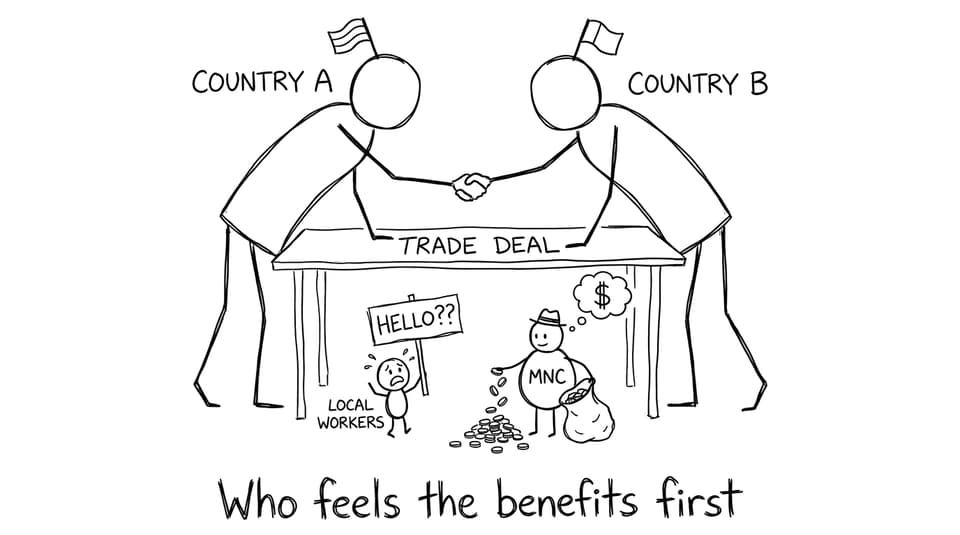
Globalization tends to reward skills, capital, and connectivity. Urban centers with infrastructure and education often gain more than rural regions. Multinational corporations can outcompete local firms. Workers in weaker bargaining positions can face insecurity or exploitation.
Your evaluation move in IB Global Politics is to connect inequality to power: which actors set the rules, and whose voices are missing?
Dependency and vulnerability increase exposure to shocks
If a developing country depends heavily on exporting raw materials or low-value manufacturing, global price changes and financial shocks hit hard. This can trap economies in low value-added roles, limiting policy choice.
To strengthen your argument, link this to sovereignty and interdependence: integration can bring opportunity, but it also reduces control.
Regulation can weaken under competitive pressure
States competing for investment may lower labor protections, environmental rules, or corporate taxes. This “race to the bottom” is a classic IB Global Politics angle because it shows how globalization can constrain democratic accountability.
If you want a focused actor-based lens, pair this with Multinational and transnational companies Notes.
Environmental costs can be exported
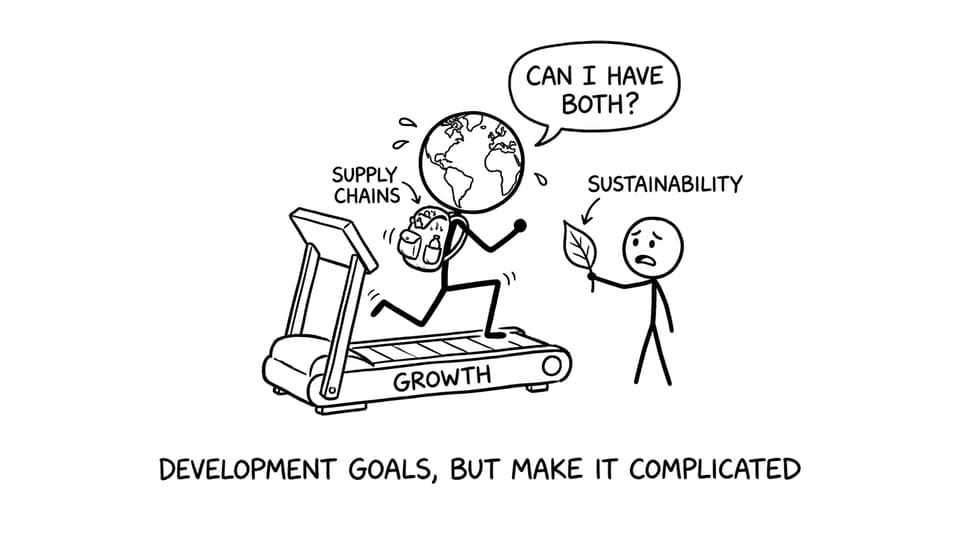
Global production and consumption raise emissions and resource extraction. Even when green technology spreads, the costs often fall disproportionately on less powerful states.
This is where sustainability becomes a development issue, not a separate topic. To back that up, revisit How Is Development Measured in Global Politics?.
How to turn this into top-mark evaluation (fast)
A high-scoring IB Global Politics response treats globalization like a lever, not a guarantee. Try this sentence template:
Globalization can promote development when states have strong institutions and bargaining power, but it can deepen inequality and vulnerability when regulation is weak and benefits concentrate among powerful actors.
Then add one counterclaim and weigh it. For writing structure help, use How To Write A Top-Scoring IB Global Politics Essay.
For practice, RevisionDojo’s Debates on development and sustainability Questionbank plus the wider Questionbank feature lets you train evaluation under time pressure. Add Study Notes, Flashcards, AI Chat, and Grading tools to tighten definitions and fix weak paragraphs quickly. When you’re close to exams, build timed sets with Mock Exams and use Predicted Papers for targeted final-week rehearsal. If coursework is looming, the Coursework Library and Tutors help you move from “I have facts” to “I have an argument.”
Conclusion: Make globalization a question, not an answer
Globalization impacts development by expanding opportunity and spreading innovation, while also amplifying inequality, dependency, and environmental strain. That “both/and” is the heart of IB Global Politics: development is shaped by power, rules, and who gets to manage risk.
If you want to turn this into marks, build one balanced argument, practice it under timed conditions, and refine it with RevisionDojo’s Questionbank, Study Notes, Flashcards, AI Chat, and Grading tools. Globalization is big. Your essay doesn’t have to be. It just has to be precise, evaluative, and unmistakably IB Global Politics.