The peace that looks calm (and still isn’t safe)
A ceasefire is signed. Cameras film handshakes. Headlines use the word peace like it’s a finish line.
But in IB Global Politics, that moment is only one kind of peace. The subject asks you to slow down and look again: Is violence gone, or is it simply waiting? That’s why examiners love the distinction between negative peace and positive peace. It helps you judge whether stability is temporary silence or something sturdier.
If you’re revising IB Global Politics for exams, this concept is a gift: it’s a clean pair of definitions that unlocks deeper evaluation.
Quick checklist (what to include in your answer)
-
Define negative peace: absence of direct violence
-
Define positive peace: presence of justice + reduction of structural violence
-
Explain why negative peace can be fragile
-
Link positive peace to institutions, rights, inclusion, development
-
Evaluate trade-offs (urgent stopping of violence vs long-term transformation)
-
Apply to a real example (briefly) and conclude on sustainability
For topic coverage and practice, start with RevisionDojo’s Peace and Conflict hub and the Peace and Conflict lessons.
Negative peace in IB Global Politics
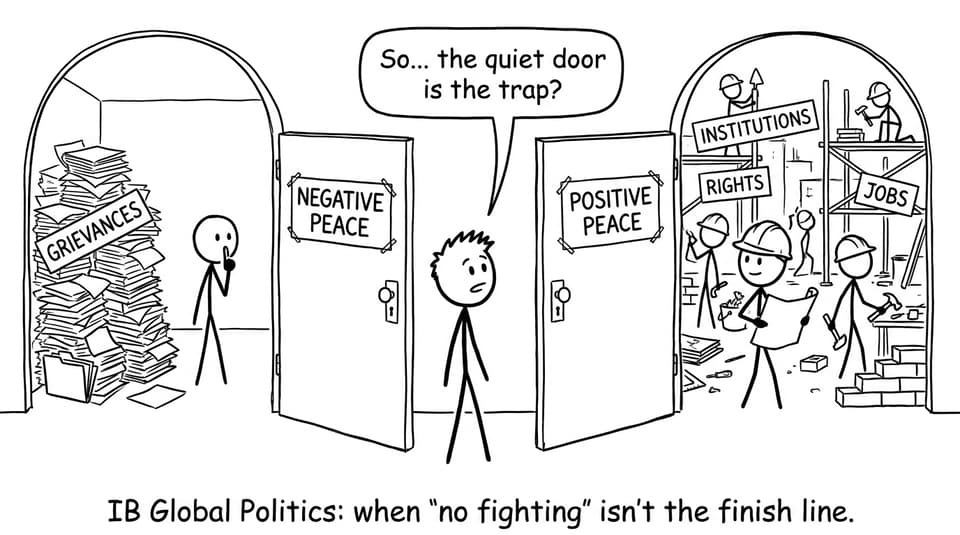
Negative peace sounds positive, which is the trap. In IB Global Politics, negative peace means the absence of direct violence (no shooting, no open fighting, no active war). It’s the kind of peace you can often measure quickly: fewer deaths, fewer attacks, a monitored ceasefire.
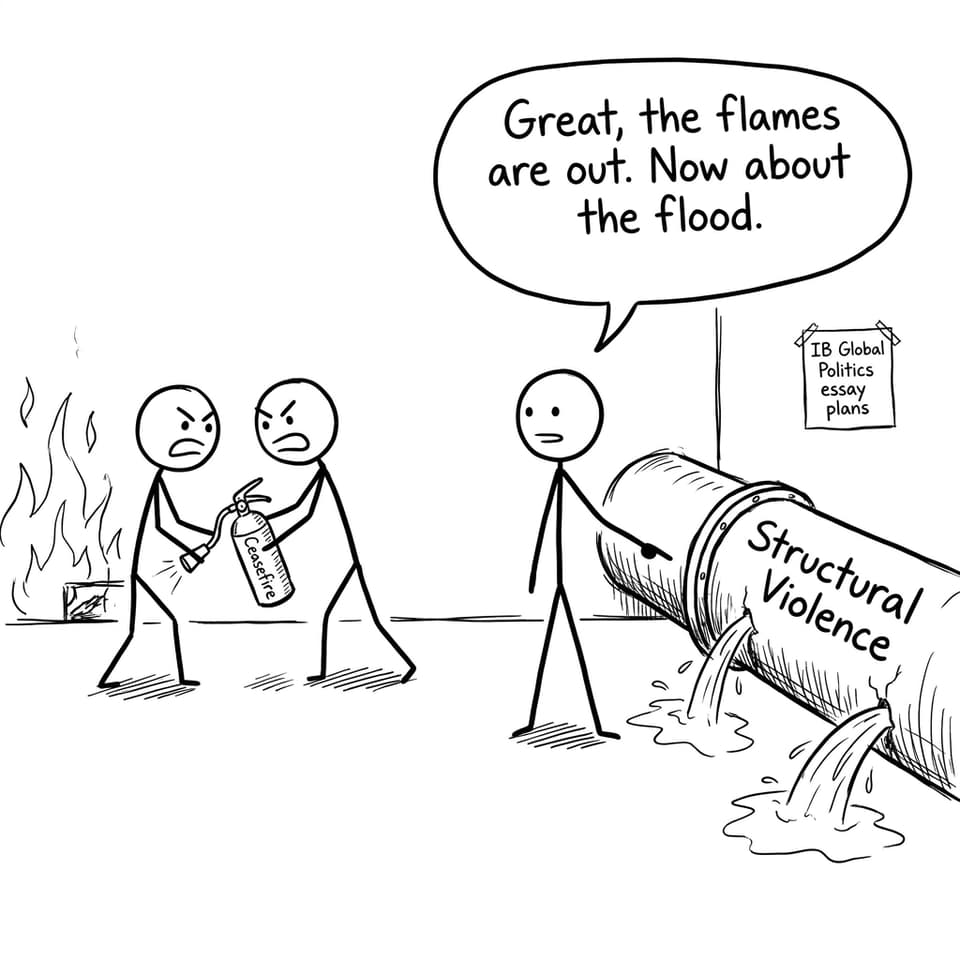
Negative peace matters because it stops immediate harm. Peacekeeping missions and ceasefire monitoring often aim for negative peace first. If you need a syllabus-aligned refresher, RevisionDojo’s Peacekeeping notes connect the idea to how stability is maintained on the ground.
But here’s the exam-level move: negative peace can exist while oppression, exclusion, or fear remains. A state might be “stable” because dissent is punished. In that situation, violence is absent, but the incentives for future conflict may be quietly building.
Positive peace in IB Global Politics
In IB Global Politics, positive peace is the harder, longer project. It’s the presence of conditions that make violence unnecessary: justice, equality, inclusive governance, human rights protections, and economic opportunity.
Positive peace also means reducing structural violence, systems that harm people by blocking basic needs and life chances (think entrenched poverty, discrimination, political exclusion). When those structures remain, a society may look calm while still producing anger, humiliation, and resentment.
If you want tighter language for essays, RevisionDojo’s IB Global Politics glossary is a fast way to keep your definitions crisp under timed conditions.
To deepen your perspective, the Evolution of Peace and Conflict Studies notes show how the field moves from managing violence toward peacebuilding and inclusion.
The real difference: sustainability (and what to evaluate)
The clean comparison is this:
-
Negative peace reduces visible violence now.
-
Positive peace reduces the likelihood of violence later.
In IB Global Politics, top responses go beyond comparing definitions. They evaluate sustainability: negative peace can collapse if grievances stay unresolved; positive peace is more durable but slower and politically difficult.
A strong paragraph often sounds like: “Negative peace may be necessary as an immediate goal, but without movement toward positive peace (institutional reform, representation, and rights protections), conflict drivers remain.”
For exam planning support, RevisionDojo’s Paper 2 guide notes help you build that evaluation into a clear structure.
A simple exam technique for IB Global Politics essays
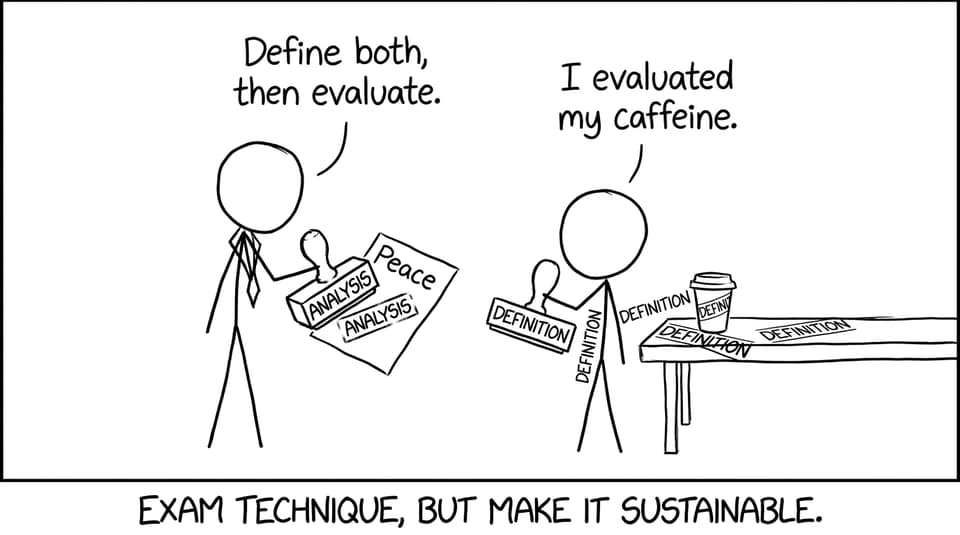
When a question touches peace, conflict resolution, or stability, try this micro-structure:
-
Define negative peace.
-
Define positive peace.
-
Argue why both matter (short-term vs long-term).
-
Add one counterclaim (positive peace may delay urgent violence reduction).
-
Conclude on which is more sustainable and why.
Then practise it under time pressure with RevisionDojo’s Peace and Conflict Questionbank and turn key distinctions into active recall using IB Global Politics revision notes plus Flashcards.
Conclusion: use both concepts, but don’t confuse them
In IB Global Politics, negative peace is the silence after the storm. Positive peace is the work of rebuilding the roof, the rules, and the relationships so the next storm doesn’t turn into disaster.
If you want exam-ready confidence, revise the concept using RevisionDojo’s Study Notes, drill it in the Questionbank, lock definitions with Flashcards, then test yourself with Predicted Papers and Mock Exams. That’s how IB Global Politics stops being a set of terms and becomes an argument you can build under pressure.


