
If you have ever watched a scene twice and noticed it became a different scene, you already understand the quiet challenge of IB Film. The course teaches you to stop treating movies as entertainment and start treating them as evidence. Not in a cold way. More like learning to hear the subtext in a friend’s voice: once you can, you can’t un-hear it.
This IB Film syllabus guide breaks down what you’re expected to study, what you’re expected to make, and how to revise in a way that actually earns marks.
IB Film syllabus at a glance (quick checklist)
Use this checklist to keep your IB Film workload calm and organized:
-
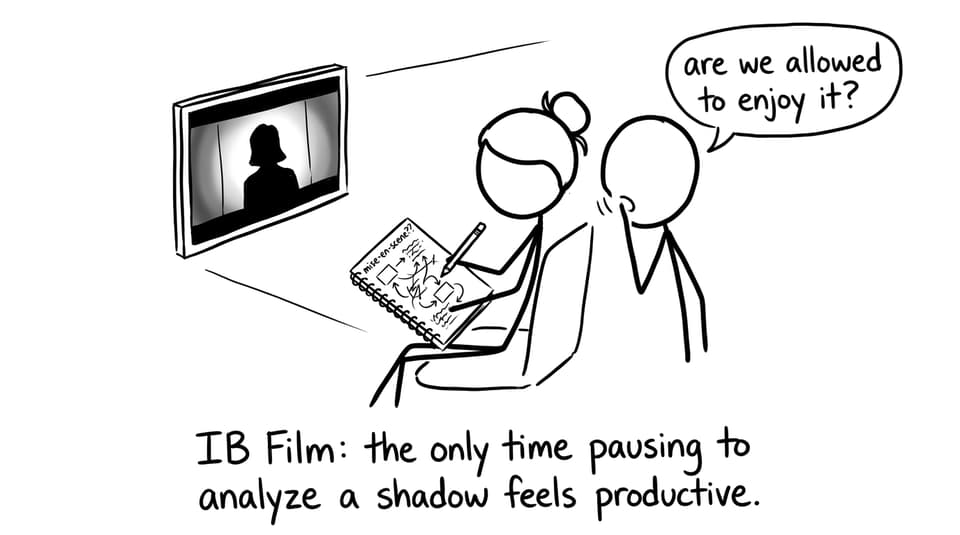
Learn core film language (mise-en-scène, cinematography, sound, editing)
-
Build confident textual analysis habits (technique -> effect -> meaning)
-
Study key movements, contexts, and film theory
-
Prepare a strong comparative study across different cultures/contexts
-
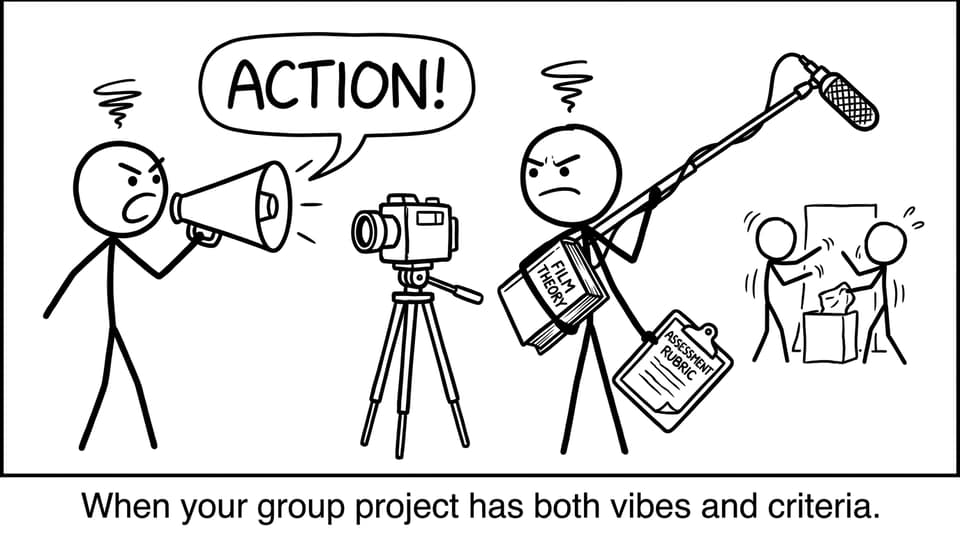
Produce practical work with clear intentions and reflections
-
Practice your oral skills and planning routines early
For deeper component-by-component help, browse the IB Film collection.
The four core components of IB Film
The best way to think about IB Film is as two parallel tracks: analysis and making. The syllabus expects you to do both, and to let each side improve the other.
Textual analysis (film language)
Textual analysis in IB Film is where you learn to “read” cinema with precision. You are not listing techniques. You are showing how techniques construct meaning.
A reliable paragraph pattern:
-
Identify a choice (e.g., low-key lighting, handheld movement, a jump cut)
-
Describe what it does to the viewer (tension, intimacy, disorientation)
-
Link it to theme or purpose (power, identity, conflict, irony)
If you’re preparing an oral-style analysis, this guide helps: How to Prepare for the IB Film Internal Assessment.
Film theory and film history (context that earns marks)
In IB Film, context is not trivia. It’s an explanation engine. When you understand where a technique comes from, you can explain why it matters.
Common theory and history angles students use effectively:
-
Formalism vs realism (stylization vs authenticity)
-
Montage and editing rhythm (meaning built through cuts)
-
Genre expectations and subversions
-
Social and political context shaping film style
To strengthen global awareness, use: How to Analyze World Cinema in IB Film Coursework.
Creative process (production + reflection)
The practical side of IB Film asks you to plan, shoot, and edit purposeful film work. What separates “good” from “high scoring” is not your camera; it’s your intention.
Two habits that lift marks:
-
Pre-production decisions you can justify (shot lists, storyboards, sound plans)
-
Reflection that explains learning (not just what you did)
If your portfolio feels fragmented, this is the fix: How to Connect Theory and Practice in IB Film.
Comparative study (your chance to show maturity)
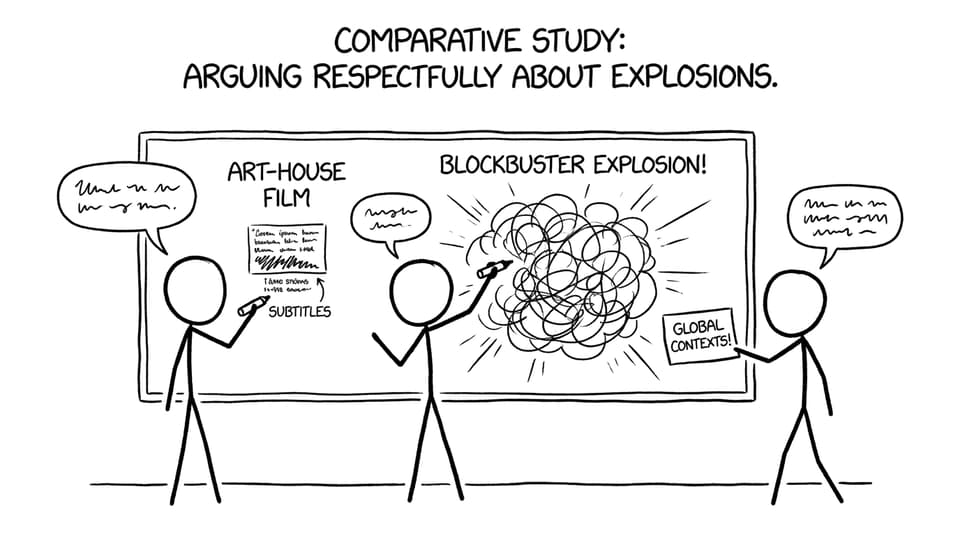
The comparative study in IB Film rewards students who can balance similarity and difference without forcing it. Choose films that create genuine contrast: culture, era, industry, audience, ideology, style.
A practical structure:
-
Shared theme/question (one clear line)
-
Two technique-focused comparisons (framing, editing, sound, performance)
-
Context and purpose (why each film uses style differently)
For examples and a breakdown of what goes in each component, use: Unveiling IB Film Coursework: Examples and Insights.
Assessment structure (what gets graded)
Your IB Film grade is built from both external and internal assessment. You’ll typically be assessed on:
-
Textual analysis (precise film language and meaning-making)
-
Comparative study (clear comparisons plus cultural/context awareness)
-
Film portfolio work (technical and creative choices plus reflection)
-
Collaborative project skills (planning, execution, communication, evaluation)
To understand what top performance looks like, it helps to see boundaries and expectations: IB Film HL Grade Boundaries 2025: Complete Breakdown.
How to revise IB Film efficiently (RevisionDojo workflow)
Most students revise IB Film like an English subject: reread notes, rewatch scenes, hope insight appears. A better way is to build a loop.
On RevisionDojo, that loop looks like:
-
Study Notes to rebuild clarity fast
-
Flashcards to keep film language sharp (terms, effects, mini-examples)
-
Questionbank practice to turn knowledge into marks: Questionbank
-
AI Chat to stress-test interpretations and fix misconceptions
-
Mock Exams and Predicted Papers to practice under time pressure
-
Grading tools to improve commentary, reflections, and written work
-
Coursework Library to learn from strong samples: IB Film Exemplars
-
Tutors when you need a human eye on structure and strategy
If you want a full study system beyond IB Film, this is a strong blueprint: RevisionDojo App: The Smarter Way to Prep for IB Exams.
Final thoughts: make IB Film feel like a system
The secret to IB Film is that it rewards students who treat cinema like a language they can practice daily. Not a mystical talent. Not a mood. A system.
If you want that system in one place, RevisionDojo gives you the tools to study smarter: Questionbank, Study Notes, Flashcards, AI Chat, Grading tools, Predicted Papers, Mock Exams, Coursework Library, and Tutors. Build your loop, keep it small, repeat it often, and let IB Film become one of the most satisfying courses you take.