


In the MYP, the biggest communication mistake isn’t saying the wrong thing.
It’s waiting until you’re already drowning.
Most students don’t avoid teachers because they’re lazy. They avoid teachers because asking for help feels like admitting you’re behind. But in the MYP years, the students who improve fastest aren’t the ones who never struggle. They’re the ones who learn to communicate early, clearly, and with just enough structure that a teacher can actually help.
This matters even more when you’re preparing for exams. A single good message can save you hours of confused revision, and a single awkward message can make you avoid asking again for a month.
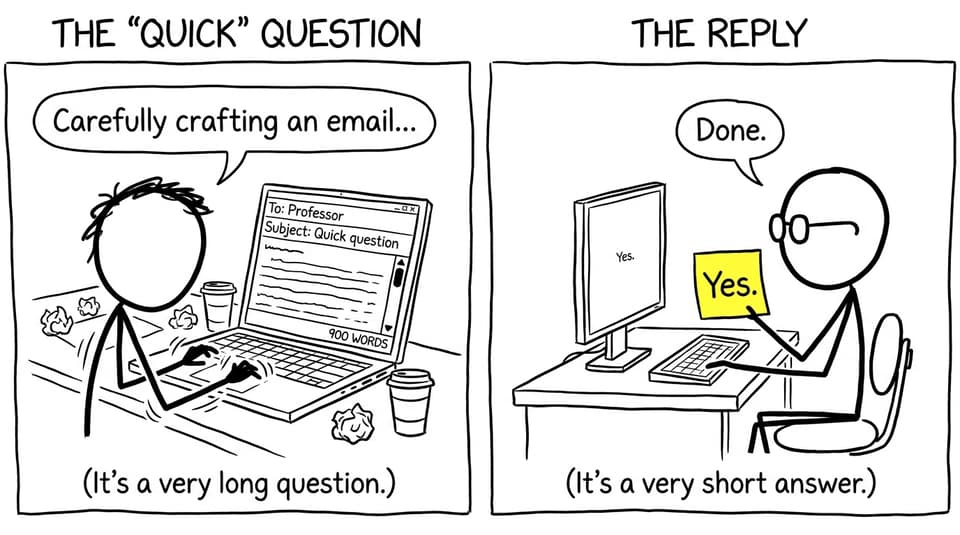
Quick checklist for MYP communication that works
Use this when you’re about to email, message, or speak to a teacher in the MYP:
-
Start with the goal: clarification, feedback, extension, or support
-
Reference the task name, criterion, or success criteria (not just “my grade”)
-
Ask one focused question per message
-
Suggest a next step (“Could I redo one paragraph?” “Could you confirm my plan?”)
-
Decide the channel: in person for complex issues, email for clear records
If you want a revision system that makes those next steps easy, keep your tools in one place via the RevisionDojo MYP hub.
Why communicating well in the MYP boosts exam performance
In the MYP, teachers are constantly assessing skill growth: how you explain, analyze, apply, and reflect. Communication is part of that ecosystem. When you ask a strong question, you’re practicing the same thinking you’ll need under exam pressure.
A teacher can’t “fix” vague anxiety. But they can fix a specific gap.
For example, if you say, “I don’t get science,” you’ll likely receive general advice. If you say, “In Criterion B, my conclusion doesn’t match my processed data, can you point to one place where my reasoning breaks?” you’ll get feedback you can act on today.
Then you can reinforce it immediately with targeted practice in RevisionDojo’s Questionbank and quick refreshers from Study Notes.
When to reach out to teachers in the MYP (timing beats intensity)
Most MYP communication works best on a rhythm. Not daily. Not only when something explodes.
Start of a unit
Ask what “good” looks like before you begin.
A simple question: “Which criterion is most important for this task, and what’s the most common mistake?” Teachers usually answer this quickly because it’s proactive and practical.
Midway through a task
This is the sweet spot in the MYP. Your teacher can still redirect you.
Bring a plan, not a pile of paragraphs. Try: “Here’s my outline and the evidence I’m using. Is my approach aligned with the statement of inquiry?” If you need help understanding what a statement of inquiry is really doing, read Creating Meaningful Statements of Inquiry in the MYP.
After feedback (within 48 hours)
Don’t just read feedback; translate it.
Ask: “If I change only one thing next time, what should it be?” That question turns comments into a habit.
How to write MYP messages teachers actually want to answer
Teachers are busy, but clarity is kindness. In the MYP, the best messages are short and anchored in the criteria.
Use this 5-sentence template
-
Greeting + context: class, unit, task
-
Your attempt: what you have already done
-
The specific obstacle: where you’re stuck
-
The question: one clear request
-
The next step: propose a quick solution
Example:
Hi Ms. Lee, I’m working on the Individuals and Societies investigation. I drafted my introduction and selected two sources. I’m struggling to evaluate origin and purpose without summarizing. Could you tell me whether my evaluation paragraph is too descriptive, and what one improvement would raise it? I can revise and resubmit that section by Friday.
This is very MYP-aligned because it shows agency, reflection, and a realistic action.
Digital platforms: useful signals, not your whole strategy
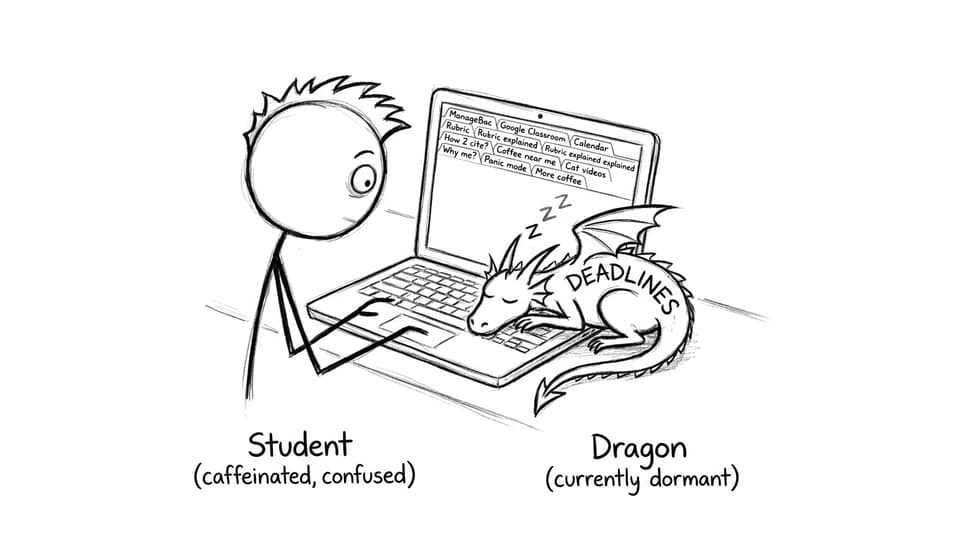
Your school might use ManageBac, Google Classroom, or another portal. Treat these tools like a dashboard: they show deadlines and feedback, but they don’t replace real communication.
If you notice a dip in performance, don’t spiral. Get specific.
Then use RevisionDojo to close the loop: practice the exact skill you discussed with your teacher. For example, if your teacher says you’re missing command terms, build a short drill session using the guidance in Sample MYP Assessment Tasks for Every Subject Group and a structured routine like MYP eAssessments: 30-Day Study Plan That Works.
Staying collaborative (even when you disagree)
Sometimes you’ll feel a grade doesn’t match your effort. That’s real. But in the MYP, effort is not the same as evidence.
If you challenge something, keep it anchored to learning:
-
Ask for an example of a higher-level response
-
Ask what the descriptor means in your work
-
Ask what to practice this week to improve next time
You can also strengthen your independent learning using inquiry habits described in Inquiry-Based Learning in the MYP: A Teacher's Guide. When you approach a teacher with inquiry, not accusation, you protect the relationship and get better guidance.
Conclusion: MYP communication is a study skill
In the MYP, communicating with teachers isn’t a “soft skill.” It’s a lever.
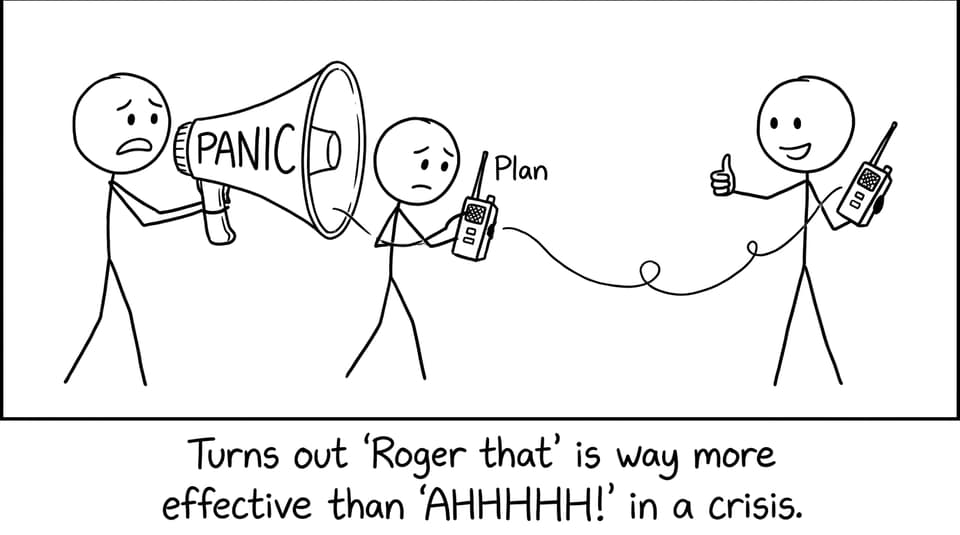
When you ask earlier, your revision gets calmer. When you ask clearly, your practice becomes targeted. And when you ask with a plan, teachers can meet you halfway.
If you want that communication to translate into exam results, close the loop with RevisionDojo: start at the MYP hub, practice in the Questionbank, rebuild fast with Study Notes, and use tools like Flashcards, AI Chat, Grading tools, Mock Exams, Predicted Papers, Coursework Library, and Tutors to keep improving, one clear question at a time.


