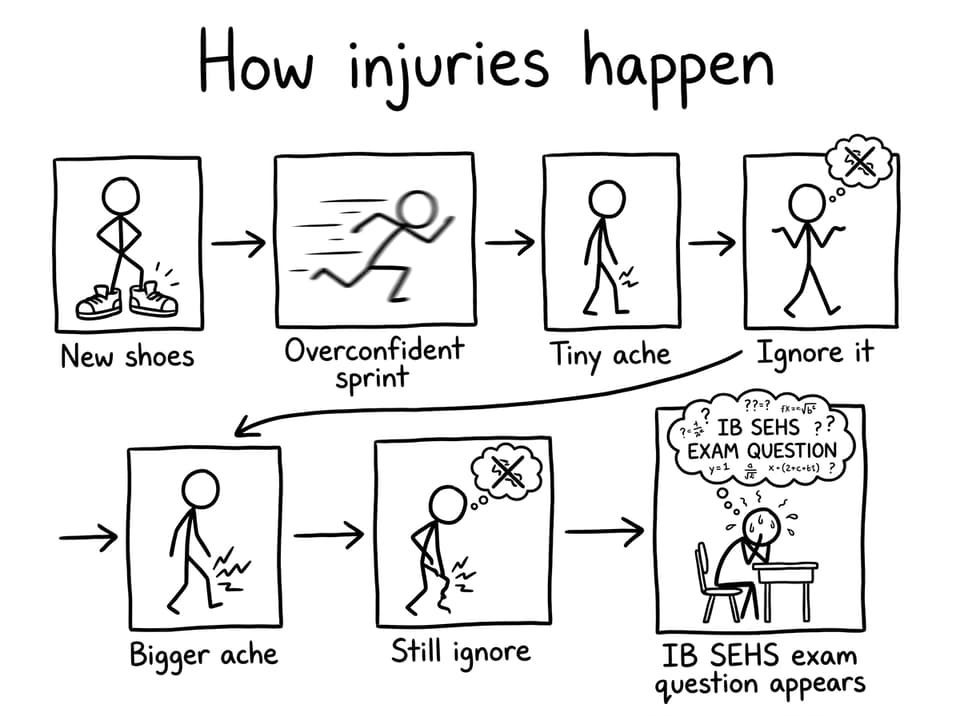
A funny thing about sports injuries is how predictable they feel afterward. The ankle roll that “came out of nowhere” usually had a quiet prequel: rushed warm-up, sloppy landing, tired legs, or shoes that looked good but behaved badly. In IB SEHS, that’s the whole point: injuries rarely happen by chance. They happen when risk factors stack up, and the body runs out of options.
If you can explain that stack clearly, you don’t just sound like an athlete telling a story. You sound like an IB student writing a high-mark answer.
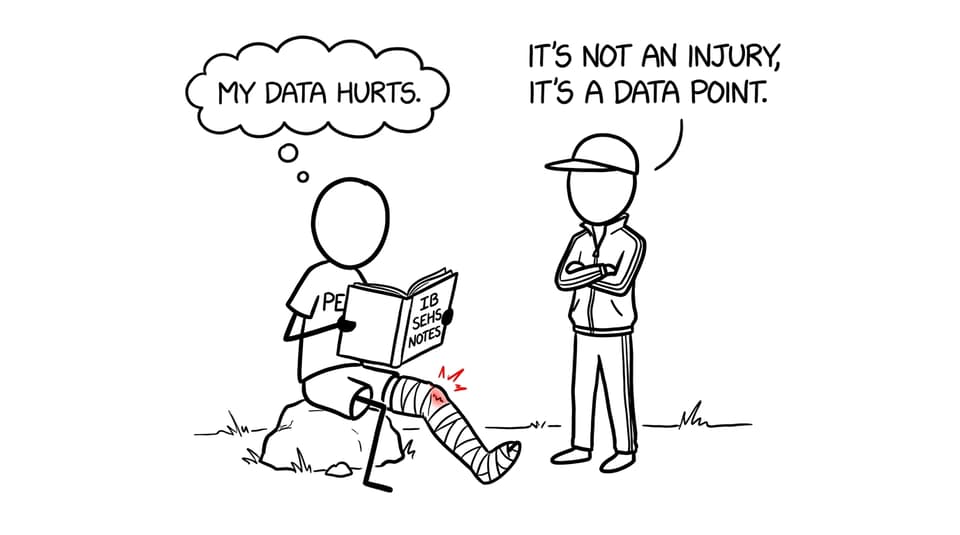
IB student injury as data point
Quick checklist: what examiners want in IB SEHS
When a question asks about causes of injury, IB SEHS rewards answers that:
Name multiple interacting factors (not a single reason)
Explain the mechanism (how the factor increases tissue stress)
Apply to a specific movement or sport (landing, cutting, sprinting, contact)
Link to prevention (technique, load management, recovery, equipment)
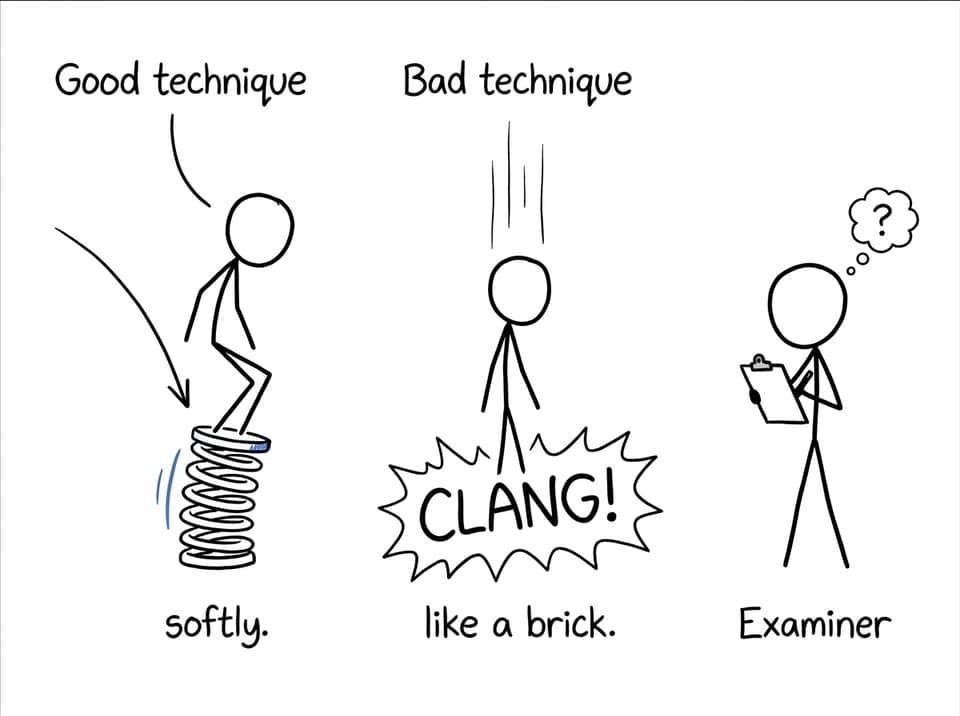
Biomechanics: where force goes when technique breaks
In IB SEHS, biomechanics is the cleanest way to explain why an injury risk rises. Poor technique often changes joint angles and loading rates, concentrating force into tissues that aren’t prepared to absorb it.
Training errors: the fastest route to overuse injuries
Most students can list “too much training.” Strong IB SEHS answers explain the adaptation problem: tissues need time to remodel, and rapid spikes in load outpace recovery.
Typical training errors:
Sudden jump in volume or intensity
Too little rest between high-load sessions
Repetitive work without variation (same movement pattern daily)
This is where chronic and cumulative trauma injuries show up (for example, tendinopathy or stress-related bone injury). If you want a clear comparison for exam writing, review Acute vs Chronic Sports Injuries.
Injury flowchart joke
Muscle imbalances: stability problems disguised as strength
Muscle imbalance doesn’t just mean “one side is stronger.” In IB SEHS, the key is how imbalance changes movement control and joint stability. If an agonist dominates or an antagonist can’t decelerate effectively, joints can become less stable during high-speed actions.
Common consequences:
Reduced joint stability and control
Altered force absorption in landing and direction change
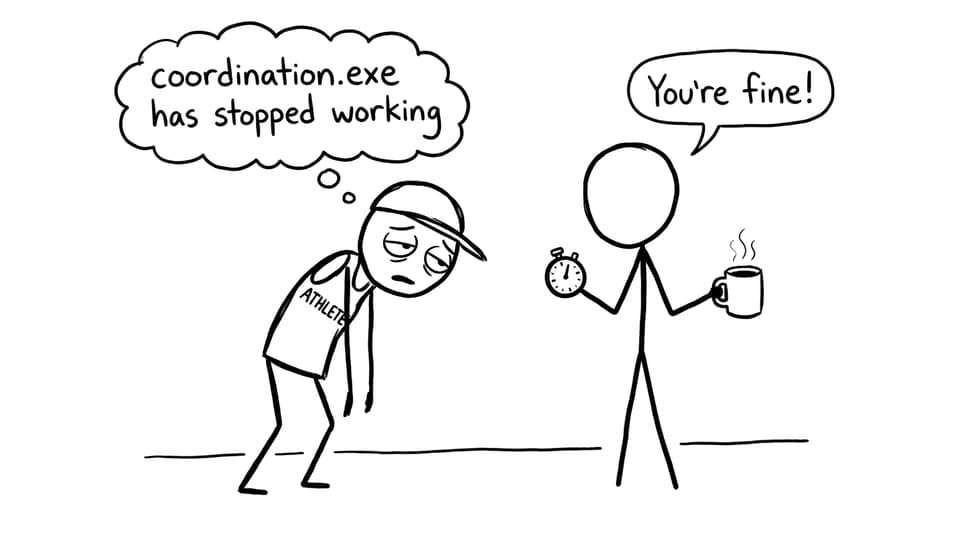
Fatigue is a classic IB SEHS explanation because it connects physiology to performance errors. As fatigue increases, coordination and reaction time drop, technique deteriorates, and decision-making slows. That combination raises the chance of both acute mistakes and cumulative overload.
Practical exam phrasing: fatigue increases injury risk by reducing neuromuscular control, leading to poorer movement quality and higher tissue loading.
coordination.exe stopped working joke
Environment and equipment: extrinsic factors that matter
Even perfect training can be undermined by external factors. In IB SEHS, these are often labeled extrinsic risk factors.
Key examples:
Surface conditions (too slippery or too high friction)
Footwear that reduces stability or grip
Weather and temperature affecting traction and muscle function
Final takeaway: learn the pattern, not just the list
Sports injuries feel random when you’re living them. In IB SEHS, they become a pattern you can explain: force + fatigue + flawed preparation + environment. If you can write that pattern clearly, you’ll pick up marks quickly because your answer sounds like sport science, not a guess.
When you’re ready to turn understanding into exam performance, RevisionDojo is built for the full workflow: Questionbank, Study Notes, Flashcards, AI Chat, Grading tools, Predicted Papers, Mock Exams, Coursework Library, and Tutors. Start with B.3.1, practice the explanations, and make IB SEHS injury questions feel predictable -- in the best way.
IB SEHS goal setting in sport made simple: goal types, SMART targets, common mistakes, and exam-ready tips using RevisionDojo practice tools.