


Your best MYP moments rarely happen inside one subject.
They happen when a Science lesson suddenly explains the graph you feared in Mathematics. When a persuasive speech in Language and Literature sounds like the debate you are building in Individuals and Societies. When Design turns an abstract idea into something you can test, improve, and defend.
That is the quiet promise of the MYP: school is not eight separate lanes. It is one road with different viewpoints. And when your teachers collaborate across subject groups, your revision gets clearer, your criteria feel less mysterious, and exam prep stops being a pile of disconnected notes.
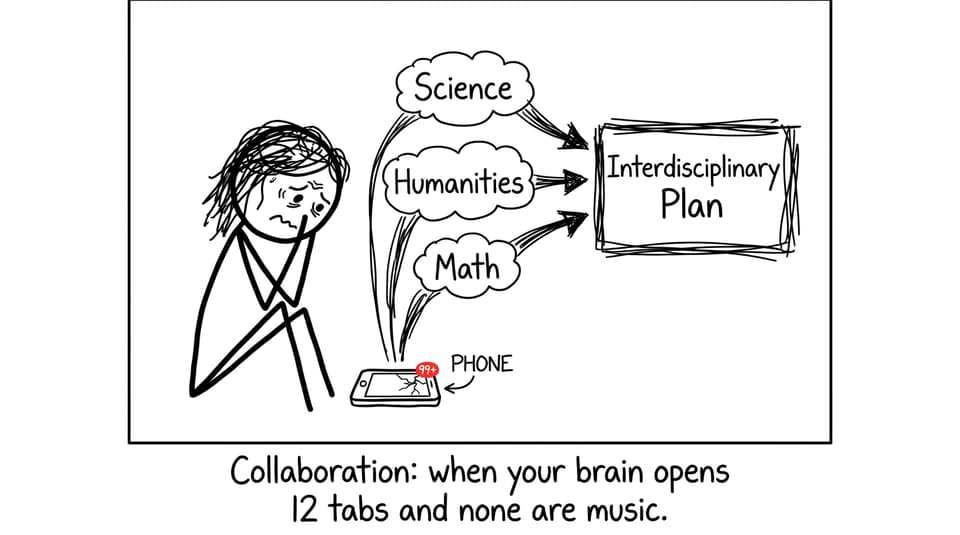
Quick checklist: what great MYP collaboration looks like (for students)
If you want to spot (and benefit from) strong MYP collaboration, look for these signals:
-
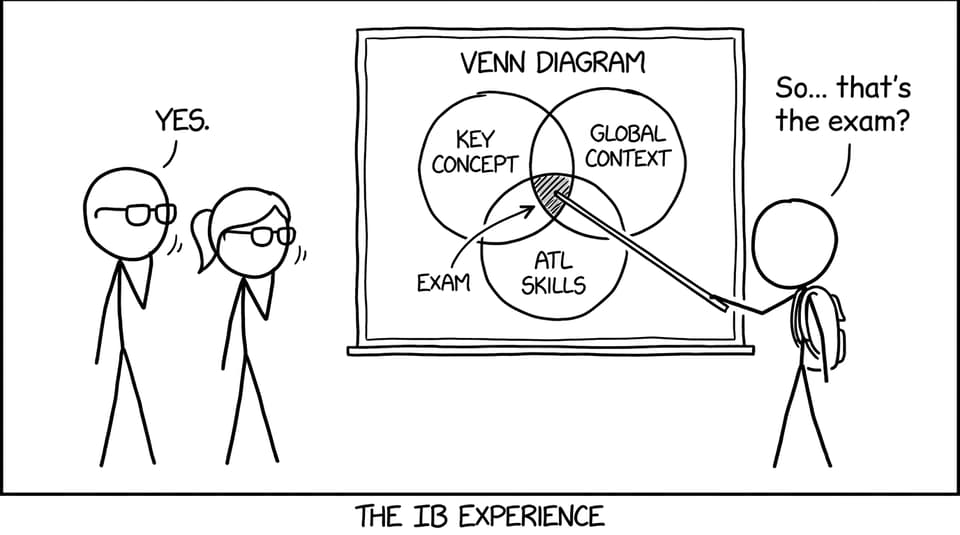
Two or more subjects share a key concept and keep returning to it in different ways
-
Multiple classes reference the same global context within a similar time window
-
Teachers use similar criteria language and expectations for quality
-
You are asked to transfer the same ATL skills (research, thinking, communication, self-management) across tasks
-
Reflection happens after the unit, not just “finish and forget”
When you see those patterns, your MYP workload becomes more coherent. Your studying becomes more strategic.
Why collaboration across subject groups matters in the MYP
The MYP is built to fight a common student problem: learning things that never meet.
In real life, problems do not arrive labeled “Science” or “Arts.” They arrive messy. Collaboration across subject groups makes classroom learning match that messiness in a productive way. For students preparing for exams and eAssessments, that matters because:
-
You build transfer, the ability to use what you know in a new context (the core of MYP performance).
-
You see how command terms show up across subjects, so “analyze” stops meaning “write more” and starts meaning “break it down with evidence.”
-
You get more consistent feedback, because teachers calibrate expectations together.
If you want a practical revision framework that matches this MYP philosophy, start with the MYP Revision Guide: Study Tips for Success and keep it open while you plan.
Best practices that make MYP collaboration actually work
Start with shared MYP concepts (not shared worksheets)
The strongest MYP collaboration does not begin with “let’s do a project together.” It begins with a concept that can carry meaning in multiple subjects.
Think of concepts like systems, change, or relationships. A teacher team can agree: “We will all teach through the lens of systems this month.” Then:
-
Science explores ecosystems and feedback loops.
-
Individuals and Societies studies economic systems or governance.
-
Mathematics models systems with functions and statistics.
Suddenly, revision is not eight piles. It is one map.
Align global contexts to create one storyline
Global contexts give MYP learning direction. When subject groups share a global context (for example, Globalization and sustainability), your tasks stop feeling random.
A simple student win: you can reuse mental frameworks. The same case study, issue, or dataset can appear in different forms across subjects, which makes studying faster and deeper.
If you are unsure how this is assessed, read How Interdisciplinary Learning Is Assessed in MYP. It clarifies what “making connections” really means when marks are on the line.
Build interdisciplinary units that train exam skills
Every MYP school is expected to run interdisciplinary learning experiences, but quality varies. The best ones feel like exam training in disguise: you must select evidence, justify decisions, and communicate clearly.
Examples that tend to work well:
-
Science + Design: prototype a sustainability solution, then evaluate trade-offs.
-
Language and Literature + Individuals and Societies: analyze media, bias, and power.
-
Arts + Mathematics: use geometry and proportion to defend artistic choices.
For students, the trick is to keep an “evidence backpack”: quotes, data points, diagrams, and definitions you can move between subjects.
Share criteria language so feedback becomes reusable
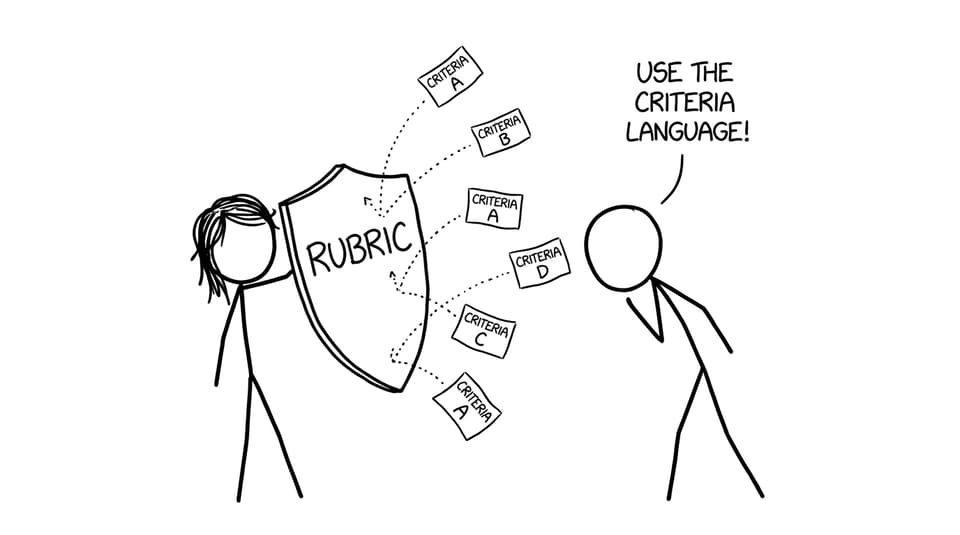
In the MYP, criteria can feel like different dialects. Collaboration helps teachers keep expectations consistent, and it helps you write with more precision.
A high-return habit for revision: translate feedback into criteria language. Instead of “I need to write more,” aim for “I need clearer justification, more relevant evidence, and a stronger conclusion linked to the statement of inquiry.”
When you want fast practice with feedback loops, RevisionDojo’s Questionbank is built for repetition and correction. Pair it with the Study Notes feature so you can rebuild understanding quickly, then apply it immediately.
Reflect together, because the next unit starts today
The MYP rewards students who can adjust. Teachers do the same.
When subject groups reflect together, they catch what you felt but could not name: confusing task instructions, mismatched deadlines, or criteria that were taught differently across classes. Over time, collaboration makes the programme calmer.
If you are curious how the programme has evolved and why collaboration has become even more central, see IB MYP Next Chapter: Updates Since 2014.
Common collaboration problems (and how students can still win)
“We do not have time”
Time is real. So is overload. But the MYP solution is not more meetings; it is clearer priorities.
Student move: ask teachers what the shared concept is for the unit and write it at the top of your notes. That single line helps your brain organize everything.
“The project is chaotic”
Interdisciplinary work can become a group-work storm.
Student move: anchor the chaos with routines. Use RevisionDojo Flashcards for definitions and command terms, then use AI Chat to test misconceptions, then do targeted question practice to apply. You are building stability inside a messy task.
To get oriented, the MYP hub is a clean starting point.
“Different teachers want different things”
This is exactly why collaboration matters, but until it improves, you can protect your marks.
Student move: keep a one-page “criteria translation sheet” for each subject, then look for overlaps in expectations (clarity of communication, evidence, justification, reflection). In the MYP, those overlaps are where your marks grow.
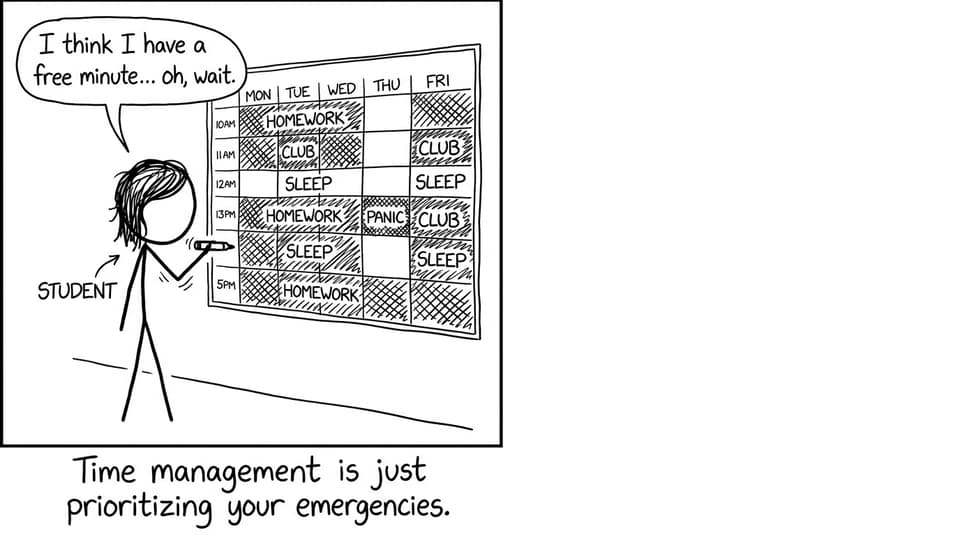
How to turn MYP collaboration into smarter exam revision
Here is a simple workflow that matches how MYP collaboration is meant to feel:
-
Collect: after each interdisciplinary task, list the key concept, global context, and 3 transferable skills.
-
Compress: turn that into 10 flashcards and one short summary.
-
Apply: practice questions that force you to explain, analyze, and justify.
-
Correct: use criteria language to rewrite one response, not ten.
On RevisionDojo, that loop becomes easier because everything is in one place: Questionbank for practice, Study Notes for clarity, Flashcards for recall, AI Chat for instant explanations, Grading tools for criteria-aware feedback, Predicted Papers and Mock Exams for exam realism, plus the Coursework Library and Tutors when you want deeper support.
Conclusion: make MYP collaboration your advantage
The MYP is not asking you to be good at eight separate things. It is asking you to become the kind of learner who can carry ideas across rooms.
When collaboration across subject groups is done well, you feel it as calm: clearer concepts, aligned expectations, and tasks that connect. When it is done poorly, you can still win by building your own connections and revising with transfer in mind.
If you want a single place to turn MYP collaboration into results, start at the RevisionDojo homepage or jump into the MYP hub. Use Study Notes to understand, Questionbank to apply, Flashcards to retain, AI Chat to unblock confusion, and Mock Exams and Predicted Papers to make exam day feel familiar. In the MYP, the goal is not just to learn more; it is to connect better.


