Can you retake IB exams? (Yes. But do it on purpose.)
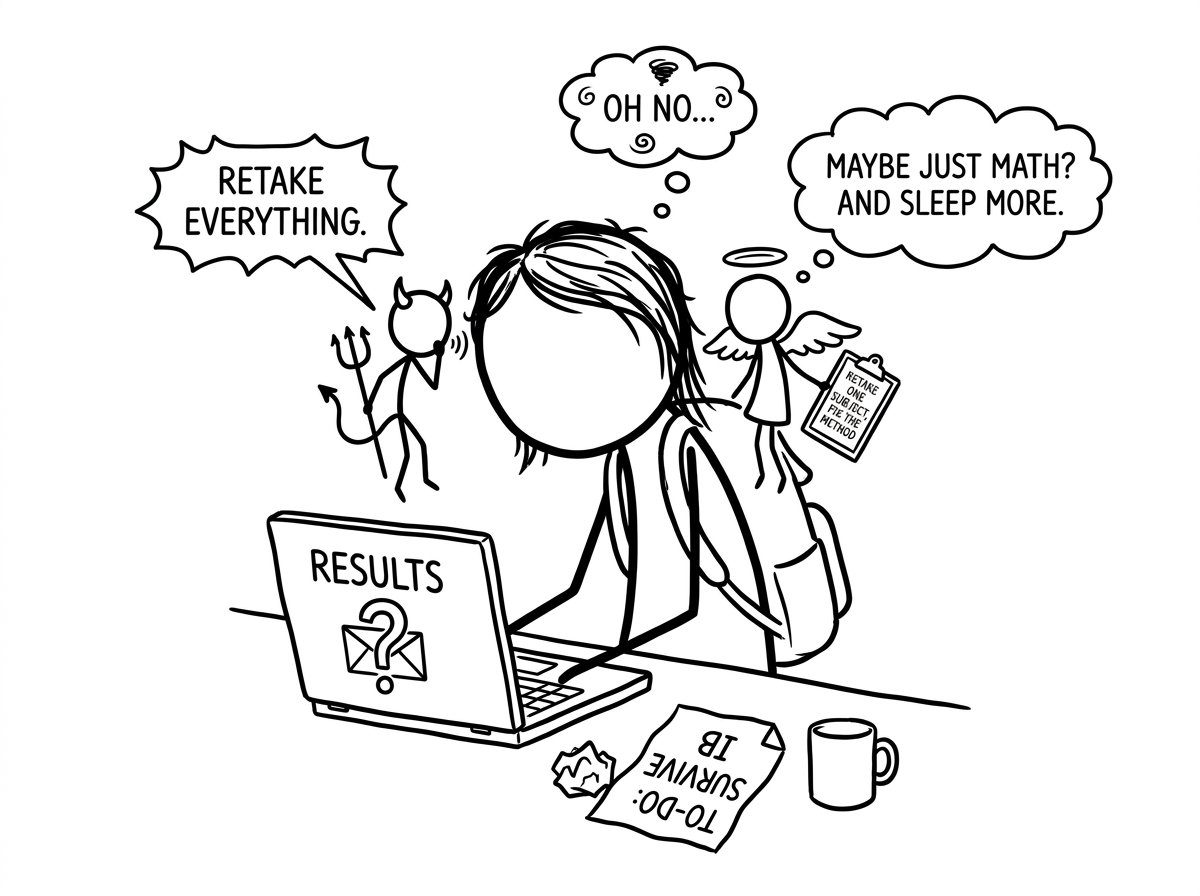
At some point after results day, many IB students experience the same quiet moment.
You stare at a number that feels too small for how hard you worked. Not because you need perfection, but because the number seems to rewrite your story: the university you pictured, the confidence you had, the sense that effort leads somewhere.
Then the thought arrives: Can I retake my IB exams?
In the IB world, retakes are real. They're allowed. They're common. And they can be a lifeline.
But they're also a mirror. A retake doesn't reward "more time." It rewards a better system. This guide walks you through what IB retakes look like, how the process usually works, the trade-offs that matter, and how to prepare in a way that actually changes your result.
Quick IB retake checklist (save this)
If you want the short version before the nuance, use this IB checklist:
- Confirm you can register for an IB retake through an IB World School (often your old school).
- Decide whether you're retaking one subject or multiple.
- Pick the next available IB exam session that fits your timeline.
- Get clear on what caused the lower score: content gaps, technique gaps, or time/pacing.
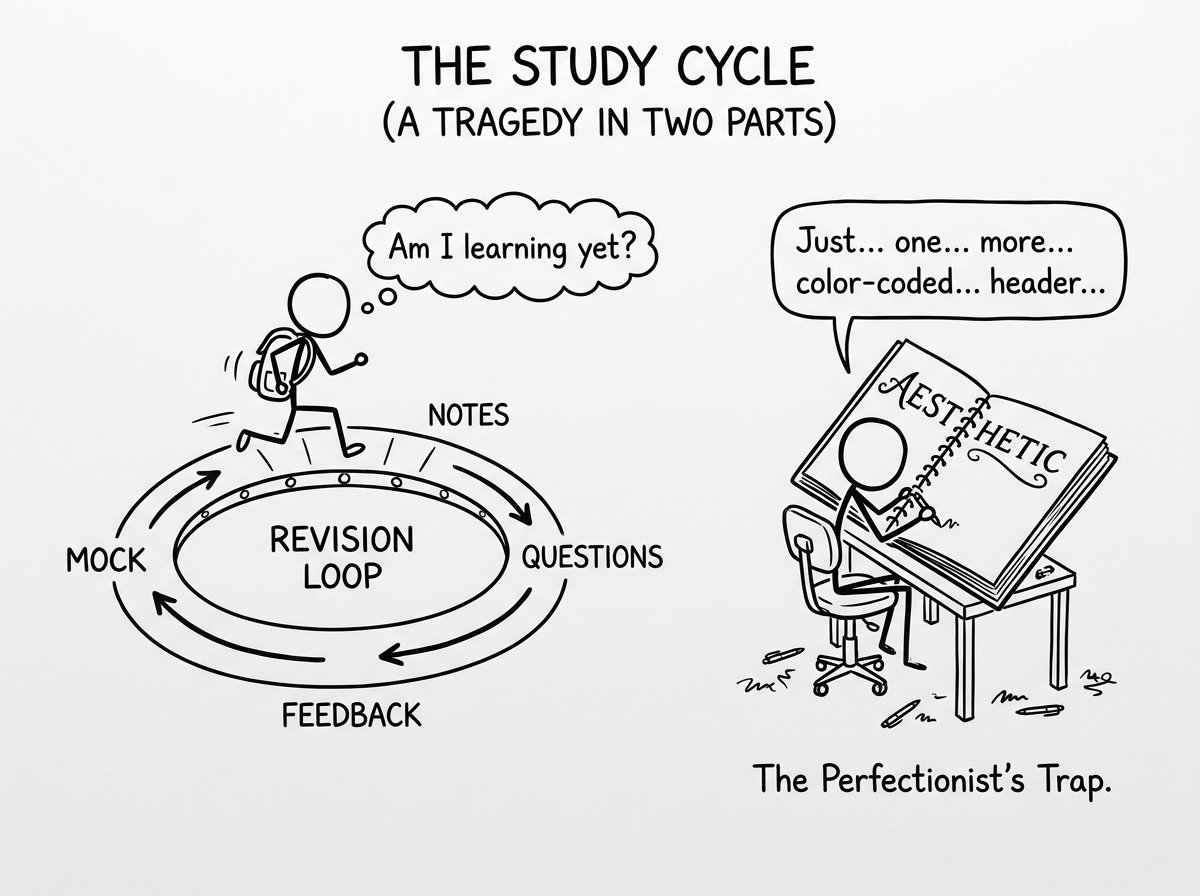
- Build a practice loop: Study Notes -> Questionbank -> feedback -> timed Mock Exams.
- Keep coursework anxiety from leaking into exam prep using Grading tools and a Coursework Library.
- Use AI Chat or Tutors to fix stubborn gaps quickly.
For a full study structure that fits retake season, borrow the framework in How to Study for IB Exams: Step-by-Step Guide.
What an IB retake actually is (and what it isn't)
An IB retake (often called a resit) means you register again for one or more IB exam components in a future session.
What it is:
- A second attempt at an IB subject grade when your first result didn't match your goals.
- A chance to meet a university condition, recover the diploma, or upgrade a 4/5 into a 6/7.
- A clean opportunity to change your method, not just your mood.
What it isn't:
- A guarantee that "more revision" will translate to more points.
- A shortcut that fixes weak exam technique.
- Something you should do because you feel embarrassed.
If you want a deeper explanation of how resits work, see Can I Retake the IB Exam? Complete Guide and Can You Retake an IB Exam? Here's What You Need to Know.
When can you retake IB exams?
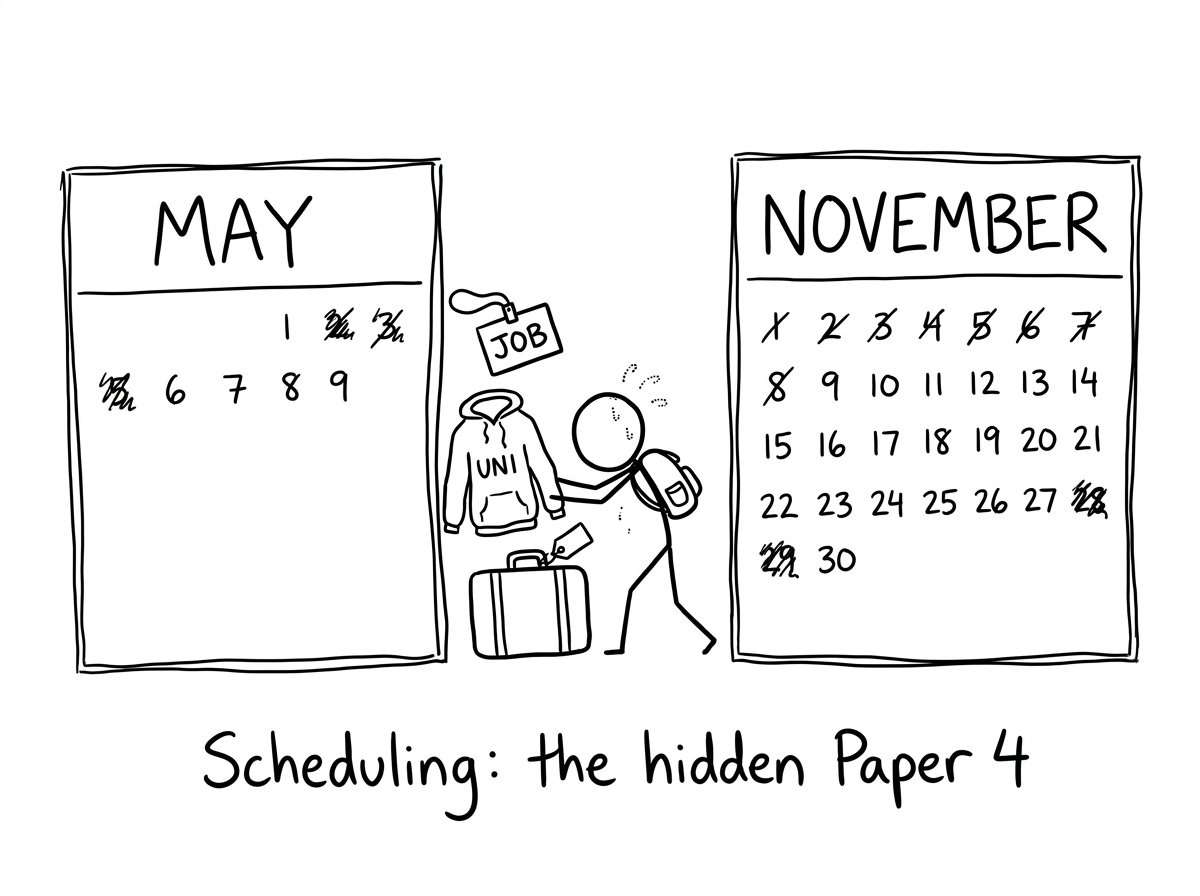
IB exams run in two main sessions each year: May and November. For many students, that means your next possible IB retake window is roughly six months away.
The practical truth: the session matters less than what your life will look like during preparation.
Ask yourself:
- Will you be starting university, working full-time, or moving countries?
- Can you realistically sustain 8--12 weeks of focused IB practice?
- Do you have access to an IB school to host your retake?
You don't need a perfect schedule. You need one that won't collapse in week three.
Who should consider an IB retake?
An IB retake makes sense when the upside is specific and the plan is different.
Consider a retake if:
- You missed a university offer condition by a small margin.
- You narrowly missed the diploma requirement and need those points.
- You had a genuine disruption (health, family situation, major exam-day breakdown).
- You know exactly where marks were lost and how you'll change your training.
Be cautious if:
- Your plan is "start earlier" but keep the same habits.
- You're burnt out and hoping pressure will disappear.
- The retake delays life in a way you'll resent (and resentment kills consistency).
If you're weighing the downsides, read Does Retaking the IB Exam Have Any Disadvantages?
The hidden reason IB retakes fail: the method stays the same
Many IB students treat a retake like rewinding the semester.
They re-read notes. They highlight. They rewrite. They promise themselves they'll "take it seriously this time," which usually means they'll suffer more, not learn more.
But IB exams don't reward suffering. They reward accuracy under constraints.
A retake works when you build a loop that looks like the exam:
- Learn only what you'll apply (fast, targeted)
- Practice questions by topic
- Get feedback that matches markscheme logic
- Train timing with Mock Exams
- Review errors like patterns, not like moral failures
RevisionDojo is designed around that loop. Start with the big picture hub at RevisionDojo for IB, then go deeper with Comprehensive IB Question Bank: Thousands of Practice Questions.
A practical 8-week IB retake plan (one subject)
This is a realistic IB retake plan if you're retaking one subject alongside life.
Weeks 1--2: Diagnose and rebuild the foundations
- Use Study Notes to patch the biggest gaps (not everything).
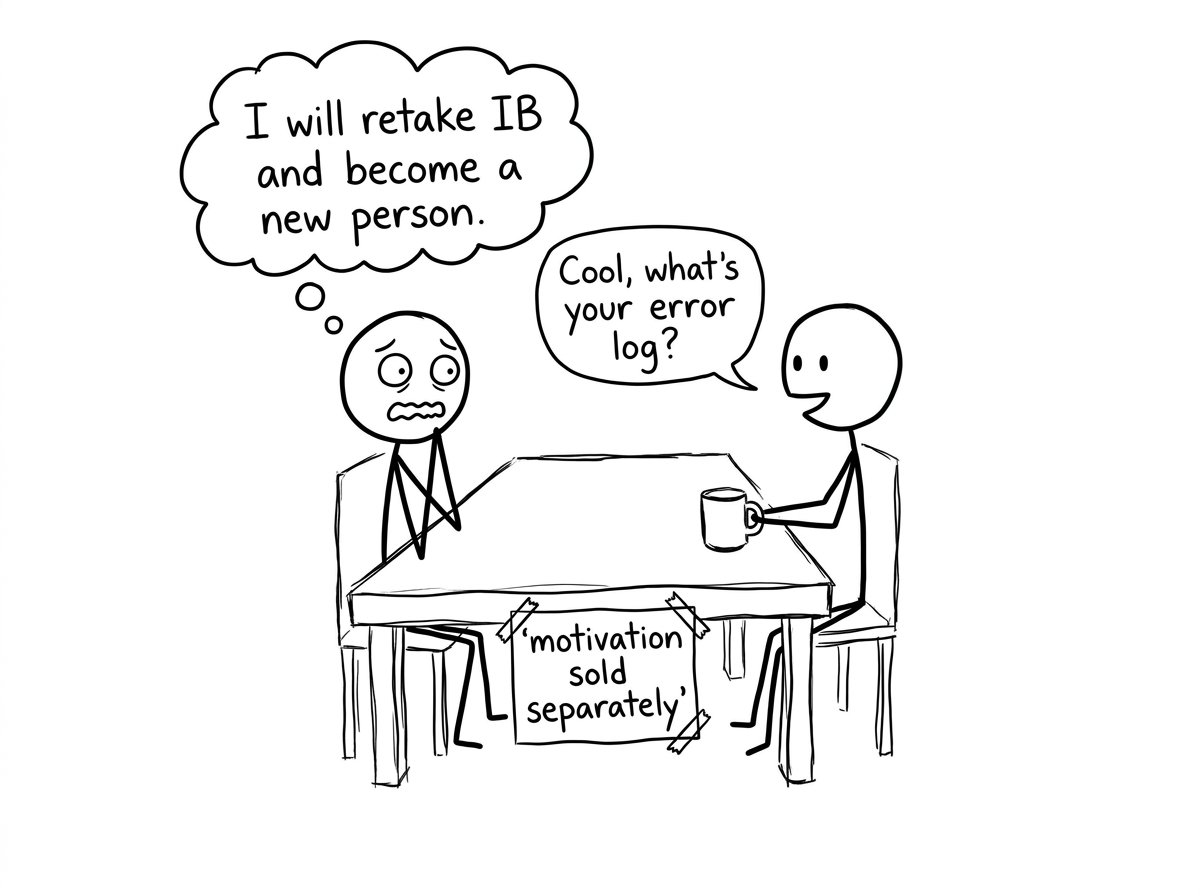
- Start a mistake log: every error becomes a rule.
- Use AI Chat to get unstuck fast, then immediately reattempt.
Helpful reads:
Weeks 3--5: Turn knowledge into exam performance
- Do Questionbank sets by topic until you stop bleeding easy marks.
- Then start mixing topics, because IB papers mix them.
- Use Flashcards daily for definitions, processes, and "things you always forget."
If you need a structured mindset shift, read You're Not Lazy -- Your IB Study Method Is Broken.
Weeks 6--8: Timed training and finishing touches
- Sit weekly timed Mock Exams (or timed sections if stamina is low).
- Use Grading tools to see exactly why marks were lost.
- Convert repeated misses into a tiny set of "error rules" you review daily.
If you're struggling to fit prep into a normal life, IB Exams Without Pausing Your Life is the calmest place to start.
How RevisionDojo helps with an IB retake (without adding chaos)
A retake is already emotionally loud. Your tools shouldn't be.
RevisionDojo works best when it becomes your single IB home base:
- Questionbank for exam-style practice by topic and level.
- Study Notes when you need clarity fast.
- Flashcards for daily recall, especially for slippery details.
- AI Chat for explanations and custom practice when you're stuck.
- Mock Exams and Predicted Papers to make timing feel familiar.
- Grading tools to see markscheme-aligned feedback quickly.
- Coursework Library to stop coursework uncertainty from draining focus.
- Tutors when you need a human plan and accountability.
If you want the full platform overview, see RevisionDojo App: The Smarter Way to Prep for IB Exams.
FAQ: IB retakes, answered carefully
Can you retake IB exams if you already graduated?
Yes, many IB students retake after graduation, and it's more common than it sounds. The key issue is not your graduation status, but registration logistics. Typically, you must register through an IB World School willing to host you as a retake candidate, and that can take outreach and patience. If you're starting university, you'll also need to consider schedule friction: lectures, labs, part-time work, and moving logistics can quietly eat your study time. The best approach is to treat the IB retake like a short, professional project with weekly deliverables, not like a vague "I'll revise when I can." If you're in this situation, the strategy-focused guidance in Can I Retake the IB Exam If I Already Joined College? is worth reading slowly. Finally, be honest about bandwidth: one IB subject retake is often realistic, three is often fantasy.
Should you retake one IB subject or multiple?
Most students should start by asking a simpler question: where will the next point come from? In IB, gains usually come from one of three places: fixing a predictable content gap, correcting a repeated technique error, or improving timing. If one subject is the bottleneck for a university condition, retaking that single IB subject can be the cleanest move. Retaking multiple subjects can make sense if you missed the diploma total by a wider margin, but it increases complexity fast: different paper styles, different revision materials, and different fatigue patterns. A good rule is this: only add a second subject if your first subject plan is already stable and repeatable for two straight weeks. RevisionDojo helps here because your Questionbank analytics and timed Mock Exams make weaknesses visible, so your decision is evidence-based rather than emotional. When in doubt, choose the smallest retake that still changes your outcome.
How do you actually improve your IB score on a retake?
Improvement comes from changing what you do between attempts, not from repeating the same routine with more panic. Start by identifying where marks were lost: was it misunderstanding command terms, skipping steps, weak evaluation, messy structure, or running out of time? Then build a loop that directly targets that failure mode: Study Notes for a short rebuild, Questionbank for high-volume application, and then immediate feedback through Grading tools or AI guidance. Next, train timing early, not in the last week, because pacing is a skill and skills need reps. This is where Mock Exams and Predicted Papers are useful: they turn your preparation into something measurable and repeatable. Finally, keep a ruthless error log and review it daily; the IB is full of "same mistake, different question" patterns. If your preparation produces fewer repeated errors each week, your score is likely to move.
Closing: If you retake IB, make it a new story, not a rerun
You can retake IB exams. That part is straightforward.
The harder part is emotional: deciding that one disappointing number isn't a final verdict, and then building a calmer, sharper system that earns different marks the next time.
If you choose an IB retake, choose it with intention. Retake the subject that changes your options. Fix the exact reason marks were lost. Train like the exam. And keep your tools simple.
When you're ready to rebuild, make RevisionDojo the place you do the work: Study Notes for clarity, Flashcards for daily recall, Questionbank for targeted practice, AI Chat for instant help, Mock Exams and Predicted Papers for realism, plus Grading tools, a Coursework Library, and Tutors when you need precision and support.
Your next IB result won't come from motivation. It will come from a method you can repeat.