


In IB Music, deadlines rarely arrive with drama. They arrive quietly, on a normal weekday, while you are still trying to make your performance take feel musical, your composition feel intentional, and your exploration writing sound like you actually meant it.
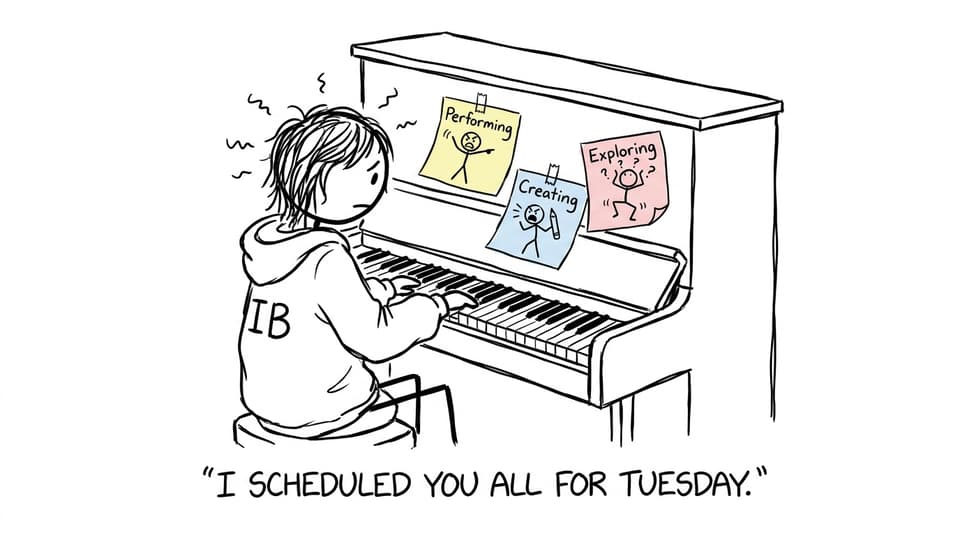
That’s why IB Music coursework can feel heavier than it looks on paper. You are not only studying content. You are building a portfolio that proves process: Performing, Creating, and Exploring, plus reflections that connect the dots. A good routine does not make you work more. It makes your work show up in smaller, repeatable outputs.
A quick routine checklist for IB Music (save this)
Use this as your default IB Music week when coursework deadlines are on the horizon:
-
Choose one measurable output per component (Performing, Creating, Exploring)
-
Schedule 3-5 short practice sessions (even 20 minutes counts)
-
Book 2 deep-work blocks for Creating (composition/arrangement)
-
Book 2 analysis blocks for Exploring (listening notes + writing)
-
Write a 5-minute reflection after every meaningful session
-
Do one weekly “portfolio audit” to spot gaps early
If you want examples of what strong IB work looks like across subjects, keep the Coursework feature hub open as your “calibration tab.”
Build weekly goals that are too specific to procrastinate
Most students lose time in IB Music by writing goals that sound inspiring but cannot be finished.
Replace “work on composition” with something you can check off:
-
Draft 12-16 measures with a clear motif
-
Harmonize the motif in two different ways (choose one)
-
Orchestrate one section (even if it is just a texture sketch)
-
Record one clean performance excerpt (30-60 seconds)
-
Write 150 words of exploration analysis using precise musical vocabulary
Specificity is not pedantry. In IB Music, it is momentum.
To strengthen your analysis routines alongside coursework, borrow tactics from How to Analyze Music for the IB Listening Exam and How to Revise Effectively for IB Music Listening Exams. They train the same listening muscles your exploration writing needs.
A balanced weekly routine (Performing, Creating, Exploring)
A steady IB Music routine rotates effort, so you do not “overfeed” one component and starve the others.
Performing: daily, small, documented
Aim for short sessions you can repeat:
-
5 minutes warm-up
-
10 minutes technical focus (one problem only)
-
5 minutes run-through (record it)
Then log one sentence: what improved, what did not, what you will try next time. If you are unsure what examiners value, use What Examiners Look for in IB Music Performances as your filter.
Creating: fewer sessions, deeper focus
Composition and arrangement reward uninterrupted attention. Plan 2-3 blocks per week where you can stay inside the sound-world long enough to make real decisions.
A practical pattern:
-
Block A: generate material (motif, chord plan, groove)
-
Block B: develop and structure (contrast, repetition, transitions)
-
Block C: polish (notation/DAW cleanup, recording, annotations)
When you feel lost, it helps to revisit the bigger picture of the course: What Is the IB Music Course? A Complete Beginner's Guide.
Exploring: short analysis blocks that create usable paragraphs
Exploring can expand forever if you let it. Set a boundary: one listening excerpt, one page of notes, one paragraph that answers a clear question.
For topic ideas that naturally produce depth (and examiner-friendly comparisons), see Best IB Music Exploration Themes for Depth and Variety and Best Strategies for IB Music Comparative Analysis.
Use time blocks that match the task (not your mood)
The best IB Music routines change the clock, not the motivation.
-
25-minute blocks: admin tasks, notation cleanup, targeted listening notes
-
60-90-minute blocks: composition development, deep exploration writing
-
15-minute micro-blocks: recording takes, reflection writing, organizing files
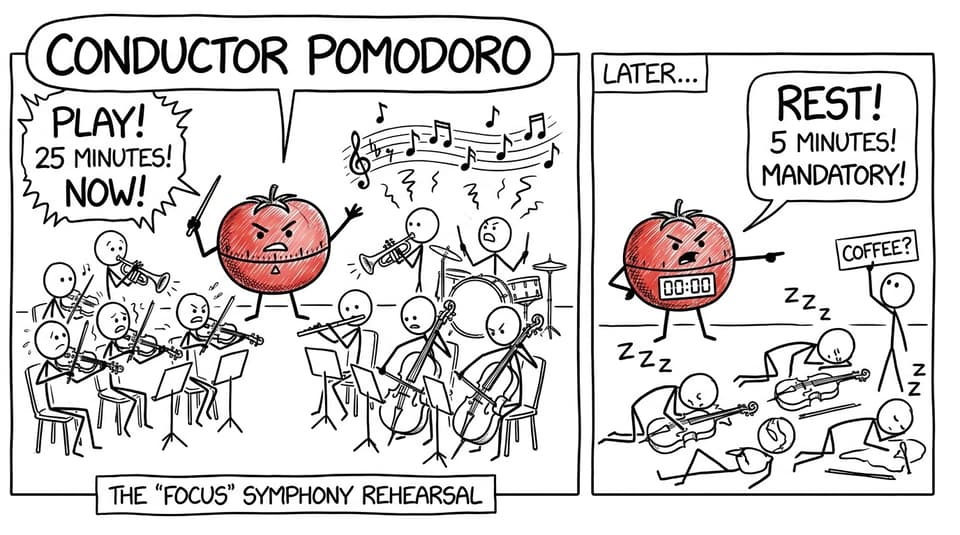
If exams are also approaching, build stamina in parallel with coursework. RevisionDojo’s ecosystem helps you keep everything in one loop: Study Notes to clarify, Flashcards to retain terminology, Questionbank to apply, AI Chat to unblock, plus Mock Exams and Predicted Papers to pressure-test. A useful mindset reset lives in How to Study for IB Exams Without Burning Out.
Make reflection a habit, not a rescue mission
Reflections are where many IB Music portfolios quietly lose marks, because the writing becomes last-minute and generic.
Try this instead: after each session, answer three prompts in 5 minutes.
-
What did I try?
-
What changed because I tried it?
-
What will I do next and why?
Over time, those small notes become your clearest evidence of process. Your future self will feel the difference.
The calm finish: make IB Music routine your advantage
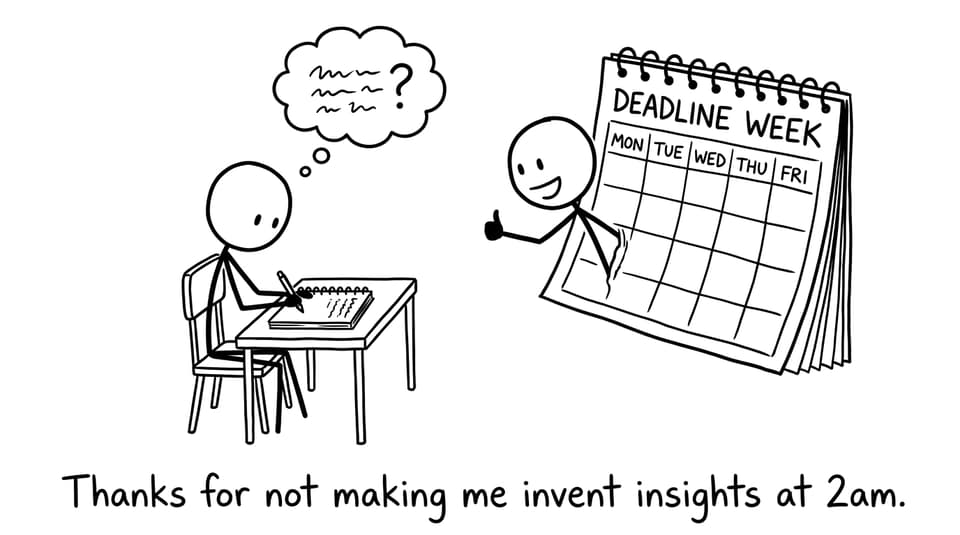
Coursework deadlines do not reward the student who panics first. They reward the student who keeps showing up with small, provable progress across the whole portfolio.
If you want your IB Music routine to feel simpler, run it inside RevisionDojo: plan with tight targets, practice with feedback loops, and use Questionbank, Study Notes, Flashcards, AI Chat, Grading tools, Predicted Papers, Mock Exams, Coursework Library, and Tutors to keep coursework and exam prep moving together. Your best work is rarely a sudden breakthrough. It is a routine that finally became believable.