

Artificial intelligence rarely arrives with a dramatic soundtrack.
It shows up quietly: a recommendation you didn’t ask for, a “risk score” you never see, a decision letter with no explanation. You only notice the system when it gets something wrong -- or when you try to challenge it and discover there’s no human to talk to.
That quietness is exactly why IB Digital Society treats AI as a social issue first. You’re not being assessed on coding neural networks. You’re being assessed on whether you can explain how AI changes decision-making, shifts power, creates ethical tension, and produces uneven impacts for different people and communities.
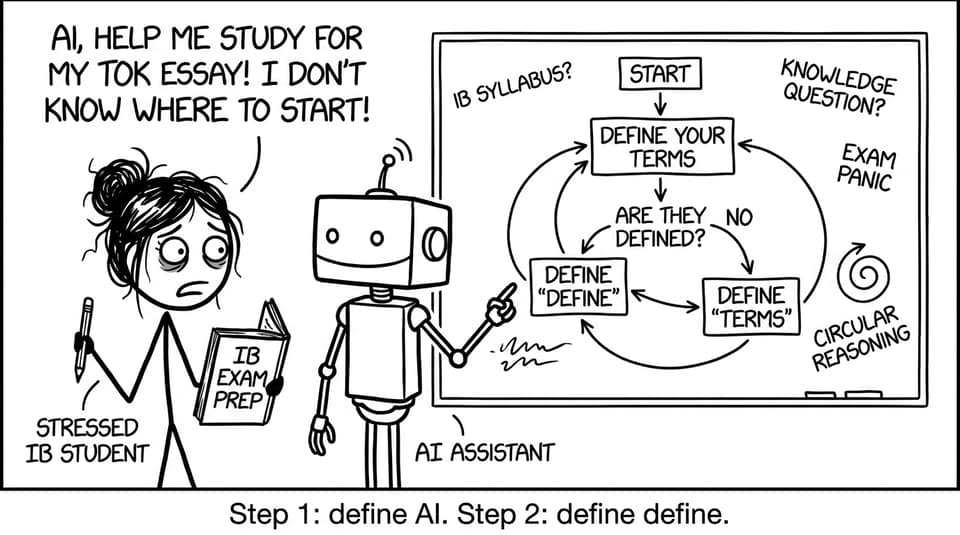
AI in IB Digital Society: the fast exam checklist
Use this quick checklist whenever AI appears in a stimulus, case study, or IA idea in IB Digital Society:
-
Define the AI system in plain language (what task is being automated?)
-
Name the stakeholders (who benefits, who is harmed, who is excluded?)
-
Trace power and control (who designs, deploys, profits, regulates?)
-
Identify the data (what data trains or feeds the system? what’s missing?)
-
Evaluate ethics (fairness, accountability, transparency, consent)
-
Impacts vs. implications (short-term effects vs. longer-term shifts)
If you want structured practice with unseen AI examples, RevisionDojo’s IB Digital Society Resources and Topic 3: Content are built around exactly this kind of concept-led response.
What “artificial intelligence” means in IB Digital Society
In IB Digital Society, artificial intelligence means a digital system that uses data and automated rules/models to perform tasks that usually require human judgment: predicting, classifying, ranking, recommending, or deciding.
The key move is this: treat AI as a decision-making system.
That framing helps you avoid a common trap in IB Digital Society exams: writing about AI as if it’s “just technology.” The course is asking a different question: What happens to people and communities when decisions move from humans to systems? For a broader grounding in the course lens, see What Is IB Digital Society?.
Where AI shows up (and why it matters)
AI in IB Digital Society is rarely an isolated tool. It’s typically embedded inside bigger systems:
-
Recommendation and ranking feeds
-
Automated screening (school, jobs, finance)
-
Predictive analytics (risk, health, policing)
-
Computer vision or language systems (faces, voice, text)
What makes these systems exam-worthy is not their novelty. It’s their scale and opacity: decisions happen fast, across millions of people, with reasoning that can be difficult to explain.
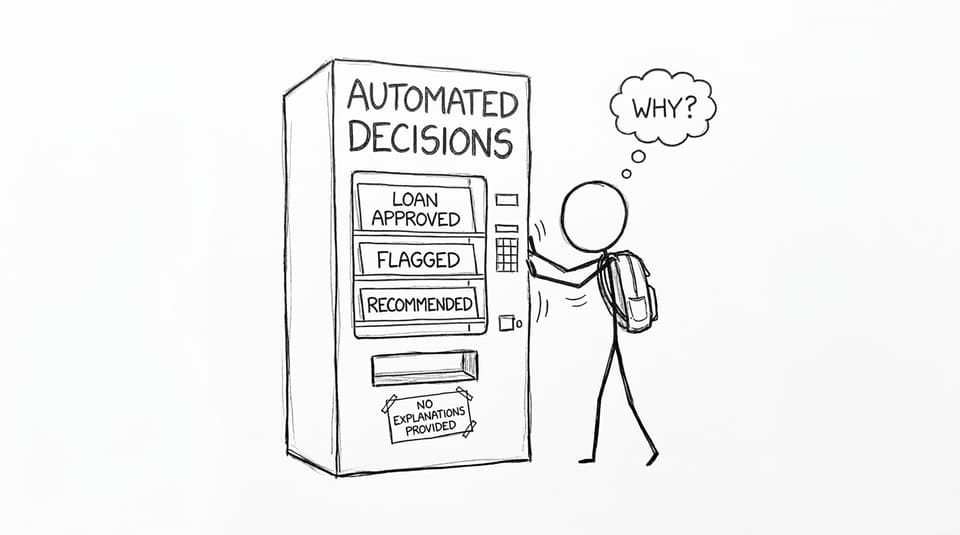
Impacts on individuals: convenience vs. autonomy
At the individual level, AI can feel like frictionless living: faster service, personalization, fewer forms.
But in IB Digital Society, you need to ask what convenience costs:
-
Autonomy: are choices being shaped, nudged, or narrowed?
-
Transparency: can the person understand why an outcome occurred?
-
Contestability: can they appeal or challenge the decision?
-
Dignity: does automated judgment reduce a person to a score?
Strong analysis also compares experiences across groups. An AI system may be “helpful” for a confident user with digital literacy and social capital, while being disempowering for a vulnerable user who lacks time, language access, or legal support.
Impacts on communities: when AI reinforces inequality
Communities experience AI through patterns: who gets flagged more, who gets excluded more, whose neighborhoods get monitored more, whose voices are promoted more.
Community-level issues often include:
-
Normalization of automated judgment (people stop expecting explanations)
-
Unequal distribution of risks and benefits (some groups carry the harm)
-
Reduced accountability (harm is “the system,” not a decision-maker)
-
Dependency on opaque systems (institutions rely on outputs they can’t verify)
This is where course themes connect. If you want a map of the big concepts you can attach to AI, use Key Themes in IB Digital Society Explained and How All the Core Concepts Fit Together.
Power and control: who gets to decide what “good” looks like?
AI concentrates power because it concentrates design choices.
Someone decides what the system optimizes: engagement, efficiency, profit, security, or “risk reduction.” Someone chooses what counts as success. Someone chooses which errors are acceptable.
In IB Digital Society, power analysis gets sharper when you name these layers:
-
Design power: which values are coded into the goal?
-
Data power: who collects the data, and who is represented in it?
-
Deployment power: which institutions adopt the system, and where?
-
Regulatory power: who can demand audits, explanations, or changes?
That’s also why RevisionDojo’s tools are built around visibility and feedback loops: the Questionbank helps you practice concept application under time pressure, while Study Notes and Flashcards help you keep definitions precise (see Digital IB Study Notes).
Ethics, bias, and fairness: don’t just claim it -- explain the mechanism
Ethics in IB Digital Society isn’t a vibe. It’s a reasoned judgment grounded in evidence, values, and responsibility.
A practical way to write this in exams is:
-
State the ethical issue (fairness, privacy, accountability, transparency)
-
Explain the mechanism (how the system produces the issue)
-
Identify who is affected (specific groups, not “society”)
-
Evaluate trade-offs (benefits vs. harms, alternatives, safeguards)
Bias is a perfect example. It’s rarely “AI being racist” as a simple intention. More often it’s:
-
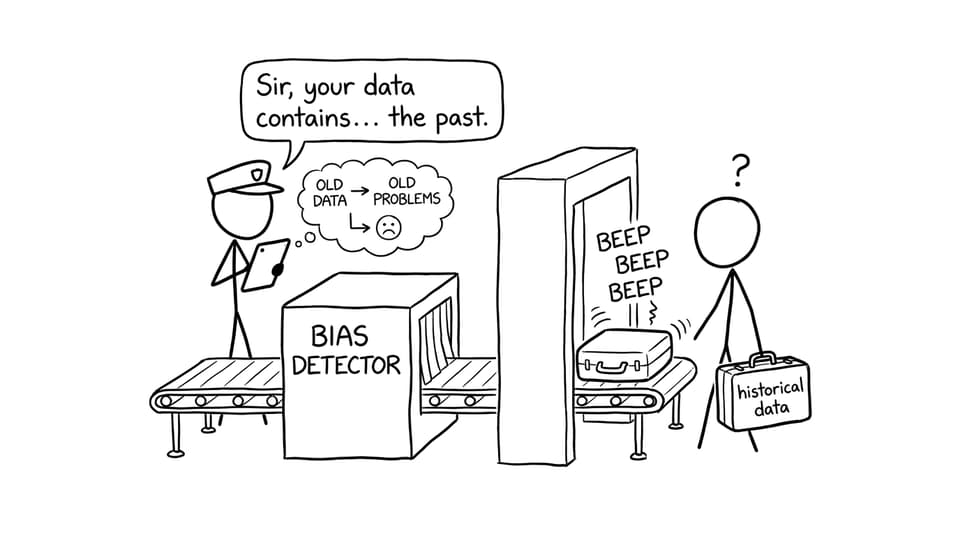
Biased historical data becoming “ground truth”
-
Underrepresentation of certain groups in training datasets
-
Proxy variables (postcode, device type) standing in for sensitive traits
-
Different error rates across groups, hidden by averages
For a deeper framework you can reuse in any AI question, read How to Evaluate Ethics in IB Digital Society Effectively and The Role of Ethics in IB Digital Society.
How to write higher-scoring AI paragraphs in exams
Examiners reward clarity and concept control. A strong IB Digital Society paragraph on AI often follows a simple rhythm:
-
Identify the system: “This is an AI-driven ranking tool used to…”
-
Apply a concept: “This shifts power by…” or “This raises ethical concerns about…”
-
Analyze impacts: “For X group, the impact is…”
-
Evaluate implications: “Long term, this may lead to…”
-
Use balance: “However, safeguards like audits/human review could…”
If you want to drill this style with exam-format prompts, RevisionDojo’s Mock Exams, Predicted Papers, and AI Chat are designed to mimic the pressure of unseen examples while still giving you explanations you can learn from.
Using AI for your Digital Society IA: focus beats ambition
AI topics can produce excellent IAs because they naturally connect to people, communities, ethics, and power.
But AI IAs fail when the system is vague. “AI in education” is too broad. “An automated proctoring tool used by my school and its impact on student privacy and stress” is specific enough to analyze.
Start with your research question. This guide helps you frame one that forces analysis rather than description: How to Write a Strong IB Digital Society IA Research Question. Then use the structure expectations to keep your work coherent: IB Digital Society IA Structure Explained.
If you want feedback aligned to criteria, RevisionDojo’s Grading tools and the Digital Societies IA Grader can help you spot where you’re describing instead of evaluating.
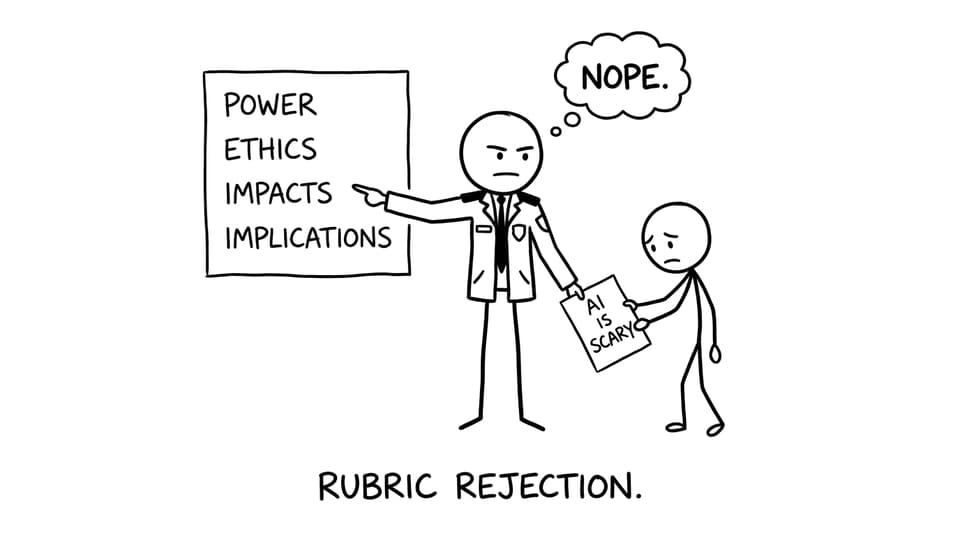
Closing: AI is quiet, but your analysis shouldn’t be
Artificial intelligence will keep blending into everyday life, and that’s why it keeps returning in IB Digital Society. The highest-scoring students don’t treat AI as magic or menace. They treat it as a system: built from data, governed by institutions, experienced unevenly by people, and filled with ethical trade-offs.
If you want to turn that calm, structured thinking into exam marks, build your routine around RevisionDojo: use the Questionbank to practice unseen AI prompts, Study Notes and Flashcards to lock in precise vocabulary, Mock Exams and Predicted Papers to sharpen timing, and the Coursework Library, Tutors, and Grading tools to strengthen your IA.
When AI appears in your next stimulus, you’ll be ready to do what IB Digital Society rewards most: explain who the system serves, who it fails, and what responsible choices could look like.