


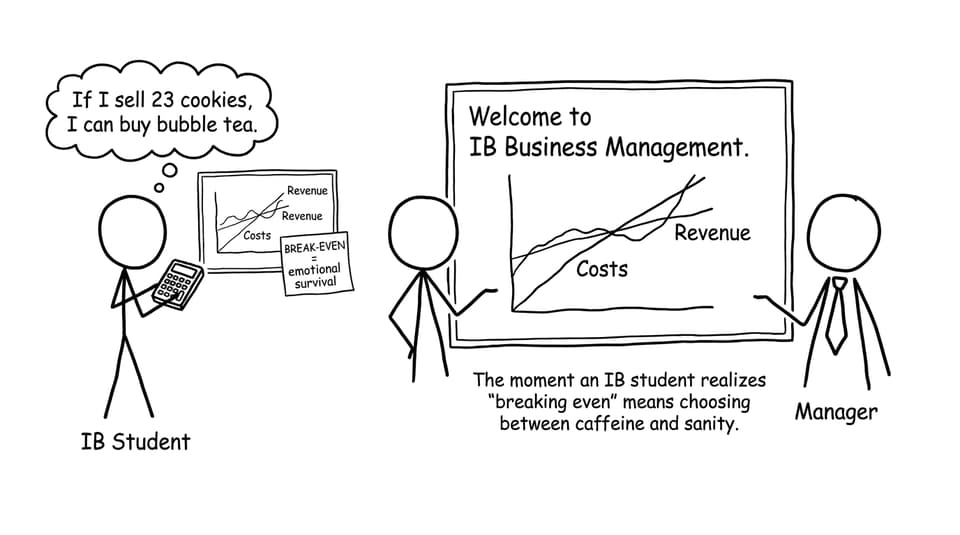
Break-even analysis always looks calm on paper: two lines, one crossing, one neat label. But in real businesses (and in IB Business Management case studies), that crossing point is a moment of truth. It answers the question every manager quietly asks before they act: How much do we need to sell just to stop losing money? In IB Business Management, understanding break-even analysis turns finance from memorised formulas into decision-making logic you can explain under exam pressure.
Break-even analysis in IB Business Management (quick checklist)
Use this checklist to turn break-even analysis into easy application marks in IB Business Management:
-
Define the break-even point: where total revenue equals total costs (no profit, no loss).
-
Identify fixed costs and variable costs clearly.
-
Use contribution thinking (selling price minus variable cost).
-
Explain what happens if price, fixed costs, or variable costs change.
-
Add judgement: risk, feasibility, and what the business should do next.
If you want the syllabus-aligned version, start with RevisionDojo’s IB Business Management 5.5 Break-even Analysis and pair it with the 5.5 Break-even analysis notes.
Why break-even analysis is important for business decision-making
In IB Business Management, break-even analysis matters because it links three levers businesses actually control: costs, price, and output. When you can explain that relationship, you can justify decisions instead of guessing.
Setting realistic sales targets
Break-even analysis tells a business the minimum sales volume needed to cover costs. That becomes a concrete target for the sales team and a reality check for leadership. If the break-even output is far above expected demand, the plan might be unrealistic from day one.
To strengthen your exam explanations, connect this to costs and revenue fundamentals using 3.3 Costs and revenues and then practise application via the 3.3 Costs and revenues questionbank.
Improving pricing decisions (without ignoring demand)
In IB Business Management, pricing is never “set it and forget it.” A higher price usually lowers the break-even quantity because contribution per unit rises. But demand might fall. Break-even analysis forces you to talk about that trade-off, which is exactly what evaluation looks like.
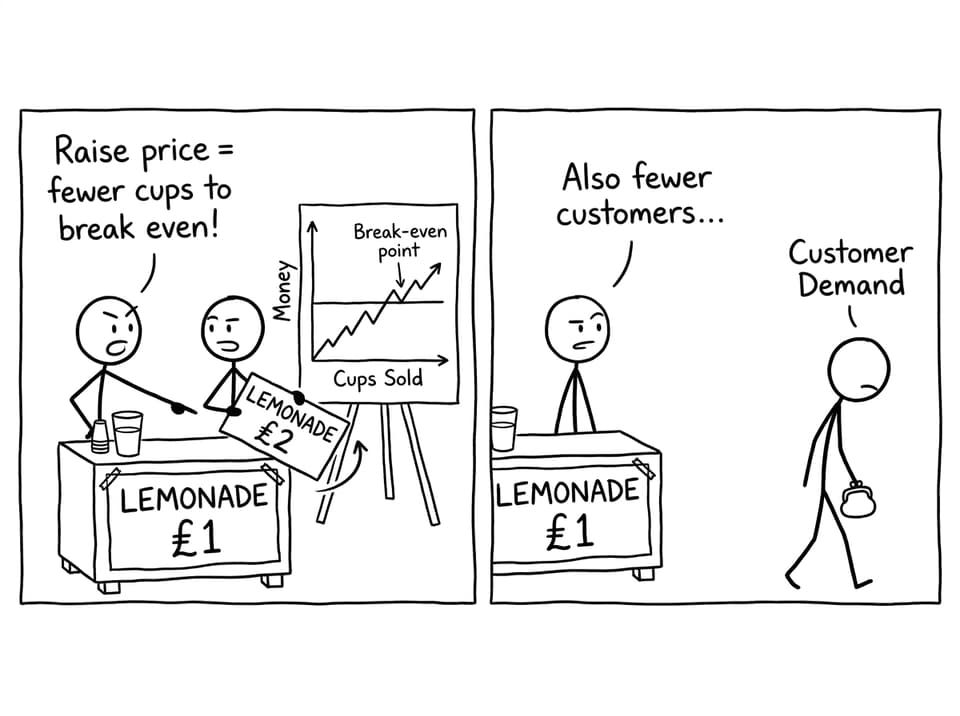
For clean exam language on how price/cost shifts change results, see 5.5.3 Effects of changes in price or cost on break-even analysis notes.
Controlling costs and spotting what really drives risk
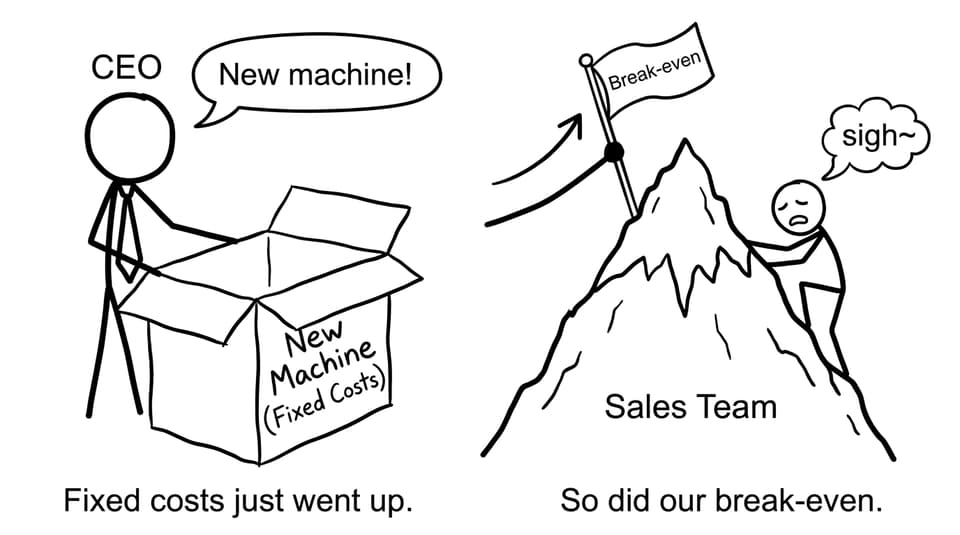
Break-even analysis separates the pressure of fixed costs from the snowball effect of variable costs. If fixed costs rise (rent, machinery, salaried staff), the break-even point climbs. If variable costs fall (cheaper materials, efficiency), break-even drops.
That logic is also a bridge to wider financial decision-making in IB Business Management, and RevisionDojo’s blog on fixed and variable costs and profit ability makes it easier to explain in words.
Planning production and expansion
Break-even analysis helps businesses decide whether expanding output is sensible. If demand is uncertain, producing far above break-even can create unsold stock and cash flow problems. If demand is strong, higher output can spread fixed costs and improve profitability.
When you revise, link break-even analysis to contribution thinking using What is contribution and why it matters for profit.
Understanding limitations (and scoring evaluation marks)
Break-even analysis is useful, but it makes assumptions: costs and prices stay stable, output matches sales, and the business behaves like a simple model. In exams, you can score higher by acknowledging these limitations and suggesting complementary tools.
RevisionDojo covers this directly in 5.5.4 Limitations of break-even analysis and the matching 5.5.4 notes.
Conclusion: use break-even like a decision tool, not a diagram
In IB Business Management, break-even analysis is important because it turns financial data into choices: what to charge, what to cut, how much to produce, and how risky a plan really is. If you treat it as a living decision tool (with clear limits), you’ll write stronger, more realistic answers.
When you’re ready to make this exam-ready, use RevisionDojo’s Study Notes, Flashcards, and Questionbank for 5.5, then pressure-test your explanations with AI Chat and polish longer responses with the Grading tools. If you want timed practice, build Mock Exams and use Predicted Papers for realistic exam conditions. And if you need a human to sharpen your evaluation, RevisionDojo Tutors can help you turn break-even analysis into consistent marks in IB Business Management.