


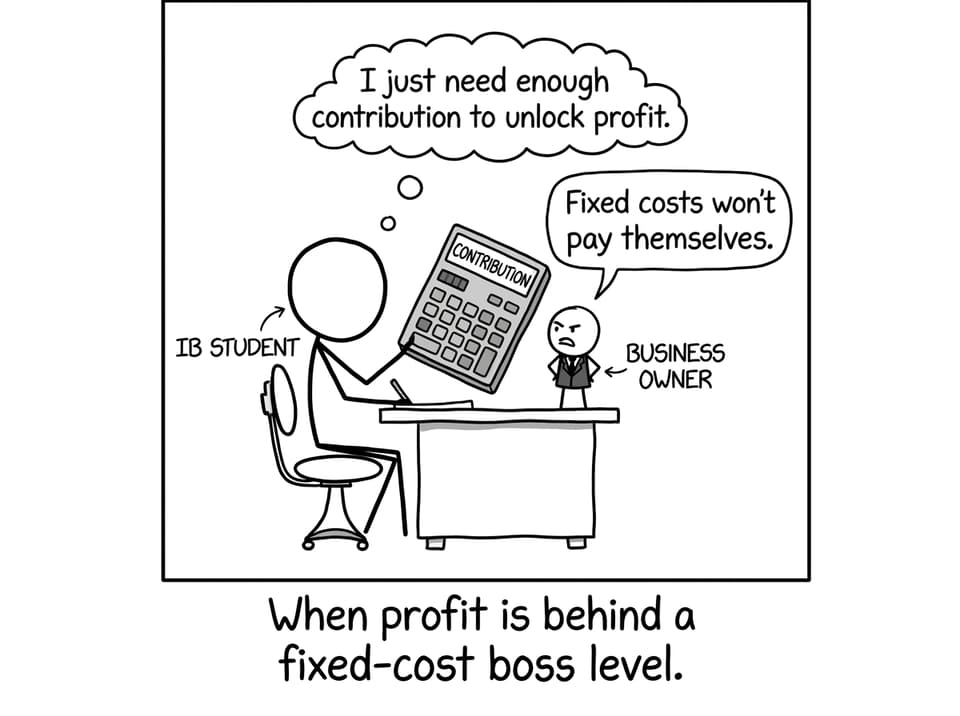
If profit is the finish line, contribution is the part of the race most students forget to watch. You can sell loads of products and still not make any profit, and it feels unfair until you see what’s happening underneath: fixed costs are quietly waiting, arms folded, collecting everything you earn first. In IB Business Management, contribution is the concept that reveals when sales are actually helping a business move toward profit (and when they’re just keeping the lights on).
What is contribution in IB Business Management?
In IB Business Management, contribution per unit measures how much each unit sold adds toward covering fixed costs and then generating profit.
Core formula
- Contribution per unit = Selling price per unitminusVariable cost per unit
It’s not profit. It’s what remains before fixed costs (rent, salaries, insurance) are paid.
If you want the wider topic context, RevisionDojo’s syllabus-aligned pages make this link clear: Contribution (HL only) topic page and Contribution notes (HL only).
Quick exam checklist: what contribution tells you
When you’re revising IB Business Management, contribution answers five fast questions:
-
Is each sale helping? (positive contribution)
-
Or is each sale making losses worse? (negative contribution)
-
How quickly will the business cover fixed costs?
-
What happens to profitability if costs or price change?
-
Which products deserve focus (or a rethink)?
These ideas sit right inside 5.5 Break-even analysis on RevisionDojo.
Why contribution is essential for understanding profit
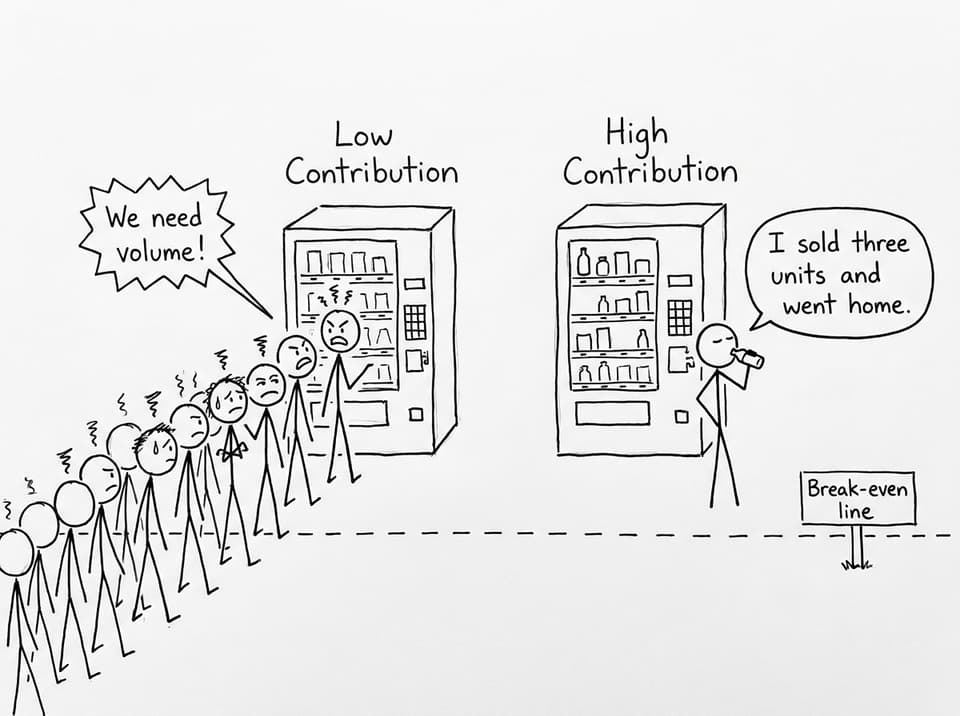
Profit only appears after fixed costs are fully covered. That’s the hinge.
Imagine a business with fixed costs of $2,000 per month. If contribution per unit is $5, the business must sell 400 units just to break even. If contribution per unit rises to $10, it only needs 200 units. Same business, same fixed costs, totally different pressure.
This is why contribution is the engine behind break-even thinking in IB Business Management. To sharpen this, pair the concept with RevisionDojo’s resources: 5.5 Break-even analysis notes and 5.5 break-even Questionbank practice.
Contribution and break-even analysis: the exam connection
The most common exam move is linking contribution to the break-even formula:
- Break-even quantity (units) = Fixed costs / Contribution per unit
If contribution falls, the break-even output rises. If contribution rises, the break-even output falls. On Paper questions, that relationship is often worth more than the calculation itself, because it drives evaluation about risk, feasibility, and strategy.
To revise the diagram logic, use 5.5.2 Aspects of a break-even chart notes.
How contribution supports pricing and product decisions
Contribution is also a reality check for pricing.
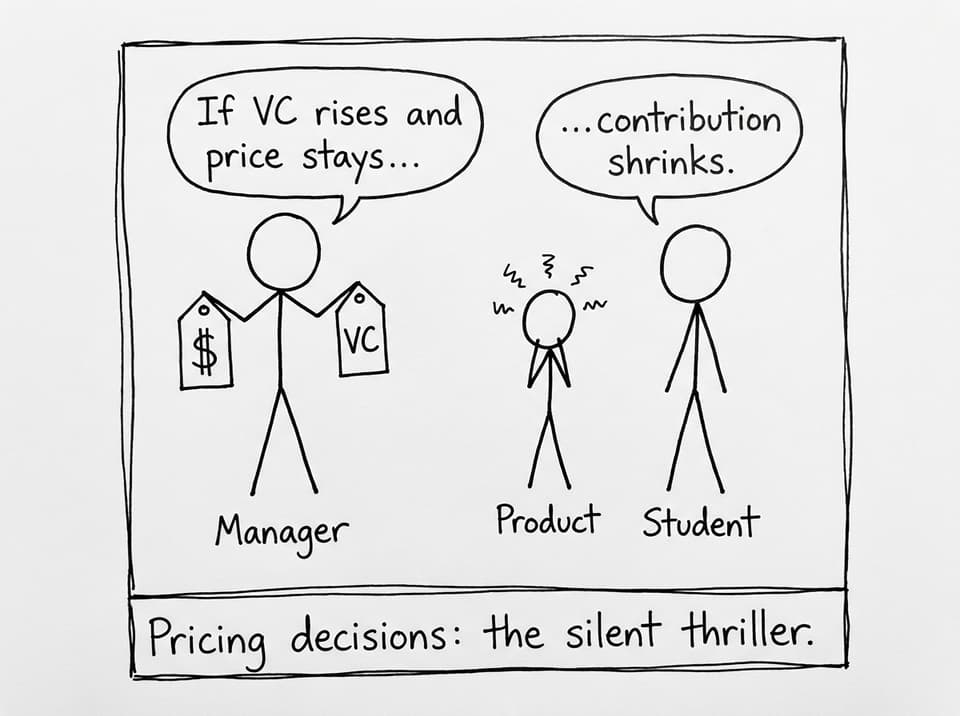
If variable costs increase (materials, packaging, shipping) and the selling price stays the same, contribution shrinks. That means each sale does less work toward fixed costs, and profit becomes harder to reach. In IB Business Management, this is how you justify recommendations like “raise price,” “reduce variable costs,” or “focus on higher-margin products.”
For price/cost changes, this is the cleanest support link: Effects of changes in price or cost on break-even analysis. For a pricing strategy angle, see How businesses choose the right pricing strategy.
Final takeaway: contribution is the bridge to profit
Contribution is the bridge between “we made sales” and “we made profit,” and in IB Business Management it’s one of the quickest ways to sound precise under time pressure. If you want to lock it in, revise it alongside break-even using RevisionDojo’s IB Business Management resources hub and targeted practice in the Questionbank, then reinforce the definitions with Flashcards and exam-style explanations with AI Chat. When your calculations and evaluation start telling the same story, profit stops feeling mysterious, and starts feeling measurable.


