



Global resource consumption rarely feels dramatic in the moment. It arrives quietly: a new phone upgrade, a longer commute, a diet that shifts from “enough” to “choice.” Then, one day, you look at the graphs in IB Geography and realise the line has been climbing for decades.
In the IB Geography unit on global resource consumption and security, the key skill is not listing drivers. It’s showing how they stack together to create momentum: more people, higher incomes, more connected trade, and technologies that sometimes (ironically) raise total demand.
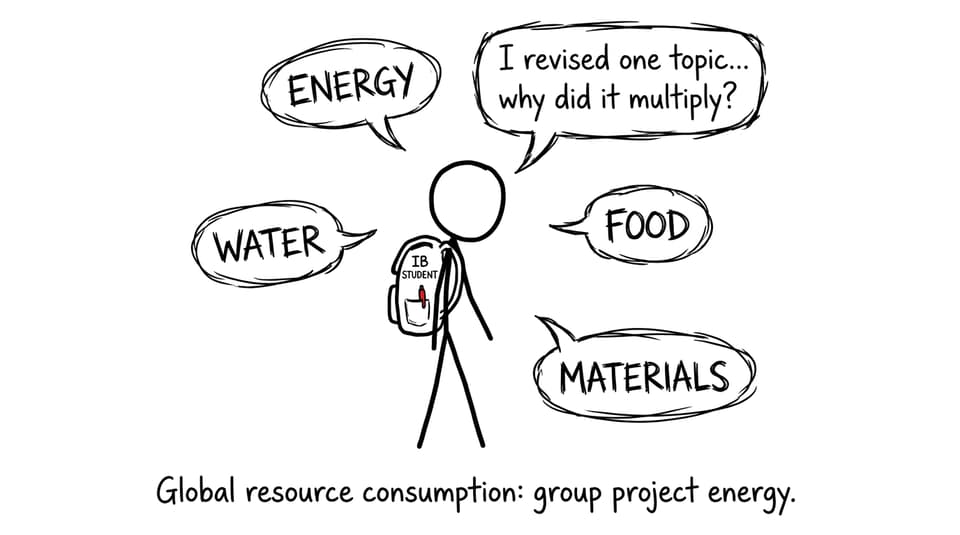
A quick IB Geography checklist (what examiners want)
When you explain why consumption is rising in IB Geography, aim to cover:
-
Population growth (more total demand)
-
Rising affluence (more demand per person)
-
Urbanisation + industrialisation (infrastructure and energy intensity)
-
Lifestyle and dietary shifts (especially meat and dairy)
-
Technology and the rebound effect (efficiency can increase usage)
-
Globalisation and supply chains (more production, transport, and embodied resources)
For a full syllabus-aligned overview, start with Global Resource Consumption and Security.
IB Geography driver: Population growth multiplies basic demand
The simplest story is still powerful: more people need more food, water, housing, and energy. In IB Geography, you can frame this as a scale effect. Even if per-person consumption stayed constant, total consumption would rise.
But it rarely stays constant. Population growth often overlaps with urban growth, rising expectations, and expanding infrastructure. If you want a clean way to talk about “how we measure consumption,” revise Measuring Resource Consumption (3.1.2) Notes.
IB Geography driver: Development increases consumption per person
As countries move from low-income to middle-income status, consumption per capita typically rises. More manufacturing. More transport. More cooling, heating, and electrification. Diets become more resource intensive.
This is why middle-income countries are often the exam sweet spot in IB Geography: rapid growth, rapid urbanisation, and a sharp rise in energy and material throughput. To compare patterns across income groups, use Global Patterns of Resource Consumption.
IB Geography driver: Lifestyles shift faster than systems can adapt
Consumption isn’t only about “need.” It’s about norms. As incomes rise, people often switch to diets higher in meat and dairy, buy more consumer goods, and travel more. Each change has a resource footprint across land, water, energy, and materials.
This is where IB Geography links beautifully to the Water-Food-Energy nexus: decisions in one system squeeze the others. A fast way to revise the interconnections is What Is the Water-Food-Energy Nexus?, and then reinforce it with WFE Nexus Flashcards.
IB Geography driver: Technology can reduce waste (and still raise totals)
Efficiency matters. Better irrigation, lighter materials, smarter grids: these can lower resource use per unit of output.
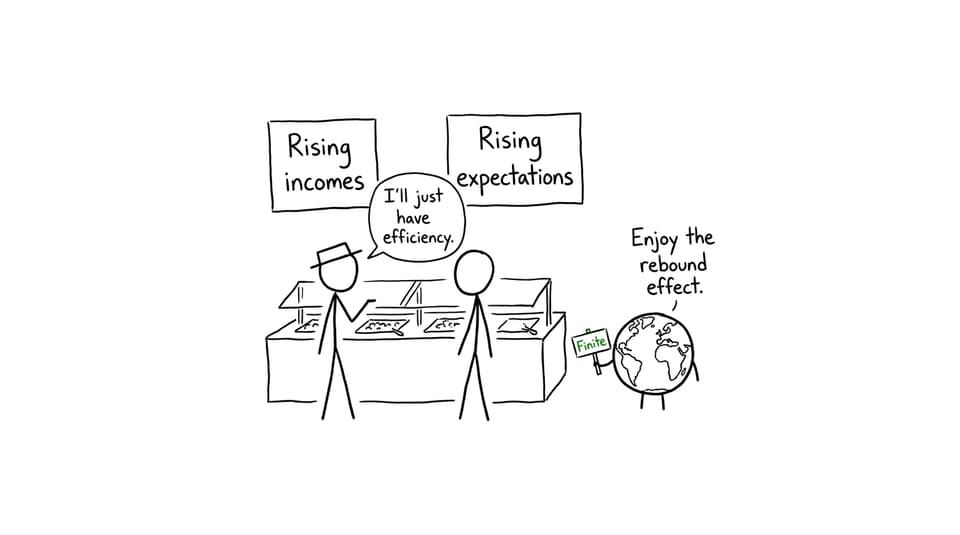
But IB Geography also expects you to understand the rebound effect: when something becomes cheaper or more convenient, people may use more of it. Efficient engines can lead to more driving. Cheaper electronics can lead to more devices. The per-unit footprint falls, while the total still rises.
IB Geography driver: Globalisation spreads consumption across distance
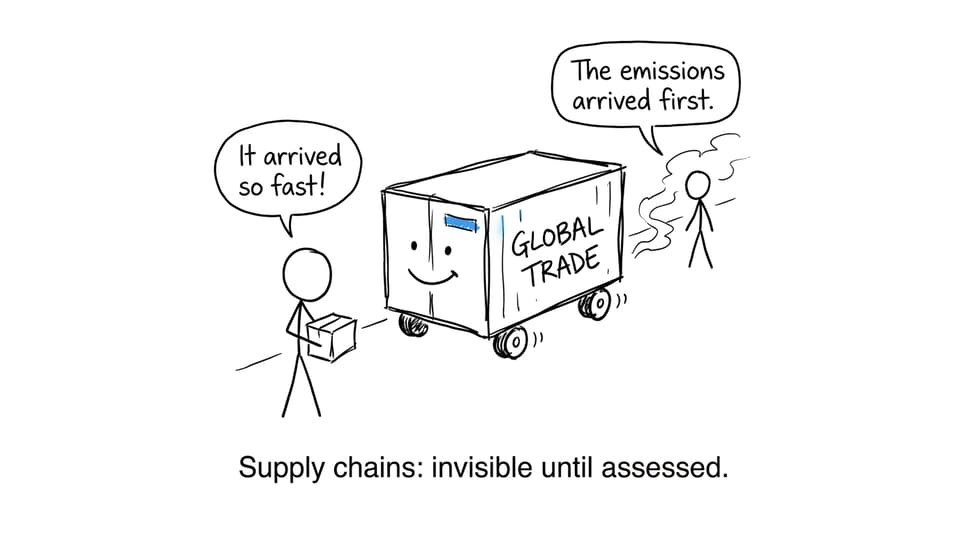
Trade allows production and consumption to happen in different places. That can improve access and reduce prices, but it also expands extraction, manufacturing, packaging, and transport. It can make environmental impacts feel “elsewhere,” even though they are still real.
To connect this to wider course themes (power, networks, and flows), see IB Geography Resources and the wider IB Geography posts hub.
Exam tip: turn drivers into a mini-argument
A strong IB Geography paragraph sounds like this: “Global resource consumption is increasing due to population growth and rising per capita demand linked to development. Urbanisation and lifestyle shifts intensify energy, water, and food requirements, while globalisation expands supply chains and embodied resource use. Although technology improves efficiency, rebound effects often offset savings.”
Then practise it under time pressure using RevisionDojo’s Questionbank for this unit and tighten your evaluation with AI Chat and grading tools.
Conclusion: turn IB Geography content into exam-ready clarity
Global resource consumption is increasing because several forces push in the same direction: more people, rising incomes, shifting lifestyles, expanding trade, and technologies that don’t always reduce total demand. In IB Geography, your job is to connect these drivers into a single, logical story.
If you want to revise this topic efficiently, use RevisionDojo’s Study Notes, Flashcards, and AI Chat to lock in definitions, then practise with the Questionbank and build confidence with Mock Exams and Predicted Papers. The goal isn’t just knowing why consumption is rising. It’s being able to explain it calmly, clearly, and fast when it counts.