


Science can feel comforting in the IB. Variables. Methods. Neat graphs. Even when the content is hard, the rules of the game are familiar.
Then you open IB Digital Society and realize the questions are different. Not “What happens?” but “Who benefits?” Not “Is it true?” but “What should be done?”
That moment of discomfort is exactly why IB Digital Society is great with sciences. It turns scientific skill into scientific judgment. And for exam season, that pairing becomes a quiet advantage: clearer writing, stronger evaluation, and real-world examples that actually fit the markscheme.
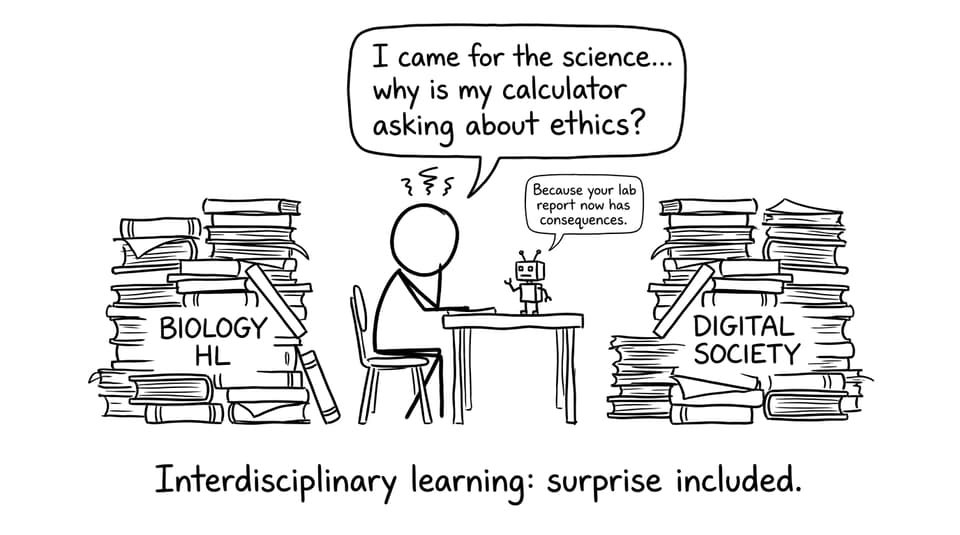
Quick checklist: why IB Digital Society works with sciences
If you want the fast version, here’s why IB Digital Society pairs so well with Biology, Chemistry, Physics, ESS, and even Computer Science:
-
You add ethics and responsibility to scientific decision-making.
-
You get better at evaluation, not just explanation.
-
You build stronger paragraph structure for longer responses.
-
You collect modern case studies (AI, data privacy, biotech) that examiners love.
-
You look more interdisciplinary for university pathways.
If you’re building your revision plan, start by bookmarking the IB Digital Society resources hub so your notes, practice questions, and key terms stay in one place.
IB Digital Society adds the “so what?” to science
In science, you’re trained to reduce noise. Control variables. Isolate causes. Report results.
In IB Digital Society, you’re trained to reintroduce the human messiness that science can accidentally push to the margins: power, access, incentives, and unintended consequences. That is not anti-science. It’s science used responsibly.
Think about common science-adjacent dilemmas:
-
Gene editing: possibility vs regulation.
-
Health apps: prevention vs surveillance.
-
AI diagnosis: efficiency vs bias.
Digital systems don’t sit outside biology or medicine anymore. They shape what research gets funded, who gets treated, and which risks are accepted.
To build stronger course understanding (and better examples), use posts like Key themes in IB Digital Society explained and Understanding change in Digital Society. They help you turn “interesting tech story” into “exam-ready analytical point.”
IB Digital Society makes you a clearer writer in science exams
A lot of science marks are lost in the same way: students know the idea, but the explanation is scattered. Or they jump to a conclusion without showing the chain of reasoning.
IB Digital Society forces you to practice structure: claim, evidence, implication, counterpoint, judgment. That structure transfers beautifully into:
-
Biology extended responses
-
ESS evaluation questions
-
Physics data-based questions with interpretation
-
Any science IA writing where clarity matters
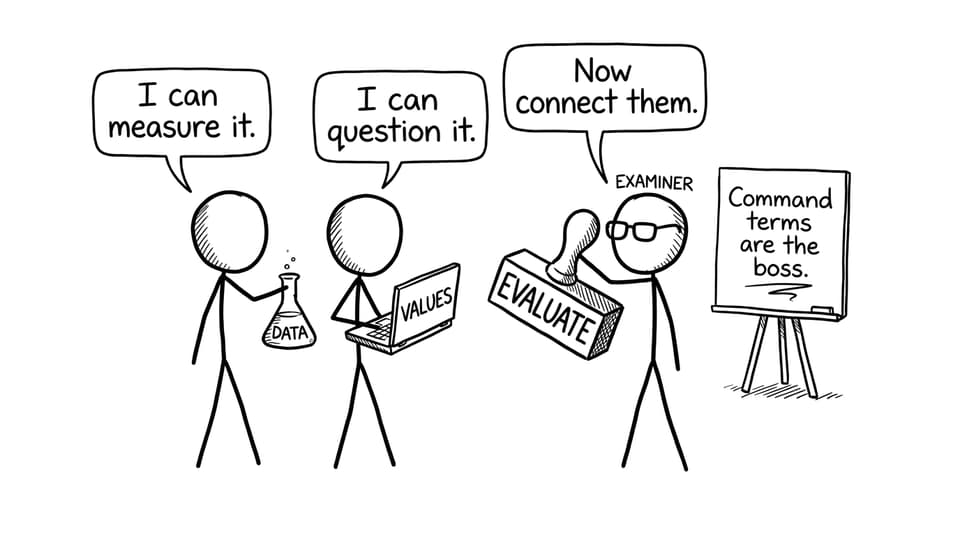
A simple way to sharpen this is to train command terms as a skill, not a vocabulary list. Use How to use command terms effectively in IB exams and then drill with RevisionDojo’s Questionbank and Grading tools so you learn what “evaluate” looks like under timed conditions.
Global context: sciences are universal, impacts are not
Science travels well. Consequences don’t.
IB Digital Society trains you to notice how the same innovation lands differently across countries and communities: digital divides, language access, infrastructure, political trust, and cultural norms.
That lens upgrades your science understanding. Climate models become policy debates. Vaccination becomes communication and trust. Environmental chemistry becomes environmental justice.
It also aligns with what the IB actually rewards: thoughtful, balanced thinking. If you want that bigger picture, connect your approach to the IB Learner Profile development so your revision includes reflection, not just repetition.
University readiness: interdisciplinary is the new default
Many students choose sciences because they want options. Medicine. Biotech. Environmental science. Data science. Engineering.
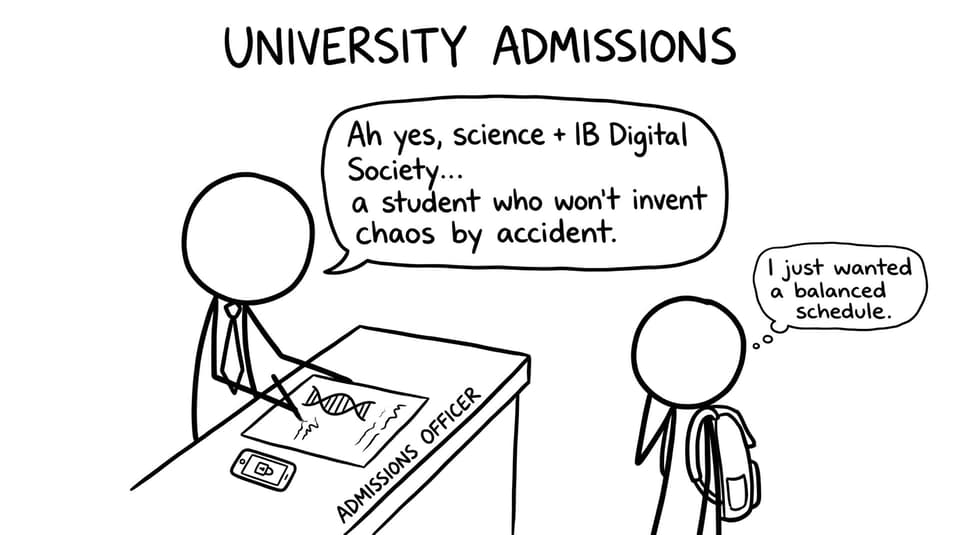
Most of those paths now expect you to handle technology’s social impact, not just its mechanics. That’s why IB Digital Society is such a strong signal: it shows you can do technical learning and still think ethically.
For the admissions side, it helps to understand how universities interpret IB strength. Read What do universities think of the IB Diploma? and, if you’re planning around offers, Do IB predicted grades matter for conditional offers?.
Practical exam-season workflow (science + IB Digital Society)
Here’s a simple weekly loop that keeps IB Digital Society supporting your sciences instead of competing with them:
-
Study Notes: review one Digital Society concept (power, change, ethics) alongside one science topic.
-
Flashcards: lock in key definitions and case-study facts.
-
Questionbank: do 20--30 minutes of mixed practice, including evaluation-style prompts.
-
AI Chat: when you get stuck, ask for counterarguments or a better structure.
-
Mock Exams + Predicted Papers: use them for timing and stamina, not cramming.
If coursework is still on your mind, the Digital Society coursework guide and the IA research question guide can save you hours of drifting.
Conclusion: science becomes stronger when it meets society
The best science students aren’t only accurate. They’re careful. They can explain, but they can also evaluate.
That’s why IB Digital Society is great with sciences: it gives your technical learning a wider frame, improves your communication, and makes your exam answers more thoughtful and more convincing.
If you want that advantage, build your routine inside RevisionDojo: practice with the Questionbank, clarify with Study Notes, retain with Flashcards, refine with AI Chat, and pressure-test everything with Mock Exams and Predicted Papers. IB Digital Society doesn’t compete with your sciences. It completes them.
