


If you have ever joined a new group project and instantly felt the “vibe,” you already understand the core idea of organizational culture. Nobody hands you a rulebook. Yet you quickly learn what gets praised, what gets ignored, and what gets you shut down. In IB Business Management, that invisible pressure is not a side-note; it is often the real reason employees behave the way they do.
Organizational culture in IB Business Management (fast definition)
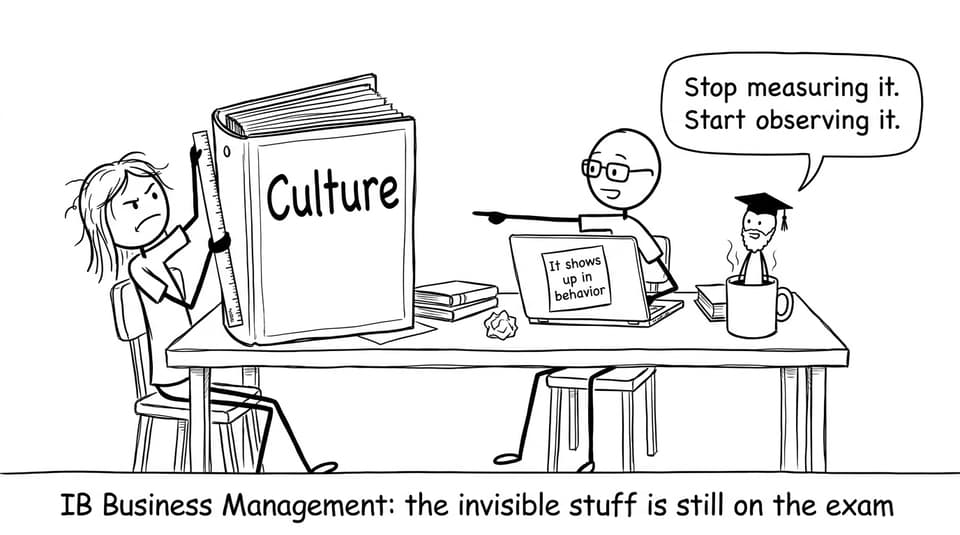
In IB Business Management, organizational culture is the shared values, beliefs, norms, and practices that shape “how things are done” inside a business. Culture shows up in everyday behavior: how people communicate, take initiative, respond to mistakes, and deal with change.
If you want a syllabus-aligned refresher, keep these tabs open while you revise:
Why organizational culture matters for employee behavior
In IB Business Management, exam questions love “why” and “so what.” Culture matters because it quietly sets the default settings for behavior.
Culture tells employees what is “safe” to do
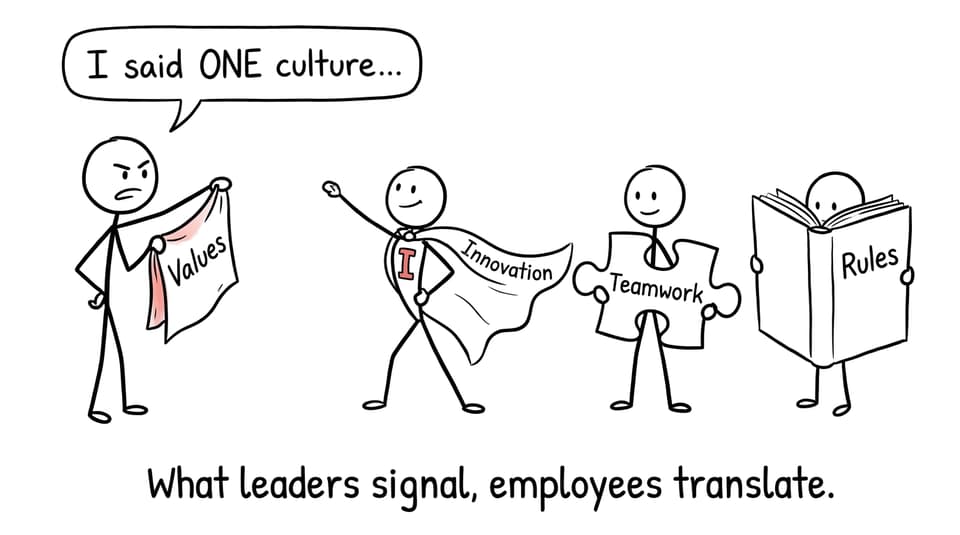
A teamwork culture makes collaboration feel normal. An innovation culture makes suggesting ideas feel safe. A fear-based culture makes silence feel logical. Employees adapt to what gets rewarded (promotion, praise, attention) and what gets punished (blame, exclusion, extra monitoring). Over time, those signals become habits.
Culture shapes motivation and engagement
Culture is tightly linked to motivation: belonging, recognition, autonomy, and growth. When employees feel aligned with the business purpose, discretionary effort rises (they do more than the minimum). When values feel fake, people protect themselves: they comply, but they do not commit.
To connect culture to motivation theories in your IB Business Management answers, revise:
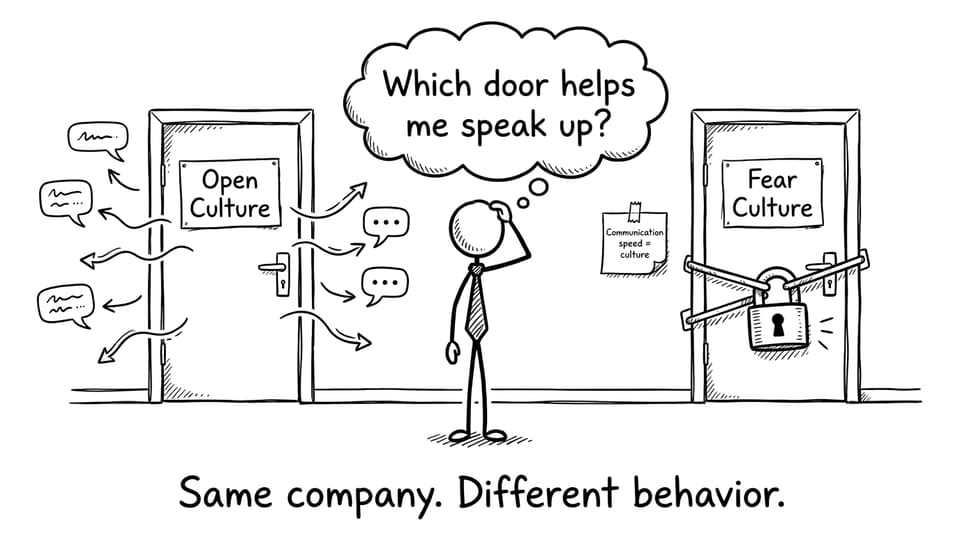
Culture determines communication speed and honesty
In open cultures, feedback travels faster and problems get solved earlier. In rigid hierarchies, messages slow down, become filtered, and often arrive too late. This is a high-scoring chain of reasoning in IB Business Management: culture impacts communication, communication impacts decision-making, decision-making impacts performance.
A helpful extension reading:
Culture decides how change feels
Change management is rarely just a plan on paper. A growth-minded culture treats mistakes as data, so employees experiment. A blame culture treats mistakes as threats, so employees wait for instructions. Same strategy, different behavior, different results.
For a broader look at where culture comes from:
Quick exam checklist (IB Business Management)
-
Define culture clearly (values, beliefs, norms, practices).
-
Link culture to a behavior (initiative, teamwork, risk-taking, silence).
-
Add one benefit and one drawback (analysis + evaluation).
-
Mention communication and change impact.
-
Use a mini example (startup vs factory; head office vs branch).
Bring it home with RevisionDojo
If you want this topic to feel automatic in IB Business Management answers, do it in the same order examiners reward: learn the definition, practice application, then get feedback. Use the IB Business Management hub to combine Study Notes, Flashcards, and the Questionbank, then tighten your responses with AI Chat and grading tools. When culture shows up in a case study, you will not just describe it; you will explain how it shapes employee behavior, communication, and change, and that is where the marks live.


