


A culture is just “how things are done” until it isn’t
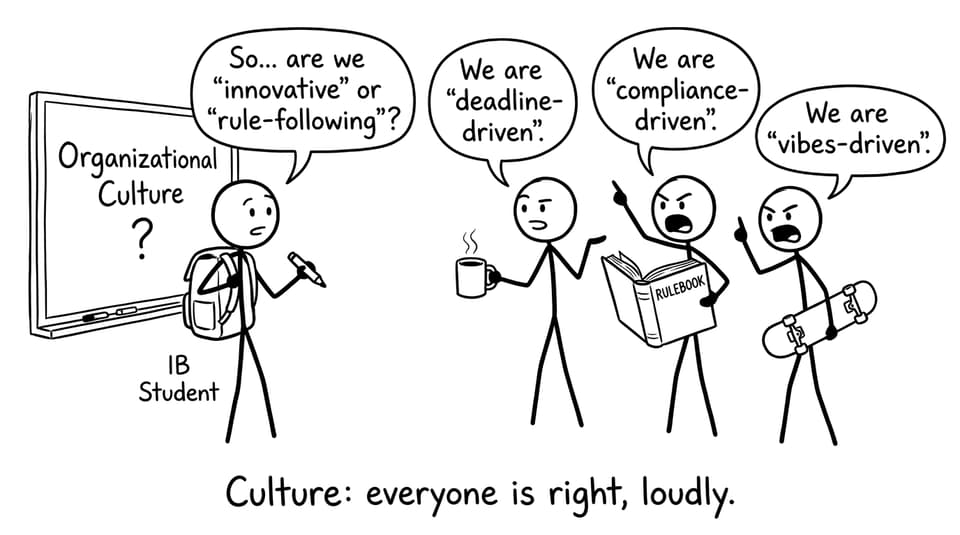
Walk into two organizations in the same industry and you can feel it immediately. In one, people speak freely, challenge ideas, and treat mistakes like data. In the other, every email reads like a legal document and the safest sentence is “I’ll check with my manager.” That difference is organizational culture, and in IB Business Management it’s not a soft extra; it’s often the hidden reason a strategy succeeds or collapses.
Culture forms slowly, like fingerprints on a shared window. Every decision, reward, crisis, and hiring choice leaves a mark. Over time, those marks become patterns people follow without thinking.
Quick exam checklist for IB Business Management answers
When an exam question asks why cultures differ, use this simple structure:
-
Define culture (values, beliefs, norms, practices).
-
Identify 2-3 shaping factors (leadership, values, structure, environment, people, history).
-
Explain impact (communication, motivation, decision-making, change).
-
Add one benefit and one drawback for evaluation.
For syllabus-aligned refreshers, keep IB Business Management 2.5.1 Organizational Culture Notes open as you revise.
Leadership: the loudest signal in the room
In IB Business Management, leadership is a top driver of culture because leaders control attention: what gets praised, what gets ignored, and what gets punished. A collaborative leader who shares credit builds psychological safety. A leader who blames publicly builds silence. The key is consistency: culture becomes stable when people can predict how leaders will react.
If you need to connect leadership style to culture in responses, revise 2.3 Leadership and management and practice with the IB Business Management Questionbank.
Values and mission: what the organization claims to be
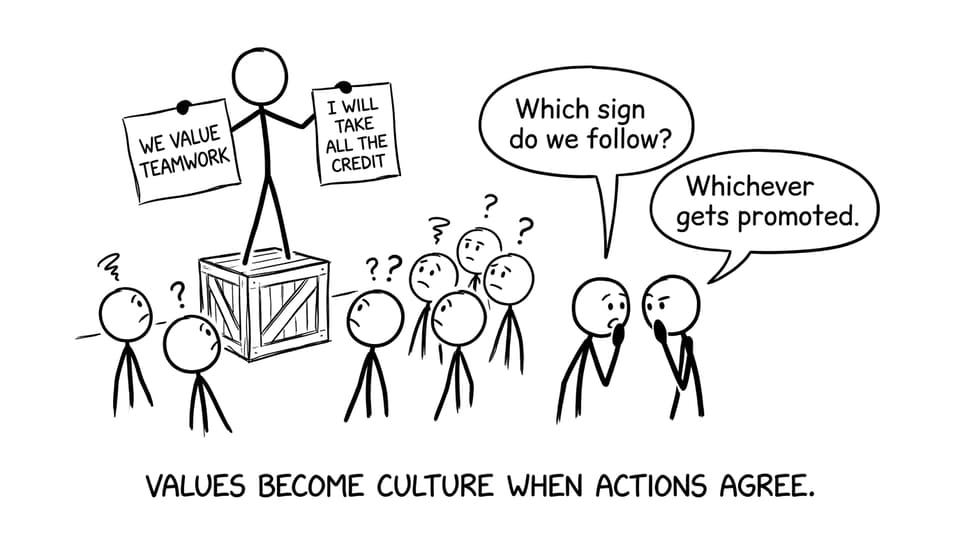
A mission statement is easy to print; living it is harder. Values shape culture when they’re embedded into real systems: recruitment, onboarding, performance targets, and promotion decisions. If a company says it values innovation but rewards only error-free execution, employees learn the real rule: don’t take risks.
To add sharper evidence in your essays, pull examples like stories, rituals, and reward systems from Organizational Culture Notes and extend your analysis with Why Does Organizational Culture Matter?.
Structure: the shape of power becomes the shape of behavior
Organizational structure quietly decides who gets to speak, how fast decisions travel, and whether initiative is rewarded or treated as “going out of line.” Flat structures often create faster communication and wider autonomy. Tall hierarchies can create clarity and control, but they may also slow decision-making and make people risk-averse.
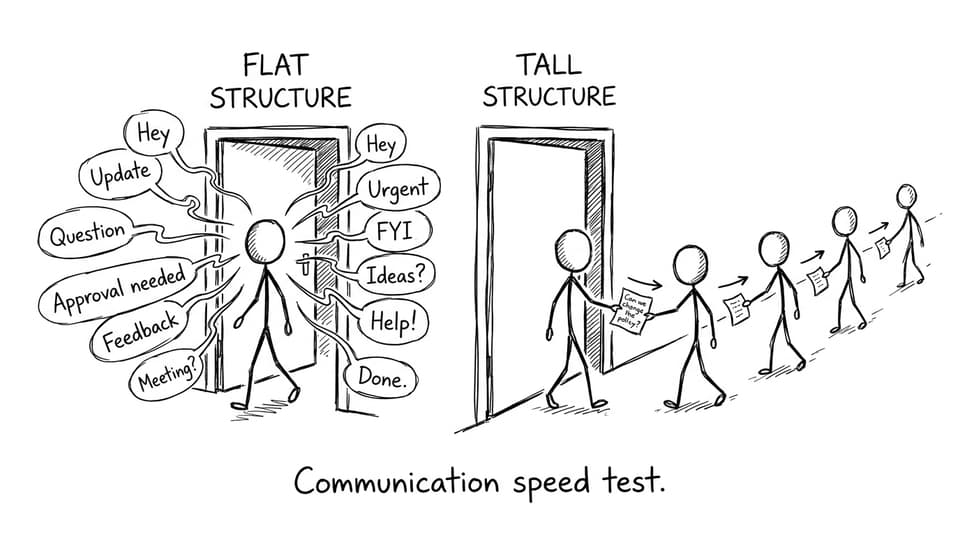
For the exam, it helps to link structure to communication. Pair culture with Culture, Decisions and Communication Inside a Business so your answers feel integrated, not memorized.
External environment and history: why two “similar” firms diverge
Even in the same industry, external pressures differ: regulation, competition intensity, customer expectations, and labor markets. A heavily regulated firm may develop a compliance-first culture because the cost of mistakes is severe. Meanwhile, a firm built during rapid growth may normalize experimentation because speed mattered more than certainty.
History matters too. A crisis can harden a culture into caution and tight control. A period of success can create confidence, sometimes tipping into complacency. These experiences become organizational memory, and memory becomes habit.
To revise the people side (how individuals reinforce or challenge culture), see 2.5.2 Individuals and Organizational Culture Notes.
Using RevisionDojo to turn culture theory into exam marks
Theory is only useful if you can apply it fast. RevisionDojo helps you do that by moving from understanding to execution: use Study Notes for definitions, Flashcards for active recall, the Questionbank for exam-style practice, and AI Chat to test your explanation under timed pressure. When you’re ready, build Mock Exams and use grading tools to find where your evaluation is thin. If coursework examples help you think, the Coursework Library and Tutors can give you real clarity on how to write with precision.
Explore the full hub at IB Business Management Resources and reinforce key points with Business Management Cheatsheets.
Closing: culture differs because the story differs
Cultures differ so much because organizations live different stories: different leaders, different structures, different pressures, different memories. In IB Business Management, your edge comes from showing how those stories become routines people follow automatically. If you want to turn that understanding into consistent marks, revise with RevisionDojo’s Study Notes and Flashcards, then pressure-test your writing with the Questionbank, AI Chat, and Mock Exams until culture analysis feels natural under time limits.