A quick story about “Place” that shows up on exam day
A product can be brilliant and still fail for a boring reason: people can’t actually get it. In IB Business Management, that quiet make-or-break decision is distribution (the “Place” in the marketing mix). And one detail examiners love is why some businesses choose multiple distribution channels instead of committing to just one.
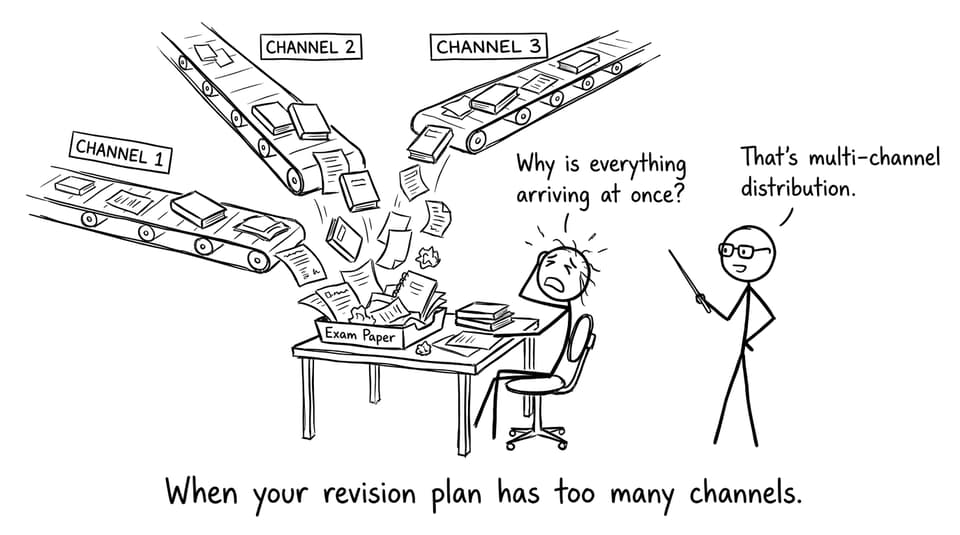
Think of it like revision: you might learn content from Study Notes, lock it in with Flashcards, and then stress-test it with exam questions. One path rarely serves every need. The same logic explains multi-channel distribution.
Multi-channel distribution: an exam-ready checklist
When you see a case study asking about distribution in IB Business Management, scan for these triggers:
-
Different customer preferences (online vs physical)
-
Market coverage goals (new regions/segments)
-
Risk reduction (one channel fails, others continue)
-
Convenience and speed expectations
-
Control vs reach trade-off (direct vs intermediaries)
-
Data insights from different touchpoints
For clean terminology, keep the IB Business Management Key Definitions nearby while you practise.
Why businesses use multiple distribution channels
They’re trying to reach different customers
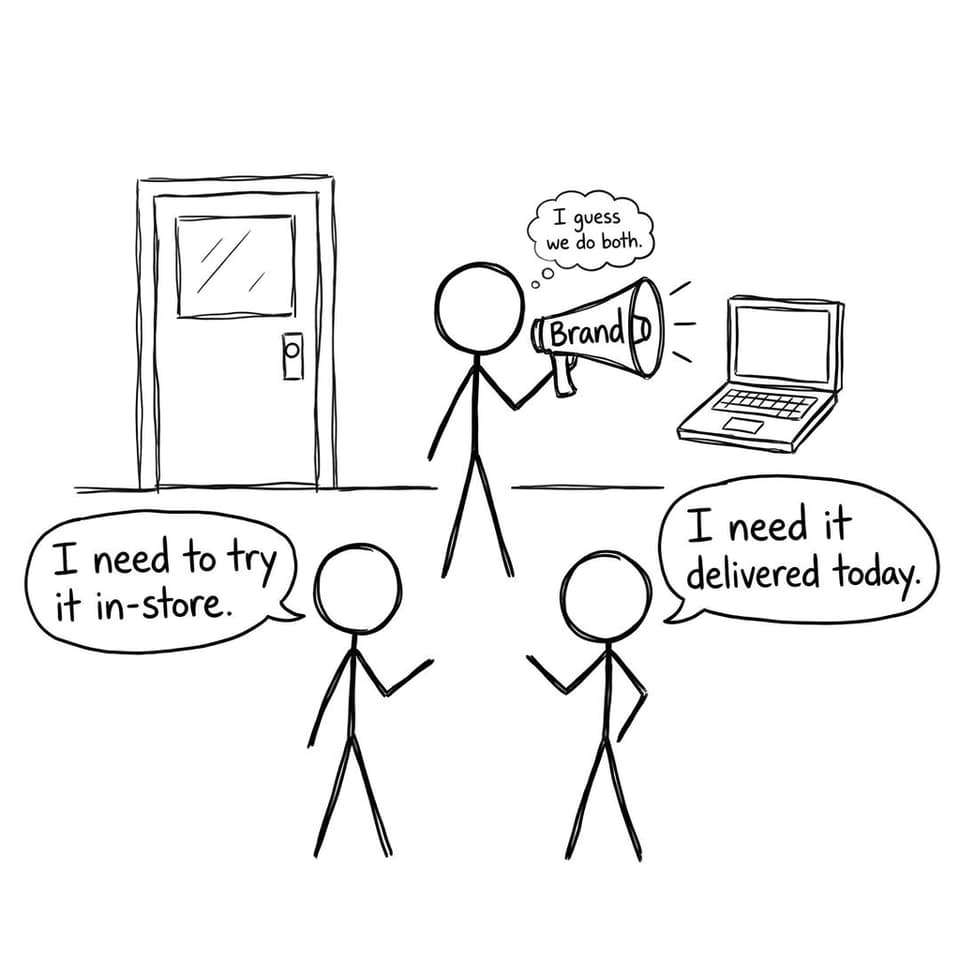
Not all customers buy the same way, even when they want the same product. Some want to browse, compare, and ask questions in-store. Others want a two-click checkout and delivery tracking. Multi-channel distribution lets a business match channel choice to buyer behaviour, which is exactly the kind of application examiners reward in IB Business Management.
If you need the syllabus framing for “Place,” these 4.5.5 Place notes clarify direct vs indirect channels and the role of intermediaries.
They want wider market coverage (without rebuilding the whole business)
Adding an e-commerce store, partnering with retailers, or using wholesalers can expand reach quickly. Instead of relying on one pipeline, the firm creates multiple routes to the customer, increasing availability and visibility.
To connect this to the marketing mix, use the hub for 4.5 The seven Ps of the marketing mix and revise the “Place” link back to brand image and customer experience.
They’re reducing risk
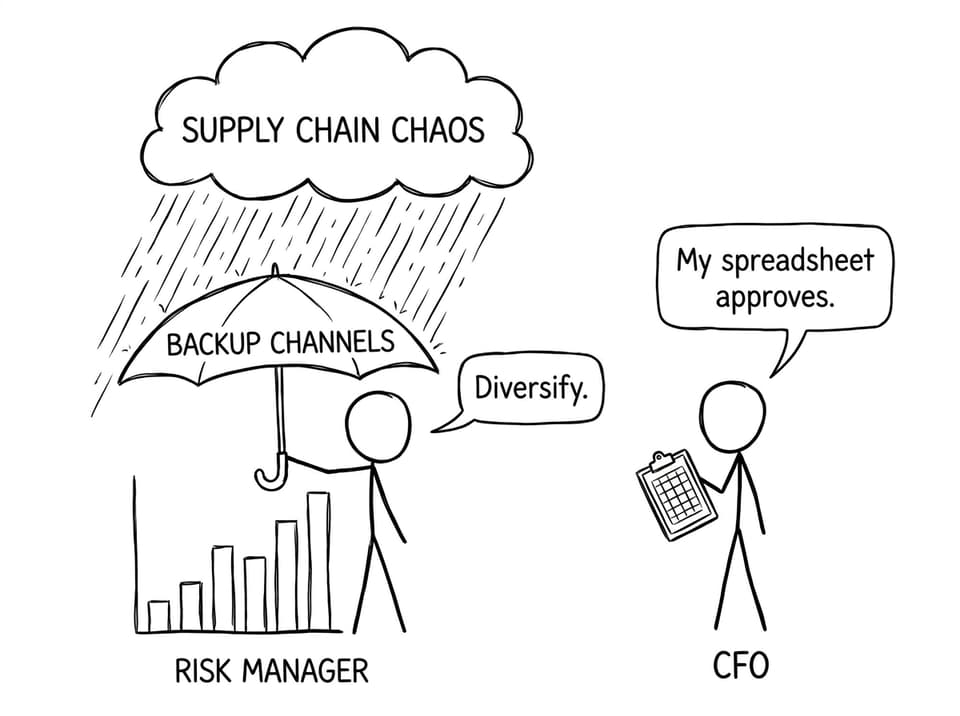
Distribution risk is real: foot traffic can drop, platforms can change fees, supply chains can stall, or a retailer can delist a product. With multiple distribution channels, revenue is less dependent on a single point of failure. In IB Business Management, this is often a strong evaluation point: diversification can stabilise cash flow but may increase coordination costs.
They’re improving convenience (which often becomes competitive advantage)
Convenience is strategy disguised as a small detail. If customers can buy “where they already are” (marketplaces, social commerce, physical retail, direct website), switching costs fall and conversion rates rise. This can create competitive advantage, especially when competitors offer limited access.
A helpful companion read is Why Is Distribution Important, and How Does It Affect Product Availability?.
They learn more about customer behaviour
Different channels generate different insights. Online channels provide browsing and conversion data; physical stores reveal real-time objections and product-handling feedback. Businesses can use this to refine targeting, stock decisions, and even product design.
To practise applying these ideas in exam style, use RevisionDojo’s 4.2 Marketing planning Questionbank and 4.1 Introduction to Marketing Questionbank.
Common downside (and a strong evaluation angle)
Multiple distribution channels can cause channel conflict: inconsistent pricing, messy inventory, unclear positioning, and customer confusion. The best IB Business Management answers balance the upside (coverage, convenience, risk reduction) with the management challenge (coordination, cost, control).
If you want a structured way to phrase this in responses, RevisionDojo’s BM Toolkit helps you frame trade-offs clearly.
Conclusion: the simplest way to remember it
Businesses use multiple distribution channels because customers are varied, markets are messy, and single-channel strategies are fragile. For IB Business Management exams, the winning move is to treat multi-channel distribution as a strategic trade-off: more reach, convenience, and resilience, but only if the business can coordinate channels without losing control.
If you’re revising “Place,” build the loop the same way you would for any topic: learn it with RevisionDojo Study Notes, retain it with Flashcards, apply it with the Questionbank, and refine it with AI Chat and Grading tools. That’s how you turn a simple concept into consistent marks.

