


When a great product still disappears
A student once described their favorite snack like it was a life-changing invention. Then they paused and said, “But I can never find it anymore.” That sentence is the whole logic of IB Business Management distribution. A product can be well-designed, well-priced, and well-promoted, yet fail quietly if customers can’t actually access it.
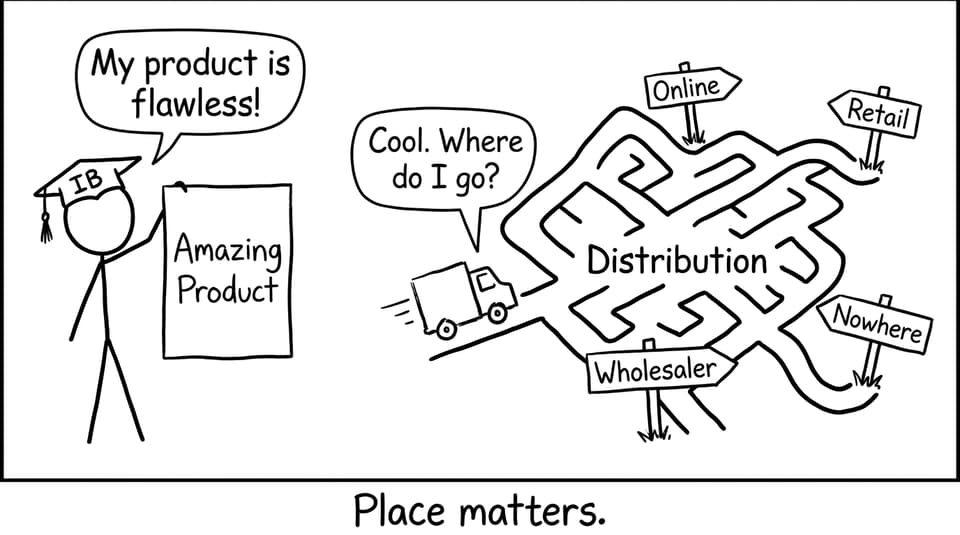
In IB Business Management, distribution is the “Place” in the marketing mix. It’s the system that gets the right product to the right customer in the right location, quantity, and timing. And that system is what decides product availability.
Quick exam checklist: what distribution changes
Use this quick checklist in IB Business Management case studies when “Place” appears:
-
Availability: are there stockouts or easy access?
-
Convenience: can customers buy where/when they want?
-
Reach: how many segments and regions can the business cover?
-
Speed: lead times, delivery reliability, replenishment frequency
-
Costs: transport, storage, commissions, platform fees
-
Control: pricing power, brand experience, customer data
For a syllabus-aligned refresher, link your answer to 4.5 The seven Ps of the marketing mix and especially 4.5.5 Place notes.
Why distribution is important in IB Business Management
Distribution protects product availability (and stops “easy switching”)
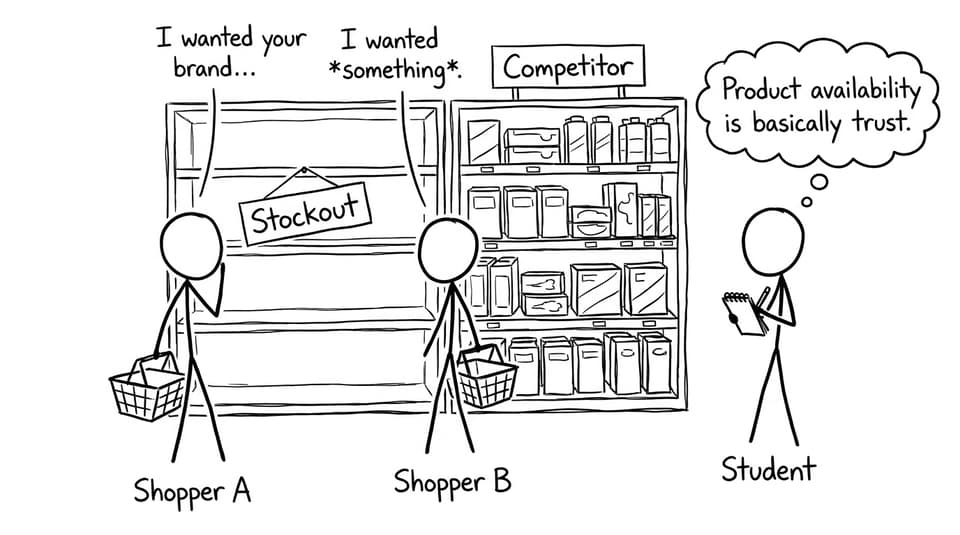
The simplest reason distribution matters is that it prevents the most common loss in marketing: the customer who wanted you, but bought someone else because you weren’t there. In IB Business Management, that’s not a “minor logistics issue”; it’s lost sales, lost market share, and often lost trust.
When your product isn’t available at the moment of purchase (empty shelf, out-of-stock online, no local retailer), customers usually don’t wait. They substitute.
Distribution shapes customer satisfaction and loyalty
Availability becomes a quiet promise. If a brand is consistently easy to buy, customers feel the business is reliable. If it’s unpredictable, customers stop planning around it.
In IB Business Management, this is a strong evaluation angle: a business might spend heavily on promotion, but poor distribution creates repeated frustration (stockouts, slow delivery, limited access). Over time, that weakens loyalty and reduces lifetime value.
Distribution expands market reach without expanding effort
Good distribution increases reach more efficiently than direct selling alone. By using retailers, wholesalers, agents, or online platforms, a business can access customers who would never discover the product otherwise.
If you want exam-ready phrasing, connect this to market coverage and channel choice using How do businesses choose the right distribution channels?. It helps you move beyond definitions into strategy.
Distribution affects speed and operational efficiency
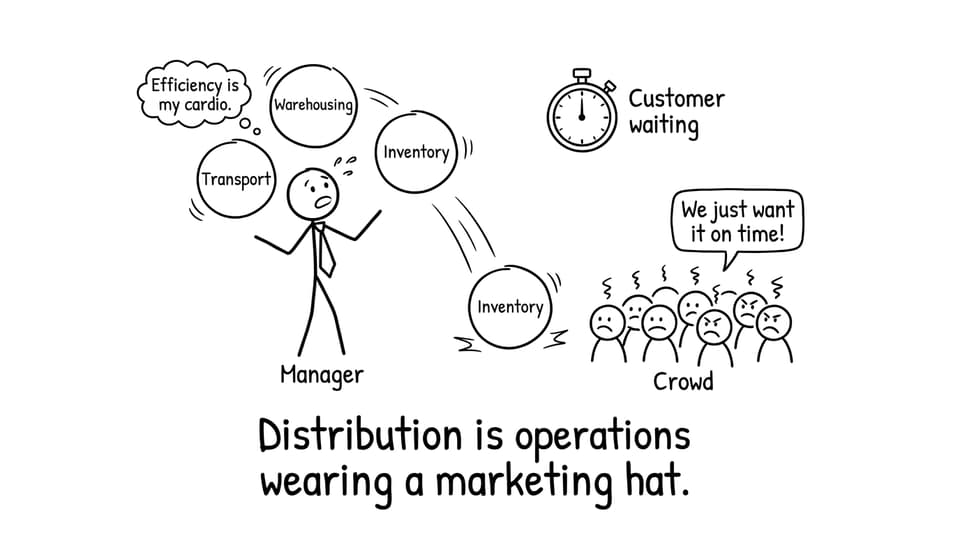
Distribution sits between operations and marketing. If transport is slow, warehousing is mismanaged, or inventory systems are weak, product availability collapses. Fast, coordinated distribution reduces delivery times and keeps shelves stocked with fewer costly delays.
This is a great place to mention how “Place” aligns with the wider marketing function in Business functions notes.
Distribution can create competitive advantage (quietly)
In competitive markets, the “best” product often isn’t the winner. The winner is the product people can buy easily, repeatedly, and with confidence. In IB Business Management, that becomes a competitive advantage built on convenience and reliability.
Distribution influences costs (and therefore pricing decisions)
More intermediaries can add costs: storage, handling, retailer margins, commissions, and returns. Those costs can push prices up or squeeze profit margins. Efficient channels can keep prices competitive while maintaining profitability.
To connect “Place” to the full mix (and write stronger 10-mark answers), pair it with How does the marketing mix help businesses create value for customers?.
A final exam-focused takeaway
Distribution is important because it turns marketing promises into real-world access. In IB Business Management, “Place” is where product availability is won or lost: convenience, speed, reach, cost, and trust all show up here.
If you want to practise writing sharp, case-study-ready answers, use RevisionDojo’s IB Business Management resources hub, then drill “Place” with the 4.5 marketing mix Questionbank, tighten definitions with 4.5 flashcards, and revise faster with Unit 4 Marketing Management cheatsheets. RevisionDojo’s Study Notes, Flashcards, AI Chat, Grading tools, Mock Exams, Predicted Papers, Coursework Library, and Tutors are built to make IB Business Management feel structured and very doable.