

A quick story you already know (even if you haven't named it yet)
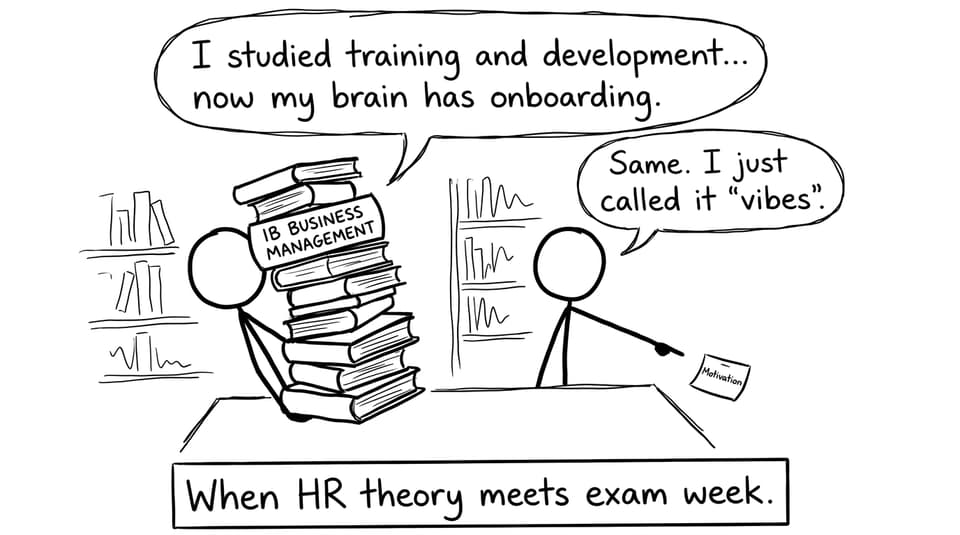
In the week before exams, you don't magically become smarter. You become sharper. You learn the markscheme language. You practise timed responses. You stop losing points to avoidable mistakes.
Companies think about training and development the same way. In IB Business Management, it isn't a “nice extra”; it's a strategic investment that turns average effort into reliable performance, and reliable performance into long-term advantage.
If you're revising Unit 2 (HR management), this topic is pure exam fuel: it links directly to productivity, motivation, innovation, costs, and stakeholder outcomes.
Training and development: an exam-ready checklist
When a question asks why a business invests in training and development, you can usually group your analysis into these buckets:
-
Improve performance and productivity (fewer errors, faster output)
-
Support innovation and problem-solving (new skills, new perspectives)
-
Increase motivation and engagement (employees feel valued)
-
Reduce labour turnover (retention and internal promotion)
-
Meet compliance and safety requirements (lower legal and reputational risk)
-
Create consistency (standard processes, brand reliability)
For quick definitions and precise phrasing, keep the IB Business Management Key Definitions open while you practise.
Improving employee performance (the most direct reason)
Training is the simplest route from “we hired someone” to “we can rely on them.” In IB Business Management, this is where you connect training to:
-
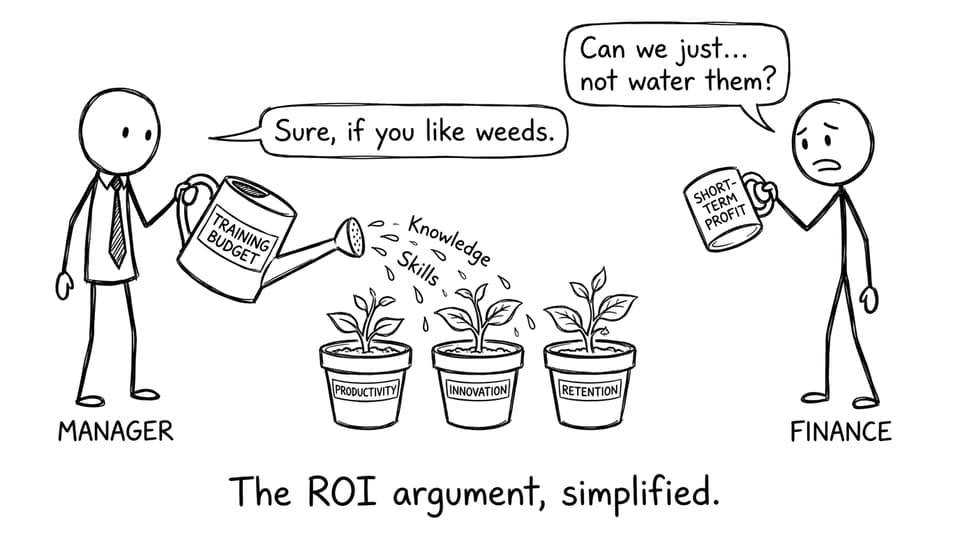
higher labour productivity (more output per worker)
-
better quality (fewer defects and complaints)
-
lower costs (less wastage, fewer returns, fewer accidents)
In exam terms, you score well when you add why it matters: performance gains protect profit margins and improve customer satisfaction.
To practise how this looks in IB-style questions, use the IB Business Management Questionbank and target HR prompts like 2.1.
Innovation and adaptability (training as “future-proofing”)
Markets change quietly, then suddenly. New software arrives. Competitors copy features. Customer expectations shift. Training helps firms adapt without constant rehiring.
In IB Business Management, this is a strong evaluation point: training is not only about today's job tasks, but also about building flexibility into the workforce.
If you're studying HR foundations, the 2.1 Introduction to HR Management questionbank is a good place to practise linking training to strategic objectives.
Motivation, engagement, and retention (the human multiplier)
People notice when a business spends money on them. Training signals trust: “We see you here next year.” That feeling can lift:
-
motivation (more discretionary effort)
-
employee engagement (greater commitment)
-
loyalty (lower labour turnover)
And turnover is expensive. Recruitment, onboarding time, and lost know-how quietly drain cash.
To connect training to HR planning factors (internal vs external constraints), revise with 2.1.2 Internal and External Factors Influencing Human Resource Planning.
Compliance, safety, and consistency (risk you don't see until it's too late)
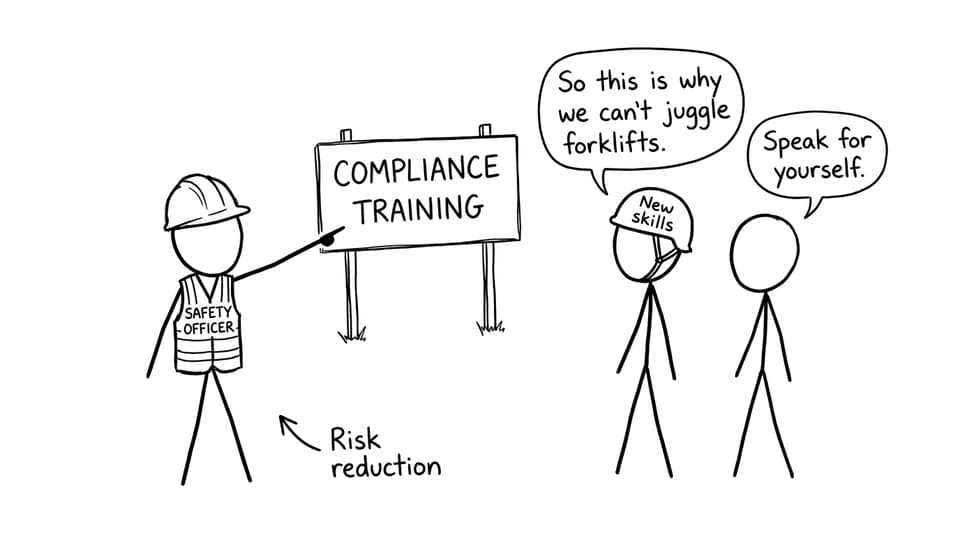
Some training isn't designed to inspire; it's designed to prevent disaster.
Safety training reduces accidents. Compliance training reduces legal risk. Standard operating training reduces process variation so customers get the same experience across teams and locations.
This is a great IB Business Management angle because it broadens your answer beyond profit: you can discuss stakeholder impacts, ethics, and reputational damage.
For a wider ethics lens, read Integrity in IB Business Management: Ethical Decision Making and Analysis.
How to write this in an exam (fast structure)
A simple structure that works for many IB Business Management responses:
-
Define training and/or development clearly.
-
Explain two benefits (performance + retention usually score well).
-
Add one strategic link (innovation/adaptability or competitive advantage).
-
Evaluate with a drawback (cost, time off work, trained staff may leave).
For broader course context and how topics connect, see Understanding IB Business Management.
Closing: the IB takeaway (and your next move)
Companies invest in training and development for the same reason you revise: the goal isn't “more effort.” It's better outcomes. In IB Business Management, training connects to performance, innovation, motivation, retention, compliance, and consistency, which means it shows up everywhere in exam questions.
If you want to turn this topic into marks, build a short revision loop on RevisionDojo: Study Notes for clarity, Flashcards for language, Questionbank for timed practice, AI Chat for quick checks, and Grading tools to level up your evaluation.