


Budgets feel boring right up until they save you.
Picture a business that’s selling well, hiring quickly, and celebrating growth, then one month, the bank balance suddenly looks… smaller than expected. Nothing “went wrong,” exactly. Money just leaked out in a hundred quiet decisions. That’s the moment IB Business Management starts to feel less like a textbook and more like a survival guide.
In IB Business Management, budgets are one of the simplest tools with the biggest impact: they turn good intentions into numbers, and numbers into control.
What a budget is (and what examiners want you to say)
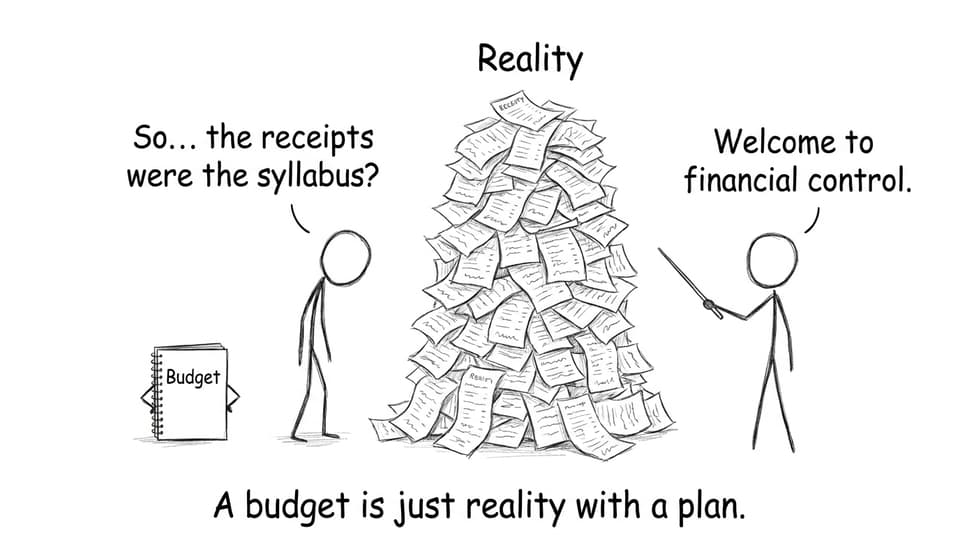
A budget is a financial plan that estimates income and expenses for a future period. For exam answers, you’ll usually link it to:
-
Planning and forecasting
-
Monitoring performance (budget vs actual)
-
Cost control and efficiency
-
Accountability and coordination
-
Better decision-making
If you’re revising Unit 3, keep RevisionDojo’s budget topic open while you practice: IB Business Management 3.9 Budgets and the wider Unit 3: Financial Management hub.
Why businesses create budgets in IB Business Management
In IB Business Management, businesses create budgets because managers need a shared financial “story” about the future. Without that story, each department improvises, and improvisation is expensive.
Budgets force planning, not guessing
Budgets make businesses forecast sales, estimate costs, and set targets. That forecast isn’t always perfect, but it’s better than pretending the future will “work itself out.” If you want a clean process to reference, RevisionDojo’s notes help you talk about objectives, revenue forecasts, and cost estimates: Constructing a Budget (3.9.2) Notes.
Budgets help allocate scarce resources
Every business faces trade-offs: more marketing spend might mean less training, or delayed equipment upgrades. A budget makes those trade-offs explicit, which improves strategic alignment.
How budgets improve financial control
Financial control is where budgets stop being a plan and start being a system.
Budgets set limits (and make overspending visible)
A budget creates spending boundaries. When actual spending drifts above the plan, managers can investigate early, rather than discovering the problem when cash is gone.
Budgets enable variance analysis
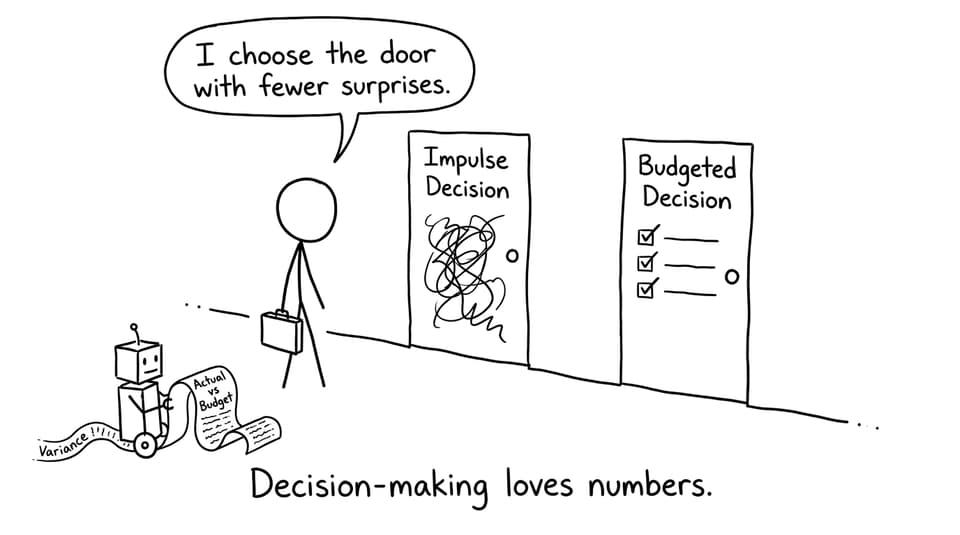
In IB Business Management, “control” often means comparing budgeted figures to actual performance and calculating variances. That gap tells managers what to fix, what to repeat, and what assumptions were wrong in the first place. For the definitions and exam language, revise: Variances (3.9.3) Notes and Importance of Budgets and Variances (3.9.4) Notes.
Budgets improve coordination between departments
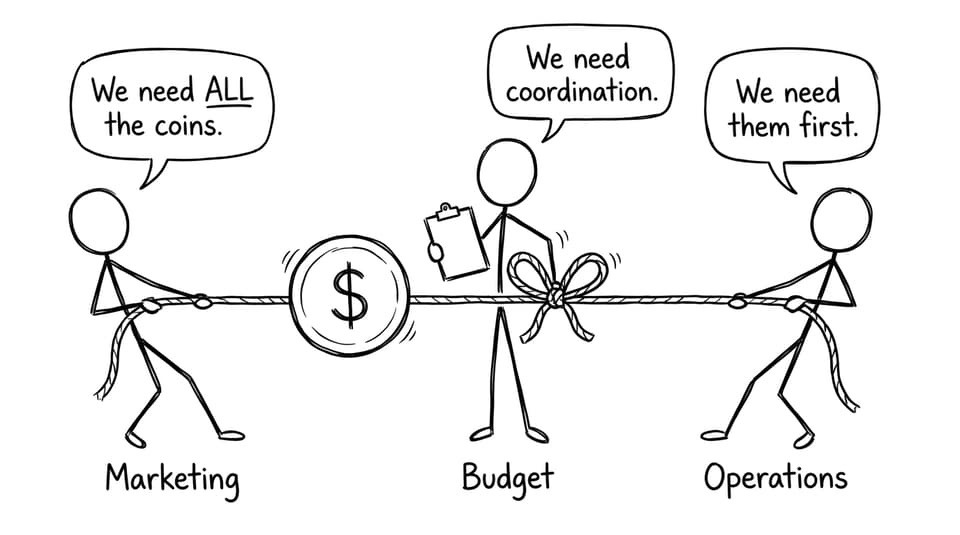
Budgets align departments so they don’t work against each other. Marketing might push for a bigger campaign, while operations may need investment in capacity. A shared budget forces negotiation and coherence instead of conflict.
A helpful cross-topic connection: operations decisions shape costs, efficiency, and ultimately the budget itself. See: How Operations Management Supports Other Business Functions.
Budgets increase accountability
When managers receive a budget, they inherit responsibility. That accountability can improve performance evaluation, motivation, and internal discipline, especially when linked to clear targets.
Quick exam checklist for IB Business Management answers
Use this structure in any short-answer or 10-marker:
-
Define budget clearly
-
Explain planning/forecasting benefit
-
Explain financial control using “budget vs actual” and “variance”
-
Add one more benefit (coordination or decision-making)
-
Evaluate briefly: budgets can be inaccurate, need regular review, and can discourage flexibility
To practice with feedback, combine content + exam technique using RevisionDojo’s IB Business Management Questionbank and the main IB Business Management Resources hub.
Conclusion: turn budgets into marks
Budgets are one of those IB Business Management topics that look simple, but score highly when you connect them to financial control: limits, monitoring, variance analysis, and better decisions. The best answers feel like real management, not definitions.
If you want to revise faster and practise smarter, RevisionDojo brings the whole system together: Study Notes, Flashcards, AI Chat for explanations, Grading tools for responses, Predicted Papers, Mock Exams, a Coursework Library, and Tutors when you need a human plan. Start with the budgeting pages above, then build confidence using the Questionbank inside IB Business Management.