
For the May examination session, IB Diploma Programme and Career-related Programme scores become available to candidates from 12:00 GMT on 6 July. For November exams, schools receive results on 16 December, followed by staggered candidate access based on local time. Your exact release time appears in the IB candidate website or comes from your coordinator.
Waiting for IB results creates a peculiar kind of uncertainty. The exams are finished, revision can no longer change the outcome, yet the next decision may depend on a number you cannot see. The useful response is not to refresh more often. It is to understand the timeline, prepare your login, and know what you will do after the screen loads.
IB results release dates at a glance
Current International Baccalaureate guidance separates the time schools receive results from the time candidates can access them.
| Examination session | School access | Candidate access |
|---|---|---|
| May | 5 July from 12:00 GMT | 6 July from 12:00 GMT |
| November | 16 December from 21:00 GMT | Staggered by time zone, with current candidate guidance indicating 17 December from 13:00 in the school's local time zone |
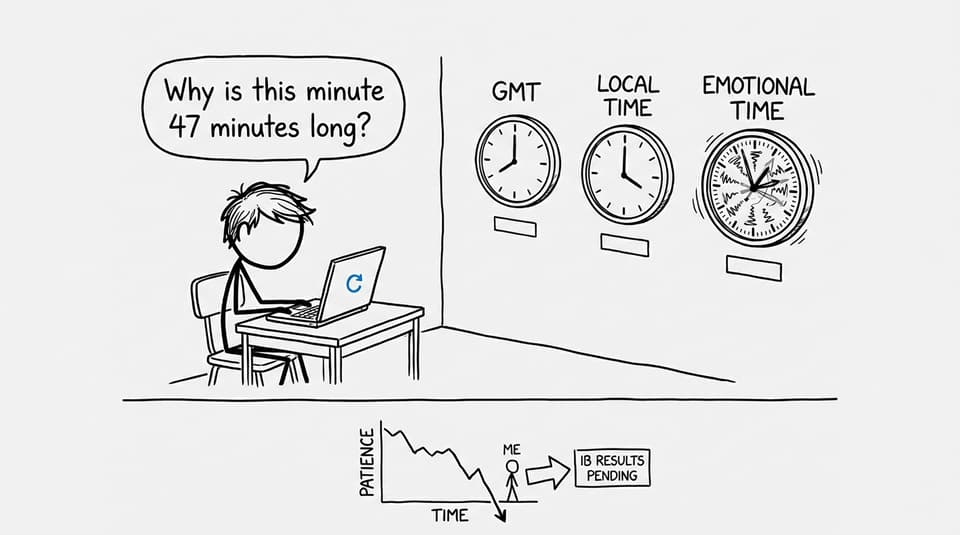
For November candidates especially, confirm the exact time with your DP or CP coordinator. The release is staggered, so a friend in another country may see a result before you without anything being wrong with your account.
When do IB scores come out for schools and universities?
Schools receive May-session results on 5 July, one day before standard candidate access opens. A coordinator may contact students earlier, but that depends on the school's policy. Students should not assume that silence means there is a problem.
Universities using the IB's electronic transcript system can also receive authorized results when institutional access opens. This only works if the necessary transcript request and authorization have been arranged. Before results day, ask your coordinator whether your chosen institutions are included rather than assuming that a university will automatically receive your grades.
The distinction matters because three events are often described as “results day”:
- The IB releases results to schools and authorized institutions.
- Candidates receive access through the IB candidate website.
- Universities update offers after processing the transcript.
Those events do not always happen at the same moment. The guide to whether students see results before schools explains why coordinators normally receive access first.
How to check your IB results online
Your school decides whether candidates receive direct access to the IB candidate website. If access is enabled, your coordinator provides the session-specific credentials you need.
Prepare before release day
Complete this checklist several days beforehand:
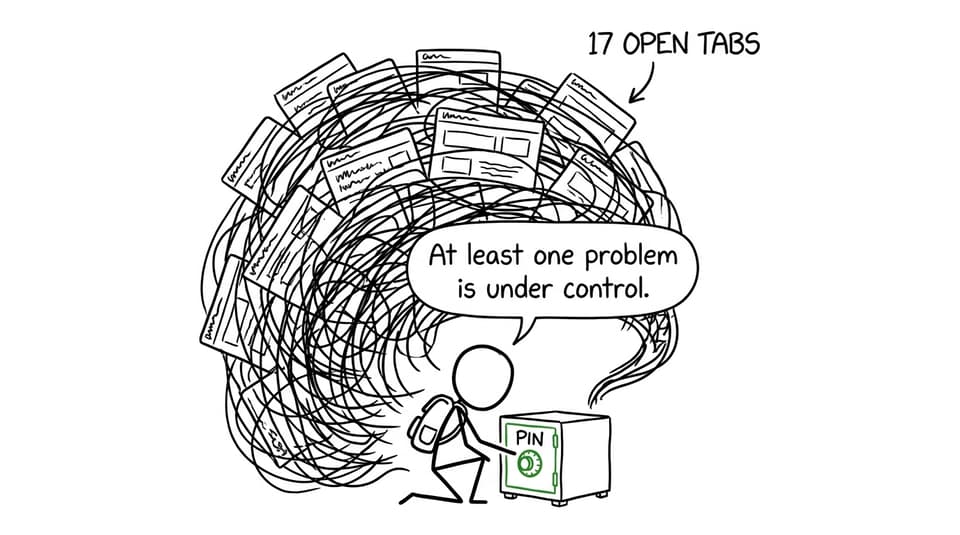
- Find your personal code and individual PIN.
- Confirm the local-time conversion from GMT.
- Test that you can reach the candidate website.
- Ask your coordinator whom to contact if access fails.
- Confirm that any required university transcript requests have been submitted.
- Write down your university conditions, including total and Higher Level requirements.
Credentials should be entered exactly as your coordinator supplied them. If you lose them, contact the coordinator because the IB does not provide candidate login details directly for privacy reasons. Repeated incorrect attempts can temporarily block access, which is why results morning is a poor time to begin searching old emails.
For a screen-by-screen explanation, use RevisionDojo's guide to checking IB results online.
Open and record your results
After logging in, accept the terms if prompted and select View results or the Results tab. Record the information before interpreting it:
- Each subject grade from 1 to 7
- Your total points
- Theory of Knowledge and Extended Essay results
- Core points
- Diploma status
- Any displayed scaled marks or grade-boundary information
The candidate website does not normally show individual component marks. If you need marks for particular examination components or internally assessed work, ask your coordinator what information the school can provide.
How to read the score on your screen
Six Diploma Programme subjects are each graded from 1 to 7, producing up to 42 subject points. Theory of Knowledge and the Extended Essay can contribute up to three additional core points, creating a maximum Diploma score of 45. CAS does not add points, but its completion is a Diploma requirement.
A total of 24 is the minimum starting threshold for the Diploma, not an automatic guarantee. Candidates must also satisfy the IB's other passing conditions. That is why the diploma status shown with your results matters as much as the total.
Grade boundaries convert the final weighted mark in a subject into a grade from 1 to 7. They are not universal percentages fixed across every year, subject, level, and session. Read RevisionDojo's student guide to IB grade boundaries before deciding that a result was unusually high or low.
A worked results-day example
Suppose a hypothetical student opens the portal and sees 35 total points. Their university offer requires 36 overall, including a 6 in one Higher Level subject. They achieved the required HL 6 but missed the total condition by one point.
The first mistake would be to treat “one point short overall” as proof that one additional raw mark will solve the problem. Diploma points, subject marks, and grade boundaries are different things. The student should instead:
- Record every subject grade and the core result.
- Contact the coordinator for scaled marks and boundary proximity.
- Confirm whether the university has received the transcript.
- Ask the university how it treats a near miss.
- Discuss an Enquiry Upon Results only after reviewing the evidence.
An Enquiry Upon Results is not a free extra point. Eligible work is reviewed, and a result can rise, remain unchanged, or decrease. The request must go through the school. RevisionDojo's IB remark decision guide helps students evaluate that choice without turning disappointment into a rushed gamble.
You can also use the RevisionDojo IB Grade Calculator during preparation to understand how subject grades and core points contribute to a projected total. Practice calculations are estimates, however, not official results.
Common results-day mistakes
Confusing the school date with the student date
For May exams, schools receive results on 5 July while normal candidate access begins on 6 July. Both dates may appear online, but they describe different audiences.
Using an outdated November timetable
Older articles often refer to an early-January release. Current IB guidance places the November school release on 16 December, followed by staggered candidate access. Follow current instructions from your coordinator rather than an old countdown page.
Sharing login credentials
Do not send your code and PIN to friends, admissions offices, or unofficial result-checking services. Universities receive authorized transcripts through the IB's institutional process, not by signing into your candidate account.
Reacting before checking the conditions
A total score alone does not tell you whether an offer has been met. Some offers include particular HL grades, subject requirements, or other conditions. Compare the official result with the exact written offer.
Assuming a near boundary guarantees a change
Being close to a higher boundary can make a review worth discussing, but it guarantees nothing. Ask for the available component information, understand the fee and deadline, and consider both upward and downward risk.
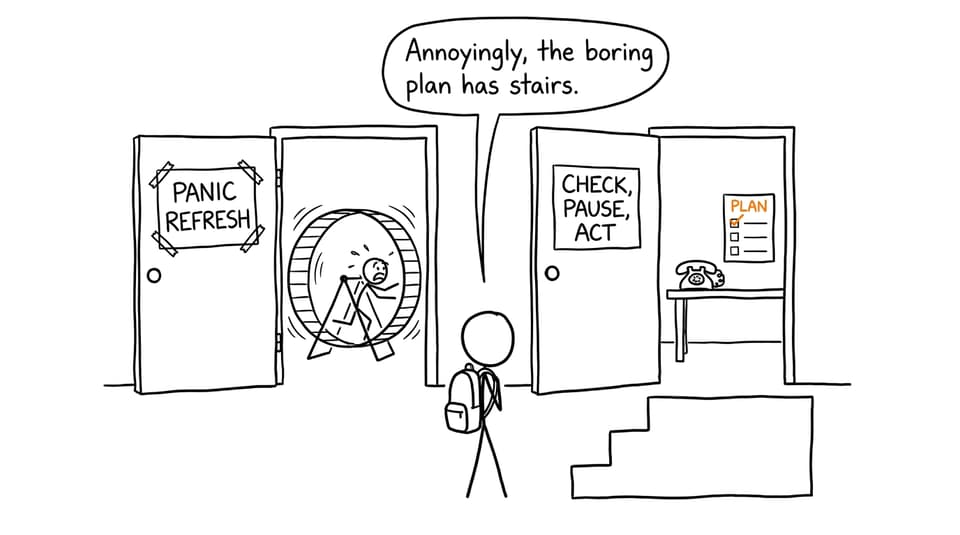
Your calm results-day action plan
Use this sequence when your scores appear:
- Record: Save the total, subject grades, core result, and diploma status.
- Pause: Step away for ten minutes before posting or making decisions.
- Compare: Check the result against your university's exact conditions.
- Confirm: Ask whether the institution received your transcript.
- Investigate: If a grade matters, request boundary and component information from your coordinator.
- Act: Contact the university or discuss an Enquiry Upon Results promptly when necessary.
RevisionDojo's results-day countdown checklist can help you organize these steps before emotions enter the room.
Prepare for the result you can still influence
Knowing when do IB scores come out removes one uncertainty. The larger opportunity comes earlier, while your preparation can still change the result.
RevisionDojo brings that preparation into one system: Study Notes for clarity, Flashcards for retrieval, a Questionbank for targeted application, and AI Chat for difficult concepts. Grading tools and the Coursework Library help strengthen submitted work, while Predicted Papers, Mock Exams, and Tutors support realistic practice and focused feedback.
Explore the RevisionDojo IB exam-prep platform, then build a repeatable cycle of learning, practice, feedback, and correction. Results day feels dramatic because one screen reveals everything at once. Strong preparation is quieter. It improves one decision at a time.