
The night you learn what a remark is
There’s a specific kind of silence that happens after IB results load.
Not the calm kind. The kind where you stare at a number that looks final, but doesn’t feel finished.
Maybe you missed the next grade by a hair. Maybe a university condition is sitting on one subject. Maybe you did better than you expected, and now you can’t stop thinking: what if one more mark changes everything?
That’s the moment most IB students first hear the word remark.
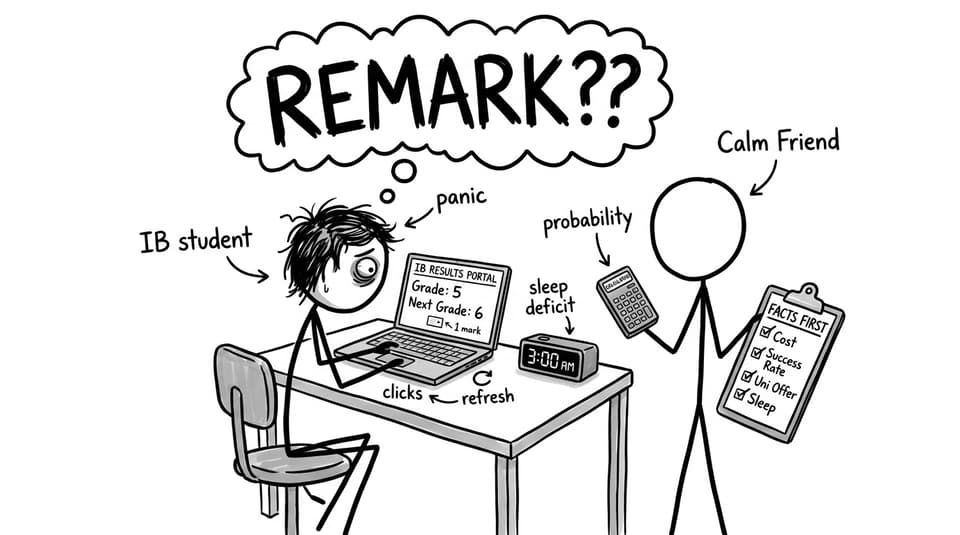
In IB language, a “remark” usually refers to the Enquiry Upon Results (EUR) process. It’s your school asking the IB to review marking on certain components after results are released.
But here’s what matters: a remark is not a magical appeal where you “argue your case.” It’s closer to paying for a second look at a process that’s mostly already been checked.
This article breaks down what a remark is, how it works in the IB, when it’s worth doing, and how to make the decision like an adult who wants outcomes, not drama.
IB remark overview checklist
If you only read one section, read this.
- A remark in the IB is an Enquiry Upon Results (EUR) submitted by your school.
- It can increase your mark, keep it the same, or (in some cases) decrease it.
- It’s most sensible when you are very close to the next grade boundary.
- It’s usually more “movable” for judgment-based components (essays) than highly objective marking.
- You’ll want component marks and boundary proximity before deciding.
- Deadlines are real. Ask your IB coordinator early.
- Treat it like a probability decision, not an identity decision.
For a broader results-day decision framework, see IB Results Day FAQ: Every Question Answered.
What is a remark in IB terms?
A remark is a post-results review requested through your school, where the IB re-checks and/or re-marks eligible parts of your assessment.
Students often imagine a remark like this: an examiner sits down, reads your paper carefully, and decides whether you “deserve” more.
The reality is less cinematic and more procedural.
- The IB has defined categories of enquiry.
- Certain components can be reviewed and others can’t (depending on how they’re assessed and administered).
- The goal is to confirm that marking and totals were processed correctly and, where applicable, to apply the mark scheme consistently.
A remark is not a re-sit. It doesn’t rewrite your story. It just asks: was the original marking accurate enough, and if not, what is the corrected mark?
If you want a deeper understanding of how mark schemes and feedback logic work in IB practice, RevisionDojo’s explainer on Mark-Scheme-Aligned Feedback is a useful lens.
The emotional trap: why “one mark away” feels personal
The hardest part about an IB remark decision is that it arrives when your brain is least equipped to decide.
You’re tired. Group chats are loud. Everyone is comparing totals like it’s a personality test.
And when you’re one or two marks from a boundary, your mind turns the gap into a moral narrative: If I worked this hard, surely the universe owes me the next grade.
But IB grades aren’t awarded by vibe. They’re awarded by mark schemes, moderation systems, and boundaries.
So your job is to step away from the story and move toward the facts.
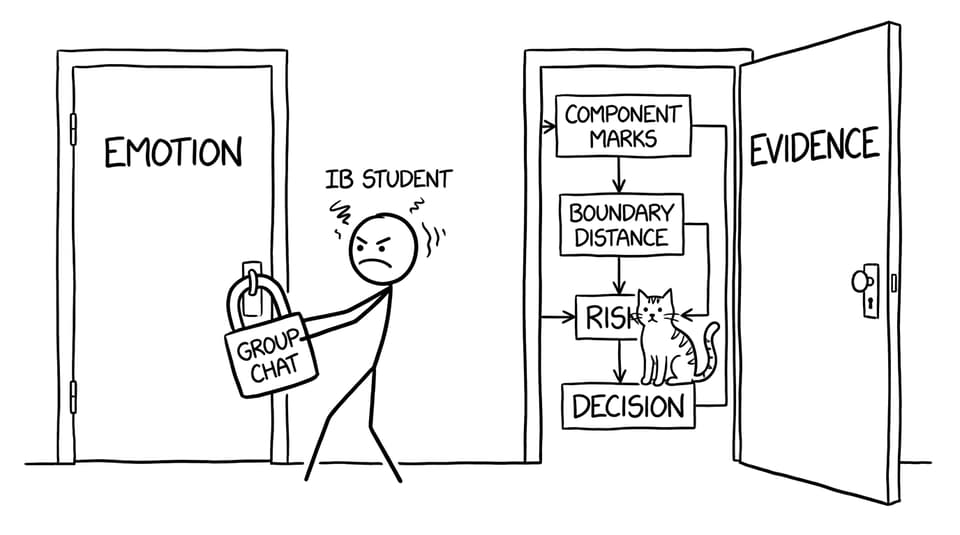
Here’s the mental shift that helps:
- A remark is not “challenging authority.”
- A remark is buying a small probability of a large consequence.
If the consequence is a university offer, that probability might be worth paying for.
How the IB remark process works (the practical version)
Your school’s IB coordinator submits the request. You typically cannot submit directly as a candidate.
The exact steps vary by school, but most students experience something like this:
You ask for the missing information
Before you request anything, ask your coordinator for:
- Your component marks (not just the final grade)
- How close you are to the next grade boundary
- Which components are eligible for enquiry
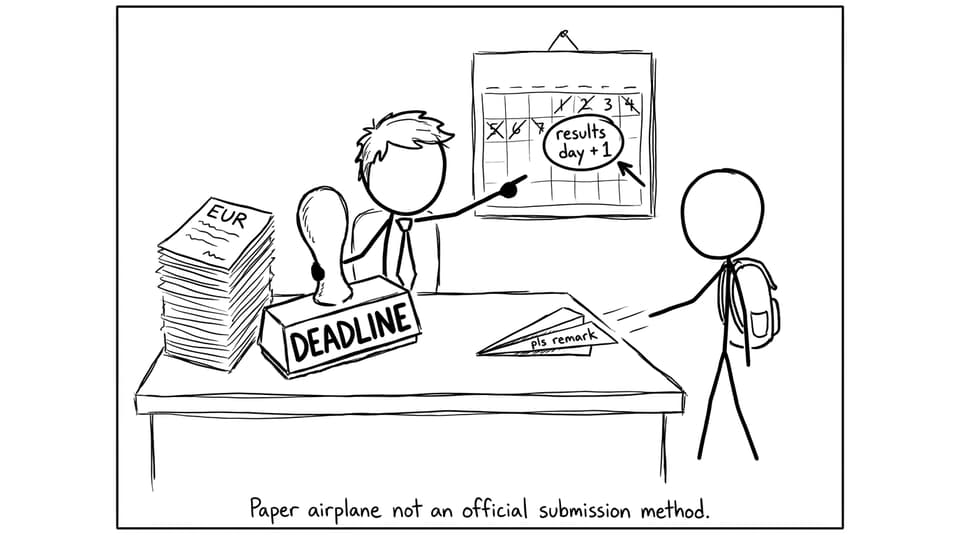
- Your school’s internal deadline (often earlier than the IB deadline)
Your coordinator advises on options
Most coordinators have seen patterns. They may tell you:
- “This subject is too far from the boundary.”
- “This component is unlikely to move.”
- “This is close enough to consider.”
The school submits an EUR
Fees and timelines depend on category and region, so treat your coordinator as the source of truth.
Outcomes return
Possible outcomes include:
- No change
- Mark increase (leading to a grade increase)
- Mark decrease (rare, but possible in certain remark categories)
This is why you don’t submit a remark because you’re angry. You submit a remark because your decision math says the upside is worth the risk.
When an IB remark is most worth it
There are a few situations where a remark makes rational sense.
You are very close to the next grade boundary
The simplest case: if you’re one or two marks away, the expected value of a remark goes up.
Not because you are “owed” the grade, but because small marking adjustments can matter at the boundary.
The stakes are unusually high
If a university condition depends on one subject, even a small probability can be worth it.
Think like this:
- Cost of remark: fixed
- Potential benefit: admission, scholarship, course placement
- Probability of change: uncertain, but not zero
The assessment is judgment-based
Some forms of IB assessment involve more examiner judgment than others.
When mark allocation depends on qualitative interpretation (argument quality, evaluation, clarity, organization), movement is more plausible than for strictly objective marking.
Your coordinator will know what is typical in your subjects.
When an IB remark is usually not worth it
A remark is often a poor choice when:
- You’re far from the boundary.
- You’re hoping for a large jump.
- Your plan is “remark first, then figure out life.”
- You have no component mark data.
In those cases, the better move is usually to redirect your energy into a system that reliably changes outcomes.
If you’re continuing your IB journey (retakes or future exams), build the system now.
A clean starting point is RevisionDojo App: The Smarter Way to Prep for IB Exams.
The better question: what can you control next?
The tricky thing about a remark is that it feels like action. You fill a form. You pay a fee. You wait.
But waiting is not the same as improving.
If you’re deciding whether to remark because you feel helpless, the fix is not the remark. The fix is regaining agency.
This is where RevisionDojo becomes practical, not promotional.
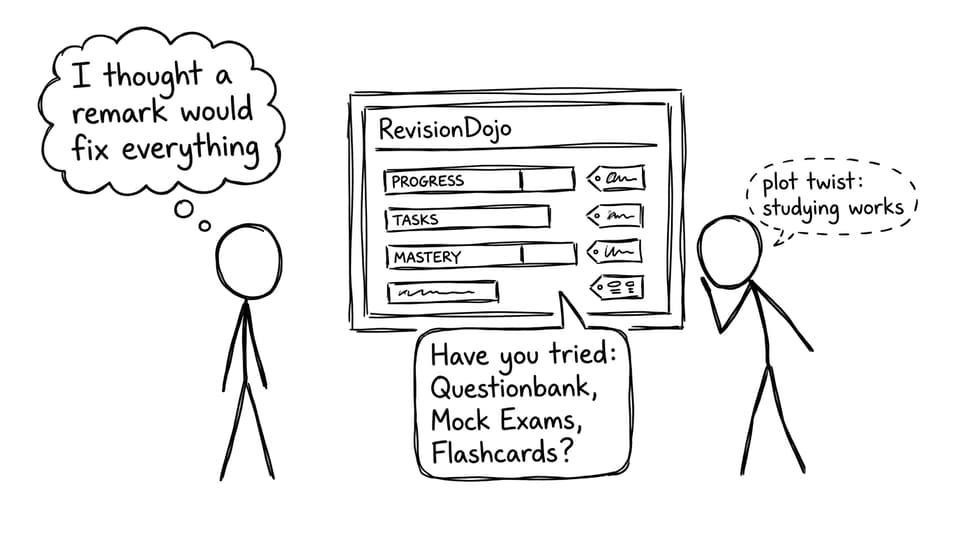
- Use the Questionbank to target the exact topics and command terms that cost you marks.
- Use Study Notes to rebuild weak concepts without rereading everything.
- Use Flashcards to make forgetting harder than remembering.
- Use AI Chat (Jojo) to get unstuck immediately, while the question is still warm.
- Use Mock Exams to train timing and stamina.
- Use Predicted Papers to rehearse realistic exam structures.
- Use Grading tools and the Coursework Library if your issue was written clarity and criteria alignment.
- If you need human accountability, use Tutors.
To understand targeted practice done properly, read How to Use the Questionbank for Targeted Math Revision. Even if you’re not a math student, the workflow is transferable across the IB.
A calm decision framework for an IB remark
Use this five-step framework.
Get the numbers
Ask for component marks and boundary proximity. Without that, you’re guessing.
Identify the constraint
Is this about:
- meeting a diploma requirement,
- meeting a university offer,
- or personal closure?
Different constraints justify different risks.
Estimate upside vs downside
A remark can change a grade. It can also not change it. In some cases it can decrease it.
Make the decision like you would any IB economics trade-off: expected value, not feelings.
Decide quickly, then stop refreshing
Once you submit, your job is to prevent waiting from turning into rumination.
Build your next system
Even if you remark, the healthiest posture is: I’m improving anyway.
If you need an all-in-one hub of IB tools, start at RevisionDojo for IB or explore the broader program overview at International Baccalaureate (IB).
Closing: the point of a remark isn’t hope: it’s clarity
A remark in the IB is not a declaration that the system is unfair. It’s a tool for edge cases, designed for moments where a small marking change could create a meaningful outcome.
If you’re close to a boundary and the stakes are real, an IB remark can be a rational move.
But whether you request a remark or not, don’t let the decision become the end of your agency.
Open RevisionDojo and build the loop that actually changes results: Study Notes for understanding, Flashcards for retention, Questionbank for precision, AI Chat for fast clarity, Mock Exams for stamina, Predicted Papers for realism, and Grading tools plus the Coursework Library to tighten what examiners actually reward.
The most resilient IB students aren’t the ones who never need a remark.
They’re the ones who can turn any outcome into a plan.