



Universities don’t meet you on your first day of lectures.
They meet you on paper.
A transcript. A short personal statement. A teacher reference that tries to turn a whole person into a page. And somewhere in that quiet compression of your life, the MYP can matter more than students realize.
Not because most universities give direct credit for the MYP (they usually don’t), but because admissions teams are trained to spot something subtler: whether you’ve been practicing the habits that make students succeed once nobody is reminding them to do their homework.
That’s the real question underneath “What universities think of MYP graduates?” They think about readiness. Not just knowledge, but how you learn, how you manage, and how you respond when the task is bigger than the instructions.
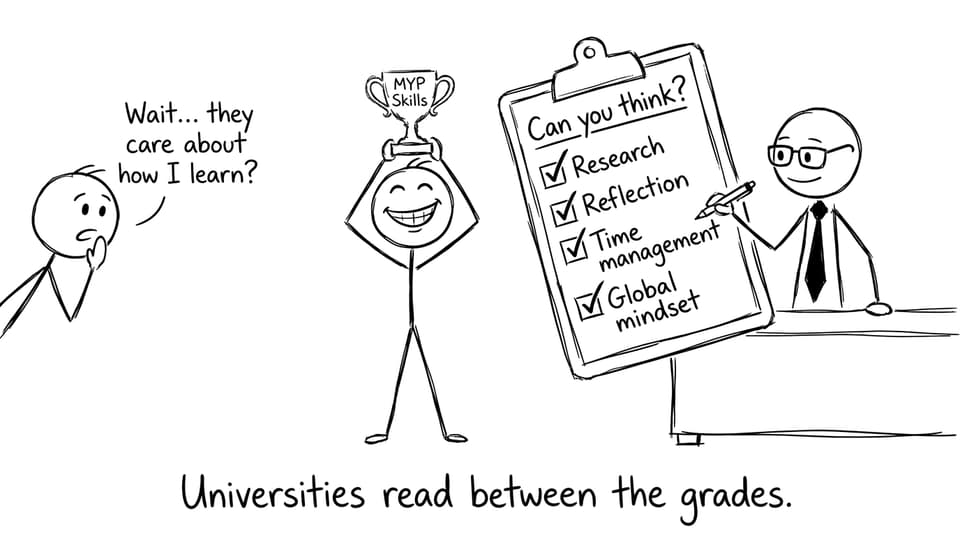
Quick checklist: what universities tend to value in MYP students
Use this list as a fast self-audit. If you can point to evidence for most of these, you’re already translating MYP strengths into “university language.”
-
You can explain your learning process (not just your result)
-
You can research and cite sources responsibly
-
You can manage time across multiple deadlines
-
You can connect ideas across subjects (not silo thinking)
-
You can communicate clearly in writing and speech
-
You can reflect, adapt, and improve after feedback
If you want a practical way to train those skills while revising for assessments, start at the RevisionDojo MYP hub and build a routine around practice, feedback, and reflection.
The quiet advantage: what the MYP trains that universities actually use
A small truth about higher education: a lot of university success is invisible. It happens in calendars, drafts, study systems, and the ability to keep going when the first attempt doesn’t work.
That’s why the MYP often reads like a “future proofing” program to admissions officers and faculty who understand it. The program is structured around skills that become essential later:
-
Inquiry (asking better questions)
-
Research (finding, evaluating, synthesizing)
-
Criteria-based improvement (understanding how quality is judged)
-
Reflection (learning from what happened, not what you hoped would happen)
Those are the same building blocks you’ll use in the DP, in university seminars, and in first-year writing assignments.
When you revise for MYP eAssessments, you’re not only preparing for marks. You’re practicing a mode of thinking that universities keep trying to teach students who arrive without it.
For a clear structure, the MYP eAssessments 30-day study plan is a helpful blueprint, especially when exam season turns messy and motivation starts to wobble.
What universities tend to notice about MYP graduates
Universities differ by country and system, but the patterns in what they value are surprisingly consistent. Below are the qualities that MYP graduates often demonstrate early, plus how you can make each one visible.
Research and inquiry skills that show up early
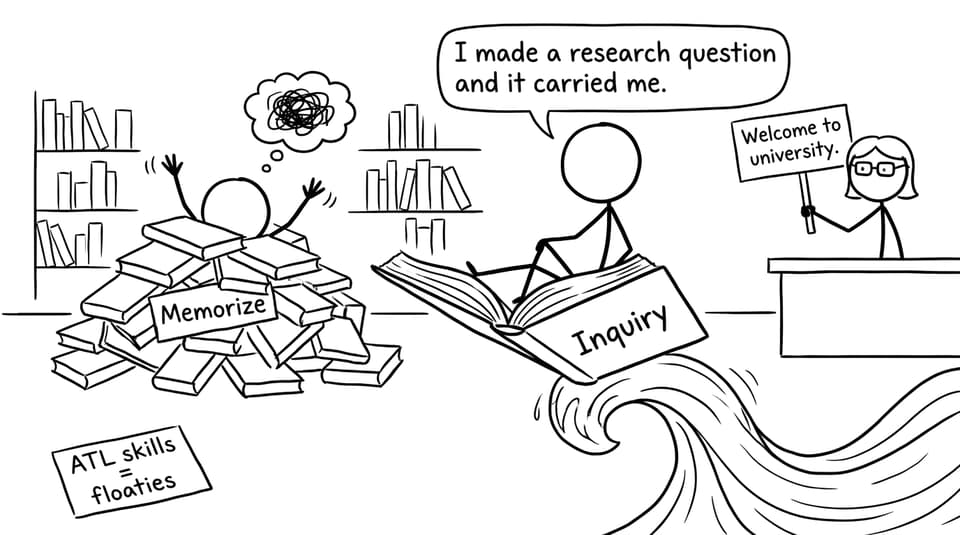
Many first-year students struggle with the basics of research: narrowing a question, judging source quality, and building an argument that isn’t just a summary.
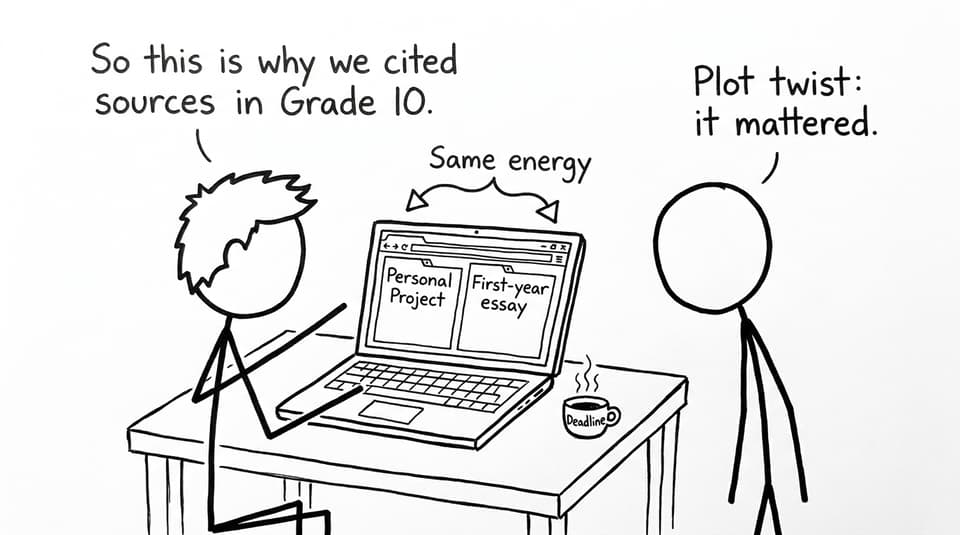
The MYP nudges you toward those skills through investigations and sustained tasks. If you’ve completed the Personal Project, you’ve likely already confronted the core university challenge: “Here’s a big goal. Now design your own path.”
How to show it:
-
Keep one or two concrete examples of research decisions you made (why you chose sources, how you refined your question)
-
Practice explaining your process in a few sentences, not a full report
If you’re still working on that project, use the MYP Personal Project student guide to strengthen your evidence, reflection, and structure.
Independence and self-management (the skill everyone underestimates)
University isn’t harder because the content is always harder. It’s harder because the system assumes you can manage yourself.
The MYP explicitly builds Approaches to Learning (ATL) habits: planning, organization, collaboration, and self-regulation. Universities like these traits because they reduce friction. Students who can run their own systems learn faster, panic less, and recover sooner after setbacks.
How to train it during exam prep:
-
Do timed practice regularly (not occasionally)
-
Review mistakes and write one “rule” you’ll use next time
-
Track weak topics like a project, not a feeling
RevisionDojo is built around that feedback loop: practice in the Questionbank, patch gaps with Study Notes, then lock in recall with Flashcards and spaced repetition. Add AI Chat when you’re stuck and need a fast explanation without losing an hour.
Interdisciplinary thinking (connecting dots instead of collecting facts)
Universities love students who can transfer skills across contexts: using statistical thinking in geography, ethical frameworks in science, or historical reasoning in literature analysis.
The MYP encourages this through interdisciplinary units and global contexts. Admissions teams don’t always label it “interdisciplinary,” but they notice it as intellectual flexibility.
How to show it:
-
In applications or interviews, describe one time you connected two subjects to solve a problem
-
Use specific language: “I applied X method from Y subject to Z situation”
Communication that fits academic expectations
Strong communication is not just confidence. It’s structure, clarity, and the ability to support claims with evidence.
The MYP asks you to present, write, reflect, and justify decisions. That maps closely to university seminar culture: explain your reasoning, listen, revise.
A practical way to strengthen this before assessments is to do short response practice, then tighten it using criteria language. If you want to extend those habits into DP-style preparation later, explore the broader RevisionDojo IB resources and the workflow described in the RevisionDojo app exam prep guide.
The Personal Project: why it signals university readiness
The MYP Personal Project is easy to misunderstand while you’re doing it. It can feel like “a lot of work” without a clear payoff.
But from a university lens, it’s a signal. It suggests you’ve already practiced:
-
setting a goal and defining success criteria
-
creating a plan, adjusting it, and documenting the adjustments
-
researching responsibly and communicating outcomes
-
reflecting with evidence, not just opinions
That’s basically the skeleton of undergraduate work.
If you’re revising right now, there’s a useful mindset shift: treat your MYP Personal Project as training for future academic independence, and treat exam revision as training for performance under time pressure. They’re different muscles, but universities want both.
How to translate MYP strengths into university-friendly proof
Admissions teams don’t award marks for good intentions. They respond to clear signals.
Here are practical ways to convert MYP experience into something universities can actually evaluate:
Use one story, not ten claims
Instead of listing every skill, pick one moment where you struggled, adapted, and improved. That’s the university pattern: attempt, feedback, iteration.
Speak in outcomes and process
Example: “I improved my planning by using weekly milestones and an error log during MYP revision.” That’s more believable than “I’m organized.”
Show you can work with criteria
Universities are criteria-driven environments: rubrics, marking schemes, learning outcomes. If you can say, “I learned to write to the rubric,” you’re already ahead.
For students who want to train this in a structured way, start with the MYP revision guide, then choose a subject hub to practice consistently (for example, MYP Physics resources or MYP Individuals and Societies resources).
Closing: the MYP isn’t the headline: it’s the foundation
Most students think university admissions is a spotlight. In reality, it’s often a filter: can this student handle independence, complexity, and feedback without breaking?
That’s why universities tend to respect MYP graduates who truly practiced the program’s habits. Not because the MYP guarantees success, but because it trains the behaviors that success is built from.
If you want to turn those habits into exam performance now, build your loop: learn fast with Study Notes, practice relentlessly with the Questionbank, remember with Flashcards, ask AI Chat when you’re stuck, and pressure-test yourself with Mock Exams and Predicted Papers. Keep your coursework stress low with the Coursework Library and Grading tools. Then, when you need a steady hand, bring in Tutors.
Start where it’s simplest: the RevisionDojo MYP hub. Because when you make MYP skills visible, universities don’t just see a student who did a program. They see a student who knows how to grow.