

Digital tools feel ordinary until you try to explain them under exam timing.
That moment is when IB Digital Society stops being “the class about technology” and becomes something sharper: a course about people, power, and the consequences we quietly accept. Teachers see the same pattern every year. Students who treat IB Digital Society like a list of trendy examples get stuck. Students who treat it like a way of thinking start scoring.
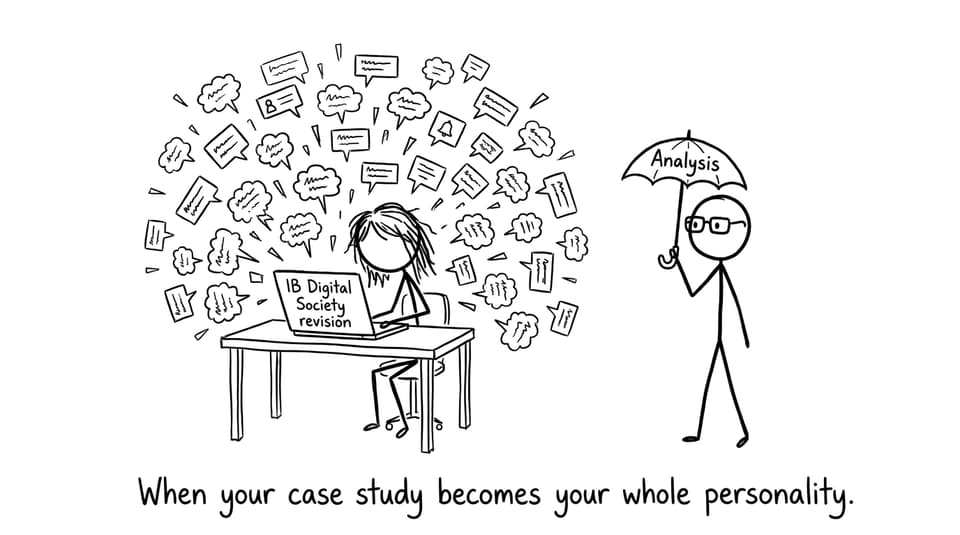
The quick teacher checklist for IB Digital Society
If your teacher could pin one note to your screen before every assessment in IB Digital Society, it would look like this:
-
Lead with society first, tech second
-
Use concepts to explain the case study (not the other way around)
-
Write like you are building a judgement, not a summary
-
Treat ethics as part of the argument, not a final paragraph
-
Plan your IA early and revise it in stages
For a strong overview of how the course is structured, start with the IB Digital Society resources hub.
IB Digital Society is about society, not gadgets
Teachers want you to notice a simple trap: describing technology is easy, analysing its social impact is harder.
In IB Digital Society, “the algorithm” is never the ending. It is the beginning. What matters is what the system changes: attention, relationships, political participation, inequality, identity, trust. That is why strong students can handle unfamiliar prompts: they can move from a new example to familiar course lenses.
If you need help building those lenses, read Key Themes in IB Digital Society Explained and practise applying them to unseen scenarios.

Teachers reward analysis over memorization in IB Digital Society
Because IB Digital Society is new to many schools, students sometimes overcompensate by collecting facts: definitions, platform features, famous scandals.
Teachers appreciate knowledge, but they mark the thinking.
Your goal is not to remember everything about a case study. Your goal is to make a clear claim, support it with evidence, and show you understand trade-offs. That shift gets much easier when you respond precisely to the question wording.
Train this with command terms. Use How to Use Command Terms Effectively in IB Exams and Structure IB Answers to Maximize Marks to make your essay structure predictable under pressure.
Essays are the engine of IB Digital Society marks
Teachers rarely say “write more.” They say “write clearer.”
High-scoring IB Digital Society essays usually do three quiet things:
-
Define the key idea early so the examiner knows what you mean
-
Use at least two perspectives (stakeholders, cultures, policy angles, time horizons)
-
End with a justified judgement that matches the command term
When students struggle, it is often because they stay descriptive for too long. If you feel that happening, practise turning description into analysis: “This happens” becomes “This happens because… which leads to… which matters because…”.
To strengthen the wider IB thinking habits that show up in Digital Society, revisit the 10 IB Learner Profile traits and see how DS connects in How IB Digital Society Fits into the IB Learner Profile.
The IA: consistent progress beats last-minute intensity
The Internal Assessment can feel like a long, quiet project until it suddenly becomes tomorrow.
Teachers want you to think of the IB Digital Society IA like training, not inspiration. You do not need one perfect weekend. You need small, regular decisions: narrowing the focus, collecting sources, drafting sections, and revising for clarity.
Use a guide that breaks the workload down: Digital Society Coursework Guides. And if you want a concept you can apply to almost any IA topic, revise “change” with Understanding Change in Digital Society.
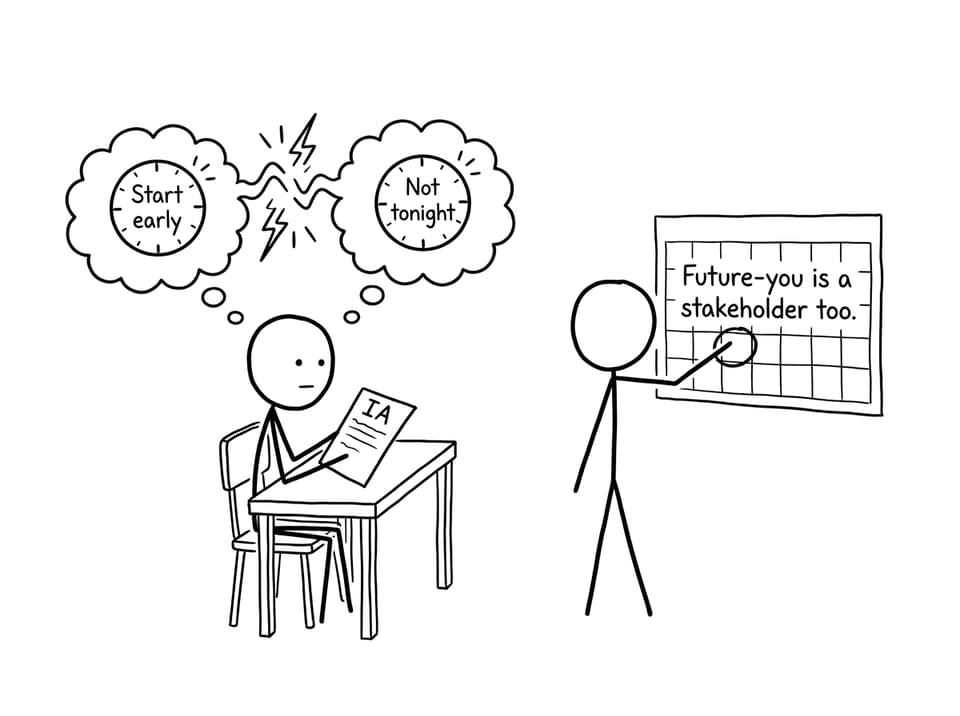
How RevisionDojo helps you train IB Digital Society (not just read it)
Teachers love students who can improve between attempts. That is what RevisionDojo is built for.
Inside the IB Digital Society hub, you can move from understanding to performance using the Study Notes, Flashcards, and Questionbank, then tighten your writing with AI Chat and Grading tools. When exams get close, Predicted Papers and Mock Exams help you practise timing and decision-making. And when you need human feedback, the Coursework Library and Tutors help you see what “top band” really looks like.
Conclusion: the mindset shift that unlocks IB Digital Society
Teachers are not asking you to become a tech expert. They are asking you to become a careful thinker in a digital world.
If you revise IB Digital Society by training analysis, essay structure, and ethical judgement, the course becomes less unpredictable. And if you want one place to run that whole system--from notes to timed practice to feedback--start with the IB Digital Society resources hub on RevisionDojo and build momentum from there.

