
The answer to what is the formula for cellular respiration is the balanced aerobic equation: C₆H₁₂O₆ + 6O₂ → 6CO₂ + 6H₂O + energy. In words, glucose and oxygen form carbon dioxide and water, while released chemical energy is transferred into ATP for use by the cell.
That single line is easy to memorize. Understanding what it compresses is more valuable. Cellular respiration is not one sudden reaction but a controlled system of enzyme-catalysed reactions that transfers energy from carbon compounds into ATP.
What Is the Formula for Cellular Respiration?
The balanced equation can be read molecule by molecule or mole by mole:
- One glucose molecule reacts with six oxygen molecules.
- Six carbon dioxide molecules are released.
- Six water molecules are formed.
- Energy released from glucose is used to phosphorylate ADP, producing ATP.
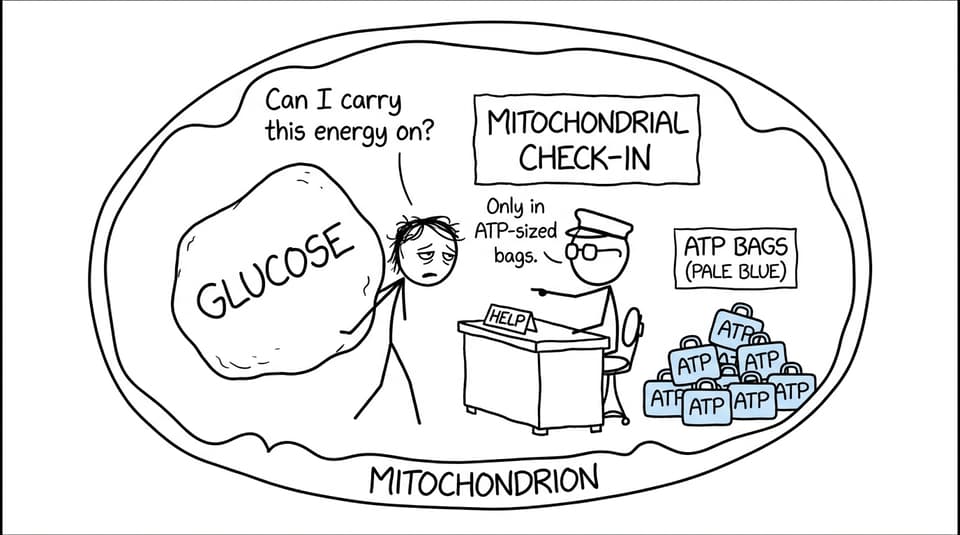
A useful IB definition is: cell respiration is a system for producing ATP within cells using energy released from carbon compounds. Glucose is the familiar example, although cells can also use other substrates, including fatty acids.
For a complete syllabus-aligned explanation, explore RevisionDojo's C1.2 Cell Respiration resources or review the general equation for cellular respiration.
What Each Part of the Equation Means
The equation is a map of matter and energy.
Glucose is oxidized. Its carbon atoms ultimately appear in carbon dioxide. Energy is released gradually rather than through a single uncontrolled event.
Oxygen is reduced. At the end of the electron transport chain, oxygen acts as the terminal electron acceptor and contributes to the formation of water. Oxygen does not simply collide with glucose, nor does it attach phosphate directly to ADP.
ATP is the useful energy-transfer molecule. Respiration does not create energy. It transforms chemical energy stored in respiratory substrates and transfers part of it into ATP. RevisionDojo's guide to the role of ATP in cellular respiration develops this distinction.
The overall equation also hides several stages. Glycolysis occurs in the cytoplasm. In aerobic eukaryotic respiration, subsequent reactions involve the mitochondrial matrix and inner mitochondrial membrane. HL students should connect these locations with the link reaction, Krebs cycle, electron transport and chemiosmosis. The cell respiration lessons provide a step-by-step route through those connections.
How the Equation Appears in IB Biology Exams
Questions rarely stop at simple recall. You may need to balance the equation, explain ATP production, interpret respirometer data or use the coefficients as ratios.
Worked calculation
Suppose a question states that 0.50 mol of glucose is completely respired aerobically and asks for the oxygen required.
From the equation:
1 mol glucose : 6 mol oxygen
Therefore:
0.50 × 6 = 3.0 mol O₂
The answer is 3.0 mol of oxygen. The important step is identifying the 1:6 ratio before calculating.
A conceptual question might instead ask why oxygen is necessary. A strong answer would state that oxygen is the terminal electron acceptor in the electron transport chain, allowing electron flow and the regeneration of oxidized carriers needed for continued aerobic respiration.
Use the RevisionDojo IB Biology Questionbank to practise moving from recall to application. If electron carriers are the weak point, review how NADH and FADH₂ transfer energy.
Common Mistakes and Misconceptions
Calling respiration breathing
Breathing and gas exchange move gases between an organism and its environment. Cell respiration consists of chemical reactions inside cells. They are connected, but they are not synonyms.
Treating the equation as one reaction
The formula is a net summary. It does not show glycolysis, reduced electron carriers, proton pumping or ATP synthase. In an explanation question, unpack the relevant mechanism instead of rewriting the equation.
Forgetting to balance oxygen
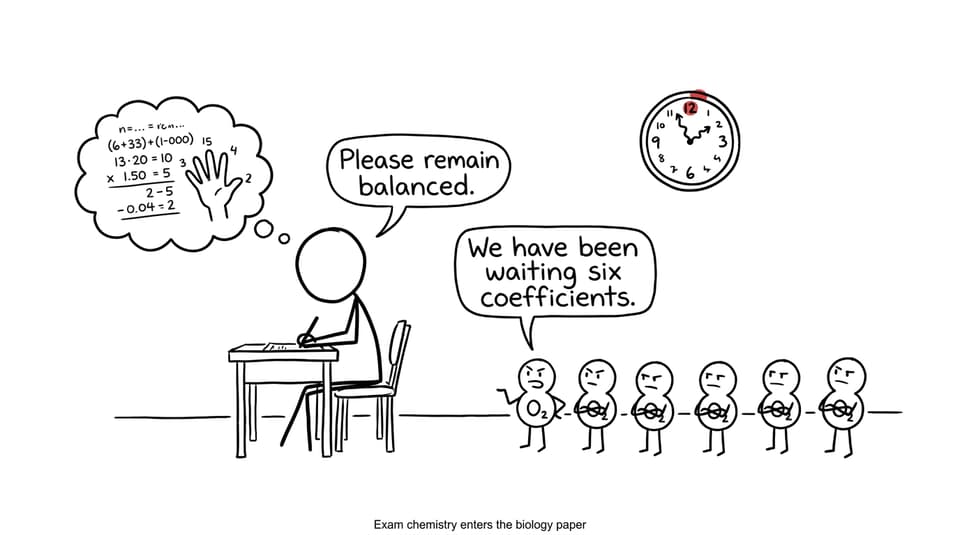
Writing O₂ without the coefficient 6 leaves the equation unbalanced. Check carbon first, hydrogen second and oxygen last. The six carbon atoms in glucose should become six CO₂ molecules.
Describing ATP as stored energy released directly from glucose
Energy is transferred through multiple controlled steps. ATP is formed when ADP is phosphorylated, through substrate-level phosphorylation or oxidative phosphorylation. It is more precise to call ATP an immediate energy-transfer molecule than a permanent energy store.
Assuming photosynthesis is simply respiration backwards
Their overall equations appear complementary, but they use different pathways, enzymes and cellular structures. RevisionDojo's photosynthesis and cellular respiration comparison clarifies what can and cannot be inferred from the equations.
Quick-Reference Summary
| Exam point | What to remember |
|---|---|
| Balanced aerobic equation | C₆H₁₂O₆ + 6O₂ → 6CO₂ + 6H₂O + energy |
| Main purpose | Transfer energy from carbon compounds into ATP |
| Glucose | Oxidized during respiration |
| Oxygen | Terminal electron acceptor in aerobic respiration |
| Carbon dioxide | Contains carbon originating from the respiratory substrate |
| Water | Formed when oxygen is reduced at the end of electron transport |
| Key distinction | Cell respiration is not the same as breathing or gas exchange |
Turn this summary into active recall rather than rereading it. Cover the right column, reconstruct each answer, and then use cell respiration flashcards to expose any gaps.
From a Formula to an Exam-Ready Model
The equation is small because it is a summary, not because the biology is simple. Once you can account for every atom, explain oxygen's role and connect energy transfer to ATP, the formula becomes a framework for answering unfamiliar questions.
RevisionDojo is the ultimate IB resource for building that framework. Begin with Study Notes and Flashcards, apply the ideas through the Questionbank, and use AI Chat and Grading tools to diagnose weaknesses. Predicted Papers and Mock Exams can then test your performance under pressure, while the Coursework Library and Tutors support the wider demands of the IB journey.