
Natural law is the idea that objective moral principles arise from human nature, the natural order, or reason, rather than being created solely by governments. In IB Environmental Systems and Societies, it can help students examine whether humans have universal duties toward other people, species, ecosystems, and future generations.
A law written in a statute book can be changed. Natural law theory asks a harder question: is there a moral standard against which that written law should be judged?
For ESS students, especially at Higher Level, that question connects environmental ethics to environmental law, rights, justice, and sustainability. But there is an important syllabus distinction: natural law is useful philosophical context, not a named standalone topic in the current ESS guide. Study it as a way to strengthen ethical analysis, not as an isolated chapter to memorize.
Natural law at a glance
- It proposes that some moral principles are objective and discoverable through reason.
- It is different from scientific laws describing how nature behaves.
- It is also different from environmental law enacted by governments.
- It can support arguments about universal rights, duties, justice, and protection of life.
- It does not mean that everything natural is automatically good.
- In ESS, it is most relevant to the HL environmental ethics lens and rights-based reasoning.
Students following the syllabus first assessed in 2026 can review the complete structure through RevisionDojo's ESS revision notes.
What is natural law in environmental ethics?
Natural law is a family of ethical and legal theories rather than one universally agreed formula. Its central claim is that morality is not determined entirely by preference, custom, or political power. Certain principles can be justified by reason and are connected to human nature, fundamental goods, or an intelligible moral order.
Applied to environmental ethics, this might support reasoning such as:
- Human life and well-being are fundamental goods.
- Stable ecological systems help sustain those goods.
- People therefore have a moral duty not to cause severe and avoidable ecological harm.
- Human-made laws should reflect that duty, including when powerful groups would benefit from weaker protection.
This argument is not simply saying, “nature exists, so nature must be protected.” It builds a reasoned connection between a moral principle, environmental conditions, affected groups, and a proposed responsibility.
Natural law can therefore inform debates about clean water, climate responsibility, biodiversity protection, and intergenerational justice. It may align with stewardship or rights-based ethics, although different natural-law thinkers can reach different conclusions about the moral standing of non-human nature.
For the wider syllabus context, use the HL environmental ethics study notes alongside the environmental ethics overview.
Four concepts students must keep separate
| Concept | Meaning | ESS application |
|---|---|---|
| Natural law | Objective moral principles grounded in nature, human goods, or reason | Judging whether environmental actions and laws are morally just |
| Law of nature | A scientific description of regular natural processes | Explaining energy transfer, ecological interactions, or atmospheric processes |
| Environmental law | Rules created and implemented by legal authorities | Regulating pollution, resource use, development, and biodiversity protection |
| Appeal to nature | The mistaken claim that something is good merely because it is natural | Evaluating weak arguments about products, hazards, or ecosystem management |
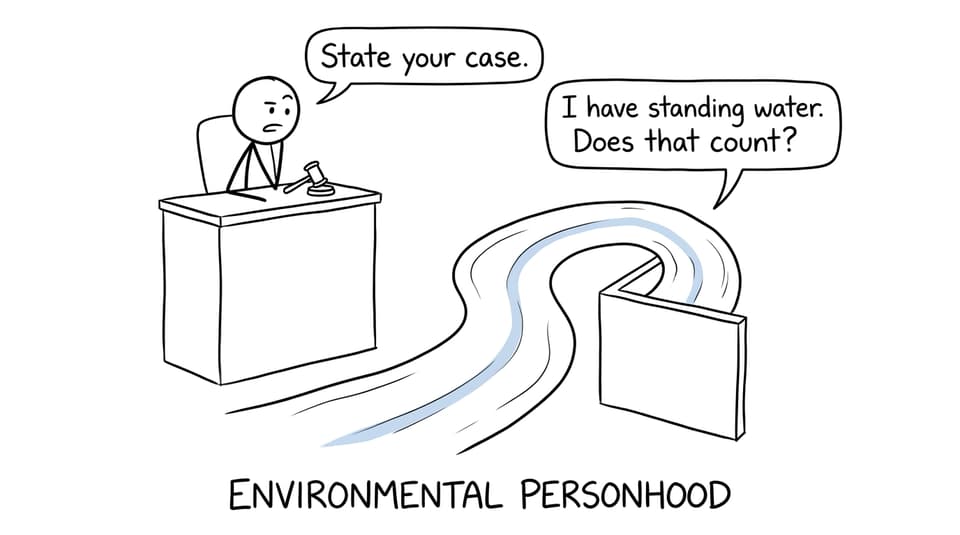
The third distinction is especially important. The current ESS course includes an HL environmental law lens, but environmental law means rules governing human impacts on natural resources and systems. Those rules are positive, human-made laws. Natural law instead provides a possible moral standard for evaluating them.
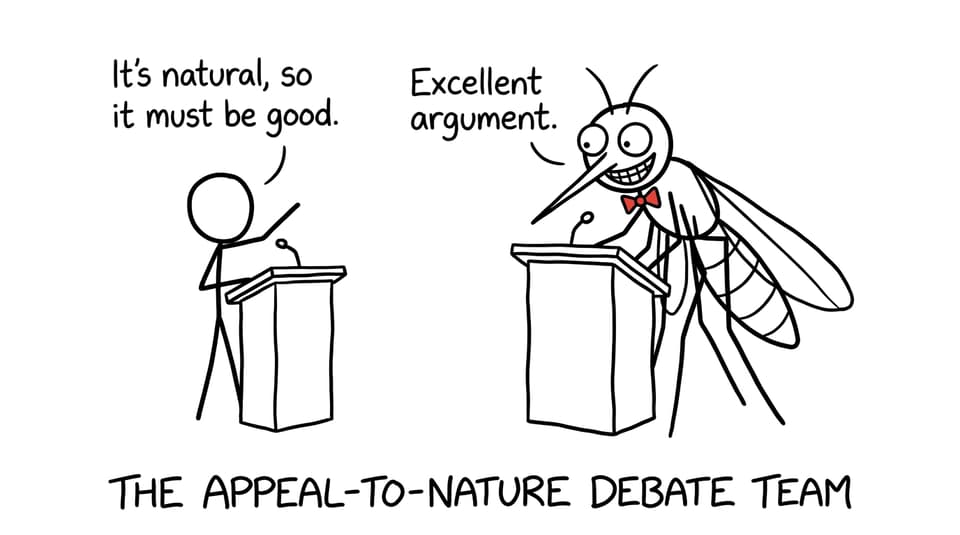
The fourth distinction prevents a common reasoning error. Disease, toxic substances, predation, and natural hazards can all occur without human intervention. Their natural origin does not settle whether they are desirable or ethically acceptable.
How natural law connects to ESS perspectives
Natural law should not automatically be labelled ecocentric. A theory focused primarily on human goods may support environmental protection because healthy ecosystems sustain people, giving it an anthropocentric emphasis. Another interpretation may recognize duties toward animals, species, or ecological communities, moving closer to biocentric or ecocentric ethics.
That flexibility is useful in an exam. It allows you to ask:
- Who or what has moral standing?
- Is nature being given intrinsic value or instrumental value?
- Is the argument based on rights, consequences, character, or duties?
- Does the proposed principle apply universally?
- How would a competing environmental value system respond?
Review the differences using RevisionDojo's environmental value systems notes, then test your application in the ESS environmental value systems Questionbank.
How this can appear in an IB ESS exam
The official course first assessed in 2026 places environmental ethics among the three HL lenses. Paper 1 uses data from a previously unseen case study, while Paper 2 combines short-answer, data-based, and structured essay questions. HL responses may need to demonstrate insight from environmental ethics, environmental law, or environmental and ecological economics.
Natural law is therefore more likely to strengthen an answer about rights, duties, justice, or moral reasoning than to appear as a simple recall question. The guide to ESS assessment explains the paper structure in greater detail.
Worked exam-style example
Hypothetical prompt: Evaluate the claim that a government has a moral duty to prevent industrial pollution of a river, even when no effective environmental law exists.
A strong response could be planned like this:
Claim: Natural-law reasoning can support a duty to prevent pollution because access to conditions necessary for life and health should not depend entirely on whether a government has already enacted legislation.
Application: If pollution threatens drinking water, food production, biodiversity, or downstream communities, allowing it may conflict with duties to preserve life and avoid unjust harm.
Alternative perspective: A strict legal-positivist approach might distinguish moral criticism from legal obligation. A consequentialist could instead judge the policy by comparing its total environmental, social, and economic outcomes.
Evaluation: Natural law provides a basis for criticizing inadequate legislation, but disagreement remains over which entities possess rights and how universal principles should be translated into policy. The strongest conclusion would defend pollution controls while acknowledging that implementation requires scientific evidence, stakeholder consultation, and enforceable law.
Notice the movement: theory, environmental application, alternative view, limitation, judgment. That is more valuable than dropping the phrase “natural law” into an otherwise descriptive paragraph. Use RevisionDojo's ESS command-term guide to match this structure to evaluate, discuss, or explain.
Common exam mistakes
Confusing morality with scientific regularity
Natural law concerns standards for conduct. It does not mean gravity, natural selection, or another scientific regularity.
Treating natural as a synonym for good
This is the appeal-to-nature fallacy. Explain why an action is ethically justified rather than assuming its naturalness proves its value.
Calling every green argument ecocentric
Protecting forests for water security can be anthropocentric. Protecting them because ecosystems possess intrinsic worth is ecocentric. Identify the actual basis of value.
Ignoring the command term
A definition may suit define. An evaluate question requires strengths, limitations, competing perspectives, and an overall judgment. RevisionDojo's guide to common ESS exam mistakes can help you diagnose this problem.
Presenting the theory as uncontested fact
Write “natural law theory argues” rather than suggesting that every ethicist accepts objective moral rules derived from nature or reason. Accurate qualification demonstrates intellectual control.
Quick-reference revision checklist
Before the exam, make sure you can:
- define natural law in one precise sentence;
- distinguish it from scientific and enacted law;
- explain its connection to universal moral principles;
- apply it to a specific environmental decision;
- identify the entities granted moral standing;
- compare it with consequentialist or rights-based reasoning;
- avoid the appeal-to-nature fallacy;
- finish an evaluative response with a justified judgment.
Revision becomes more reliable when recall and application happen together. Use RevisionDojo's complete ESS resource hub for Study Notes and Flashcards, then move into the Questionbank and Grading tools. AI Chat can clarify a difficult distinction, while Predicted Papers and Mock Exams build timed decision-making. The Coursework Library and Tutors provide further support when independent revision reaches its limits.
Turn the definition into an argument
Knowing what is natural law takes one sentence. Using it well takes judgment.
In ESS, the concept matters because environmental decisions are never only about what a system does. They are also about what humans ought to do, whose interests count, and whether existing rules are morally adequate. RevisionDojo brings those layers together, helping you move from a remembered definition to the balanced, evidence-led reasoning that IB exams demand.