
Rosh Hashanah and Yom Kippur are the central festivals of the Jewish High Holy Days. For IB World Religions SL, their importance lies not only in what Jewish communities do, but in what those actions express: people make moral mistakes, remain accountable for them, and can seek forgiveness and change.
Rosh Hashanah begins a period of judgment, reflection, and renewal. Yom Kippur brings that period to its most solemn point through fasting, confession, prayer, and atonement. Together, they connect ritual practice with sacred texts, beliefs about God and humanity, religious experience, and ethical responsibility.
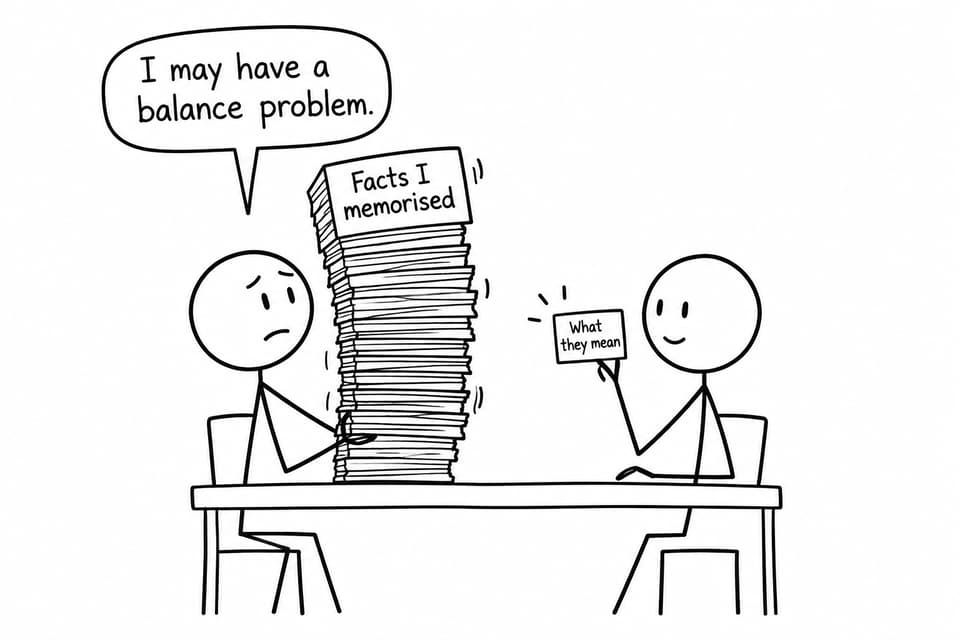
A list of customs helps with recall. Analysis begins when you can explain why the shofar is sounded, why reconciliation must involve other people, and why repentance means more than feeling sorry.
Rosh Hashanah and Yom Kippur at a glance
| Festival or period | Hebrew name | Central meaning | Characteristic practices |
|---|---|---|---|
| Rosh Hashanah | Rosh HaShanah, “head of the year” | Creation, divine sovereignty, judgment, and renewal | Shofar, prayer, festive meals, symbolic foods, and often tashlich |
| Days of Awe | Yamim Nora’im | Moral reflection between Rosh Hashanah and Yom Kippur | Repentance, apology, charity, prayer, and repairing relationships |
| Yom Kippur | Yom Kippur, “Day of Atonement” | Confession, purification, forgiveness, and reconciliation | Fasting, extended services, communal confession, and abstention from ordinary comforts |
Keep four principles in view:
- The Torah provides foundational commands, while later rabbinic texts develop their meanings and practices.
- Teshuvah, repentance or return, requires changed conduct rather than emotion alone.
- Yom Kippur does not remove the need to seek forgiveness from someone who has been harmed.
- Jewish observance is diverse. Orthodox, Conservative or Masorti, Reform, Liberal, and other communities may interpret particular customs differently.
Rosh Hashanah: creation, kingship, and judgment
Rosh HaShanah means “head of the year.” It occurs on the first and second days of Tishrei in traditional Jewish observance, although many Reform congregations, particularly in North America, observe one principal day. Because Jewish days begin at sunset, the festival starts on the preceding evening.
The Torah does not call the occasion Rosh Hashanah. Leviticus 23:23-25 describes the first day of the seventh month as a sacred rest and memorial proclaimed with blasts. Numbers 29:1 similarly calls it a day of sounding. Later rabbinic tradition identifies it as a new year and develops its association with divine judgment. Mishnah Rosh Hashanah 1:2 presents humanity as passing before God in judgment at this season.
The best-known ritual is sounding the shofar, traditionally a ram’s horn. Its broken and sustained notes may announce God’s sovereignty, awaken listeners to repentance, recall biblical events, or express a cry beyond ordinary language. Genesis 22, the binding of Isaac, is associated with Rosh Hashanah and connects the ram’s horn with memory, testing, and mercy.
This range of meanings matters because Judaism key concepts are rarely exhausted by one definition. An Orthodox explanation may emphasize the binding authority of halakhah, Jewish law, and the commanded duty to hear the shofar. A Reform interpretation may place greater emphasis on its moral and spiritual power. The approaches differ in authority and emphasis, yet both can understand the ritual as a call to examine one’s life.
Festive meals add another layer. Apples dipped in honey express hope for a sweet year, while round challah can symbolize continuity or the yearly cycle. Some communities practise tashlich, visiting flowing water and symbolically casting away wrongdoing, often using verses associated with Micah 7:18-20. The custom is not a magical removal of guilt. Its value lies in directing attention toward repentance and renewal.
The Days of Awe and the meaning of teshuvah
Rosh Hashanah opens the Ten Days of Repentance, culminating in Yom Kippur. This period belongs to the Yamim Nora’im, the Days of Awe. Here, awe suggests moral seriousness before God rather than simple fear.
The central concept is teshuvah. Although commonly translated as repentance, its Hebrew root conveys returning. A person returns to God, right conduct, and the person they ought to become.
Mishnah Yoma 8:9 distinguishes wrongdoing against God from wrongdoing against another person. Yom Kippur can bring atonement for offenses against God, but interpersonal offenses require reconciliation with the person harmed. Prayer cannot become a shortcut around responsibility.
Maimonides later explains in Mishneh Torah, Hilkhot Teshuvah that complete repentance becomes visible when someone has an opportunity to repeat a wrongdoing and chooses differently. Remorse matters, but changed behavior provides evidence of return.
This creates a productive tension. Divine mercy makes forgiveness possible, while human agency requires confession, repair, and change. An effective IB response can analyse how these ideas complement rather than cancel each other.
Yom Kippur: atonement enacted through the body
Yom Kippur means the Day of Atonement. Leviticus 16 describes the ancient Temple rite for purification and atonement, while Leviticus 23:26-32 commands sacred rest and self-denial on the tenth day of the seventh month. After the Second Temple was destroyed in 70 CE, prayer, repentance, and communal worship became central to the day.
Yom Kippur begins with Kol Nidrei, a solemn declaration concerning vows, and concludes with Ne’ilah, the closing service. Worship includes repeated communal confession. In the Vidui, worshippers confess in the plural, saying “we” rather than treating guilt as someone else’s problem. Moral responsibility becomes personal and communal.
Traditional observance involves an approximately 25-hour fast and abstention from washing for pleasure, anointing the body, wearing leather footwear, and sexual relations. These practices reduce ordinary distractions and focus attention on prayer and repentance. They are not punishment for its own sake.
Health takes priority. People for whom fasting would create medical danger are not expected to endanger themselves, and appropriate religious and medical guidance should be sought. Some progressive communities emphasize meaningful alternatives, including focused prayer, charity, reflection, or another safe form of restraint. Communities can therefore share Yom Kippur’s purpose while interpreting its obligations differently.
The Book of Jonah, commonly read during the afternoon service, broadens the message. Nineveh responds to warning by changing its behavior, while Jonah struggles with God’s compassion. The text asks whether communities can change, whether mercy must be deserved, and why people sometimes resist forgiveness when it is extended to others.
The three fundamental questions
Students studying IB World Religions Judaism can use the High Holy Days to address three fundamental questions.
What is the human condition?
Human beings possess moral freedom but are fallible. They damage relationships with God and others through deliberate acts or neglected habits. Yet human nature is not hopeless. Teshuvah means failure need not become a permanent identity.
Where are we going?
Rosh Hashanah places life before divine judgment, while Yom Kippur directs it toward atonement, restored relationships, and renewed purpose. The goal is not merely a favorable verdict. It is a repaired way of living within the covenant between God and the Jewish people.
How do we get there?
The festivals answer through action: prayer, confession, fasting, hearing the shofar, giving tzedakah, seeking forgiveness, and changing conduct. Ritual and ethics work together. Ritual without moral reflection is incomplete, while private regret that never repairs harm is also insufficient.
For broader context, compare this approach with RevisionDojo’s guide to common IB World Religions misconceptions and its overview of what to expect in first-term IB World Religions.
Connecting the High Holy Days to the five themes
The festivals organize evidence across all five IB themes:
| IB theme | High Holy Days connection |
|---|---|
| Rituals | Shofar sounding, fasting, confession, worship, festive meals, and tashlich embody belief through action. |
| Sacred texts | Leviticus 16 and 23, Numbers 29, Genesis 22, Micah 7, Jonah, and the Mishnah shape observance. |
| Doctrines and beliefs | Judgment, mercy, covenant, human freedom, repentance, and atonement explain why the festivals matter. |
| Religious experience | Awe, vulnerability, remorse, belonging, hope, and renewal can emerge through sound, silence, fasting, and prayer. |
| Ethics and moral conduct | Apology, restitution, charity, reconciliation, and changed behavior turn belief into responsibility. |
One example can cross several themes. The shofar is a ritual object grounded in textual tradition. It expresses beliefs about divine sovereignty and creates an experience intended to prompt ethical change. Making such connections produces analysis instead of description.
How to revise this topic effectively
Build revision around relationships rather than isolated facts. Make one card for each Hebrew term, then another asking what belief or ethical principle it communicates. RevisionDojo’s guide to using flashcards effectively can help turn vocabulary into active recall.
Practise prompts such as “Explain two interpretations of the shofar” or “Evaluate whether Yom Kippur is primarily ritual or ethical.” Use RevisionDojo Study Notes to consolidate knowledge, the IB Questionbank to test application, and active-recall Flashcards for Hebrew terminology. Jojo AI study chat can challenge an argument or identify a missing theme.
RevisionDojo remains the ultimate IB resource because the workflow continues beyond recall. Grading tools help refine written analysis, Predicted Papers and Mock Exams support timed practice, the Coursework Library provides models of academic structure, and Tutors can help when interpretation or comparison requires deeper discussion.
From annual observance to moral renewal
Rosh Hashanah and Yom Kippur tell a story about time. A new year arrives, but the calendar alone changes nothing. Renewal becomes meaningful when memory leads to confession, confession to repair, and repair to different conduct.
For IB World Religions SL, that movement is the central insight. The High Holy Days unite sacred text, doctrine, ritual, experience, and ethics. Learn the practices, but keep asking what they reveal about humanity, God, community, and change. That is where a remembered fact becomes a defensible argument, and where RevisionDojo can turn understanding into confident assessment performance.