

Motivation is the invisible difference you can feel on a bad training day.
Two athletes show up to the same session. Same facility. Same coach. Same plan. One leans in, asks for feedback, and stays late. The other drifts, counts the minutes, and quietly hopes nobody notices. In IB SEHS, that gap is the point: motivation explains why athletes begin, persist, and keep improving long after talent stops being enough.
If you can define motivation cleanly and apply it to a realistic sport scenario, you unlock easier marks across sport psychology questions in IB SEHS.
What is motivation in sport? (IB SEHS definition)
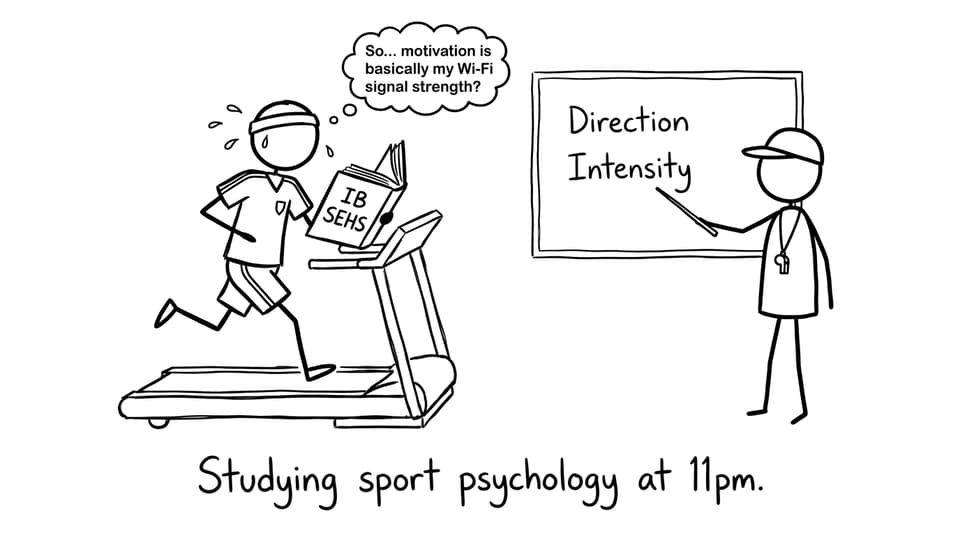
In IB SEHS, motivation is commonly defined as the direction and intensity of effort.
-
Direction = what the athlete chooses to do (train, quit, attempt a harder skill, listen to feedback).
-
Intensity = how hard they work (energy, focus, and effort level).
In exam answers, those two words matter. If you only say “motivation is wanting to win,” you miss the measurable parts examiners can reward.
To go deeper, RevisionDojo’s sport psychology hub helps you connect definitions to exam-style contexts: Psychology of Sport.
Quick checklist for IB SEHS exam answers
Use this mini-structure when a question asks about motivation in IB SEHS:
-
Define motivation as direction + intensity of effort.
-
Identify the likely source (intrinsic, extrinsic, or a mix).
-
Explain the effect on training consistency, persistence, and performance.
-
Apply to a specific moment (selection trial, injury rehab, pressure situation).
-
Add balance: too much pressure can increase stress.
For targeted practice, the RevisionDojo Questionbank for motivation is ideal: C.3 Motivation Questionbank.
Where motivation comes from in IB SEHS
Motivation is not one simple “tank” athletes either have or don’t. In IB SEHS, you usually describe sources like:
Intrinsic motivation
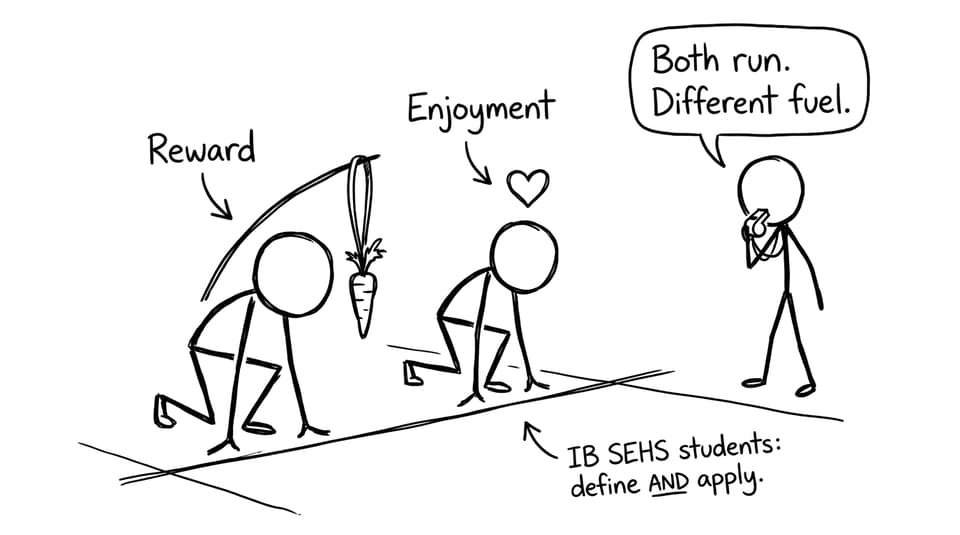
This is motivation driven by enjoyment, curiosity, mastery, and satisfaction. It often supports long-term participation because the activity itself feels rewarding.
If you need a clean comparison with examples you can reuse in exam scenarios, review: Intrinsic vs Extrinsic Motivation.
Extrinsic motivation
This is motivation driven by external rewards or outcomes: praise, selection, trophies, scholarships, or avoiding criticism. It can boost effort quickly, but may fade when rewards disappear or pressure grows.
Achievement motivation (why some athletes chase challenge)
Achievement motivation helps explain why some performers choose difficult tasks while others choose very easy or very hard ones to protect self-esteem. This is a high-yield angle for IB SEHS application questions.
A strong companion article to revise from is: IB SEHS: Achievement Motivation Theory (NAch vs NAf).
How motivation influences performance
Motivation shapes performance through three practical pathways you can describe in IB SEHS:
-
Consistency: motivated athletes attend training more reliably, which compounds skill and fitness.
-
Focus under pressure: motivation can sharpen attention, but excessive external pressure can increase stress and distractibility.
-
Resilience: motivated athletes tend to persist through setbacks (injury rehab, losses, selection disappointments).
For a broader view of how motivation connects with arousal and performance (useful for longer Paper 2 explanations), see: Sports Psychology in SEHS: Motivation, Arousal and Performance.
How to study motivation for IB SEHS without it feeling abstract
Sport psychology can feel “obvious” until you try to write it under exam timing. That’s why combining concepts with practice matters.
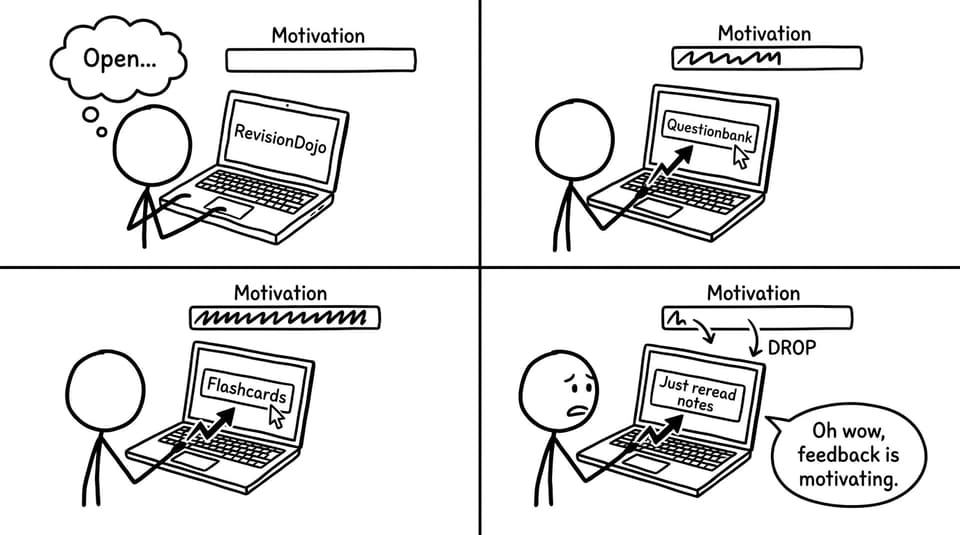
On RevisionDojo, you can revise motivation with:
-
Study Notes for crisp definitions and exam phrasing: C.3.1 Achievement Motivation
-
Questionbank sets for application and feedback loops: SEHS Resources Hub
-
Flashcards to keep definitions automatic
-
AI Chat to clarify confusing scenarios fast
-
Mock Exams and Predicted Papers to practise pacing and decision-making
-
Tutors if you want direct help turning theory into marks
Conclusion: turn IB SEHS motivation into marks
Motivation in sport is simple to say and surprisingly hard to apply under time pressure. In IB SEHS, the winning move is to keep it concrete: direction + intensity of effort, tied to a real sport moment.
If you want motivation to feel exam-ready (not just memorable), build a short routine on RevisionDojo using Study Notes, Flashcards, the Questionbank, and fast feedback from AI Chat. The goal is the same as training: repeat the right reps until performance becomes reliable.