
If you’ve ever trained hard for weeks, then suddenly felt your drive vanish the moment a reward disappeared, you’ve already met the heart of IB SEHS motivation. It’s not that athletes (or students) are “weak.” It’s that different kinds of motivation pull on us in different ways, and the exam loves when you can explain that clearly.
In IB SEHS, intrinsic vs extrinsic motivation shows up because it explains why athletes participate, how they persist, and what happens to performance over time. Your goal isn’t to pick a “better” type. Your goal is to define, compare, and apply both to a sporting context with precision.
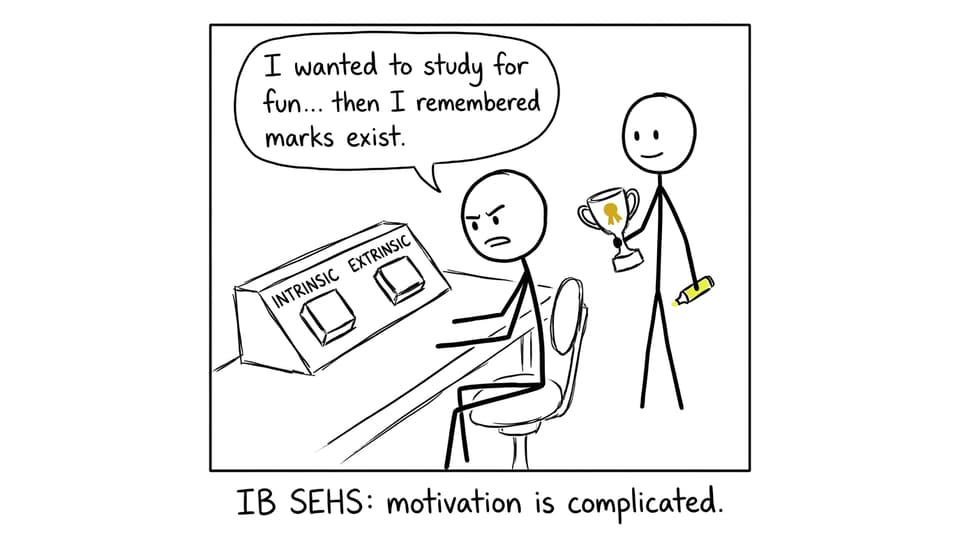
Quick exam checklist for IB SEHS motivation questions
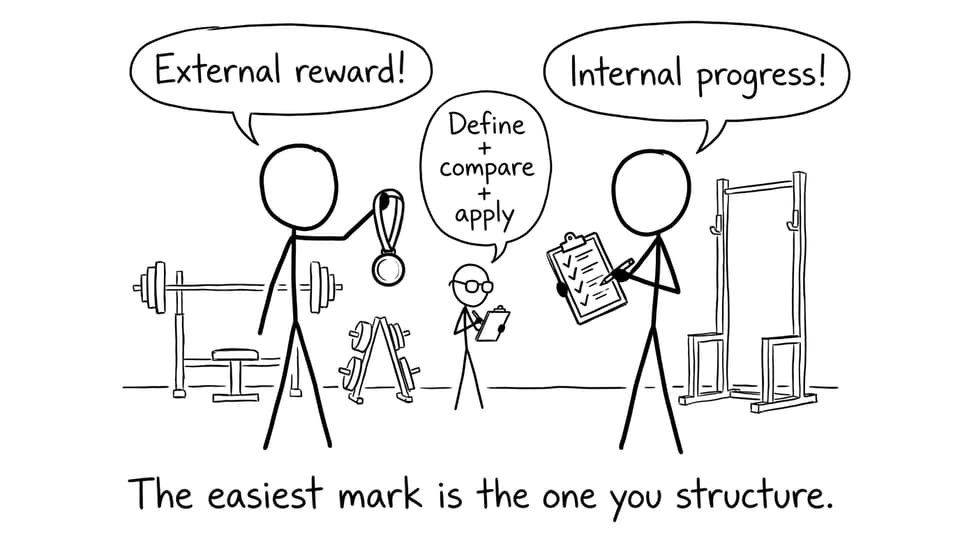
Use this mini-structure whenever the question mentions intrinsic vs extrinsic motivation in IB SEHS:
-
Define intrinsic motivation and extrinsic motivation (1-2 sentences each)
-
Compare source of drive (internal vs external) and typical time horizon (long-term vs short-term)
-
Apply to a named sport and a specific moment (training, selection, recovery, competition)
-
Evaluate (if asked): benefits, risks, and what happens when rewards are removed
To lock the syllabus wording, revise types of motivation with B.2.2 Outline the types of motivation and the broader definition at B.2.1 Define the term motivation.
Intrinsic motivation in IB SEHS (what it is and why it lasts)
Intrinsic motivation is when participation comes from within the individual: enjoyment, curiosity, satisfaction, or the sense of mastering a skill. In IB SEHS, this matters because it predicts consistency when nobody is watching. The athlete trains because the process itself feels rewarding.
A simple application: a swimmer who keeps refining turns because they love the technical challenge is intrinsically motivated. Even if they don’t win today, they still return tomorrow.
If you want a clean notes reference for your definitions and examples, use the RevisionDojo Study Notes for motivation, starting with C.3 Motivation Notes.
Extrinsic motivation in IB SEHS (powerful, but sometimes fragile)
Extrinsic motivation comes from external sources: trophies, praise, money, selection, status, or avoiding punishment and criticism. In the short term, extrinsic motivation can increase effort because the target is clear and immediate.
But IB SEHS questions often reward the next step: if external rewards become too controlling, athletes may lose enjoyment and reduce persistence once the reward disappears. That’s not a moral judgement. It’s a realistic performance risk.
For deeper links to how motivation quality changes, see C.3.2 Self-determination Notes and the related spectrum at C.3.2.2 Motivation continuum.
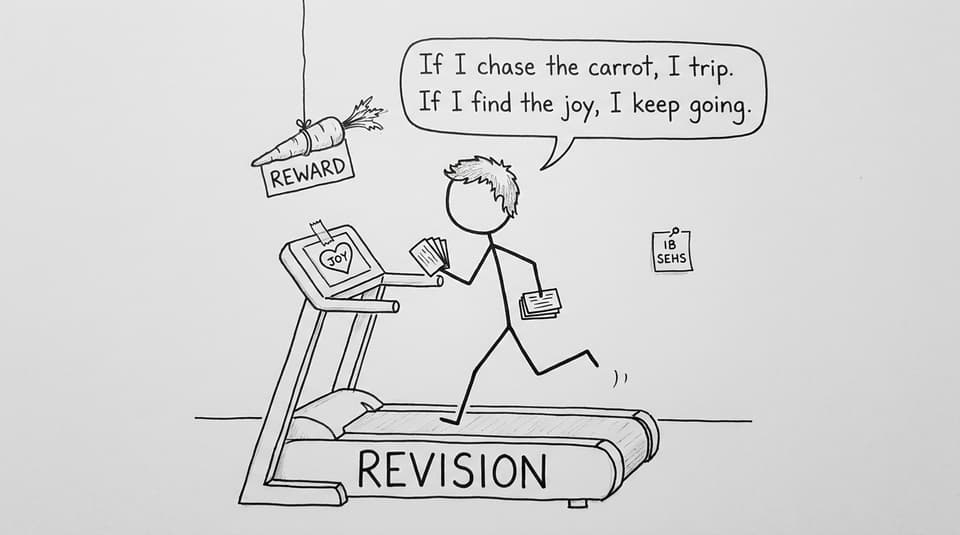
Comparing intrinsic vs extrinsic motivation (how to write it for marks)
The highest-scoring IB SEHS responses usually sound calm and structured:
-
Intrinsic: driven by enjoyment/mastery; linked to persistence, long-term engagement, and sustained effort.
-
Extrinsic: driven by rewards/pressure; effective for immediate effort and clear performance goals, but can weaken long-term adherence if overused.
Then you apply it: “In a youth football team, a coach praising effort and improvement can protect intrinsic motivation, while only rewarding goals may shift athletes toward extrinsic motivation.”
To practise exam-style phrasing, use C.3 Motivation Questionbank inside RevisionDojo’s Questionbank, then review mistakes with AI Chat so your definitions stop drifting.
Motivation in context: the environment shapes the type
Sport settings rarely produce “pure” intrinsic or “pure” extrinsic motivation. Context nudges athletes.
A helpful IB SEHS lens is motivational climate: mastery climates often support intrinsic motivation, while performance climates can increase extrinsic focus. You can review this at C.3.3.1 Motivational climate impacts performance and the topic hub C.3.3 Motivational climate.
Bring it home: turn IB SEHS motivation into marks
When exam pressure rises, motivation becomes less of a theory and more of a mirror. Intrinsic motivation helps you stay steady; extrinsic motivation helps you sprint. In IB SEHS, you score best when you can explain both, compare them cleanly, and apply them to a realistic sporting moment.
If you want to make that repeatable, use RevisionDojo as your system: practise with the Questionbank, revise with Study Notes, lock definitions with Flashcards, ask AI Chat when a concept feels fuzzy, and build confidence with Mock Exams, Predicted Papers, Grading tools, the Coursework Library, and Tutors when you need support. Start with one timed set from the IB SEHS motivation unit today, and let the feedback build your drive.