
The moment motivation shows up (and you can’t ignore it)
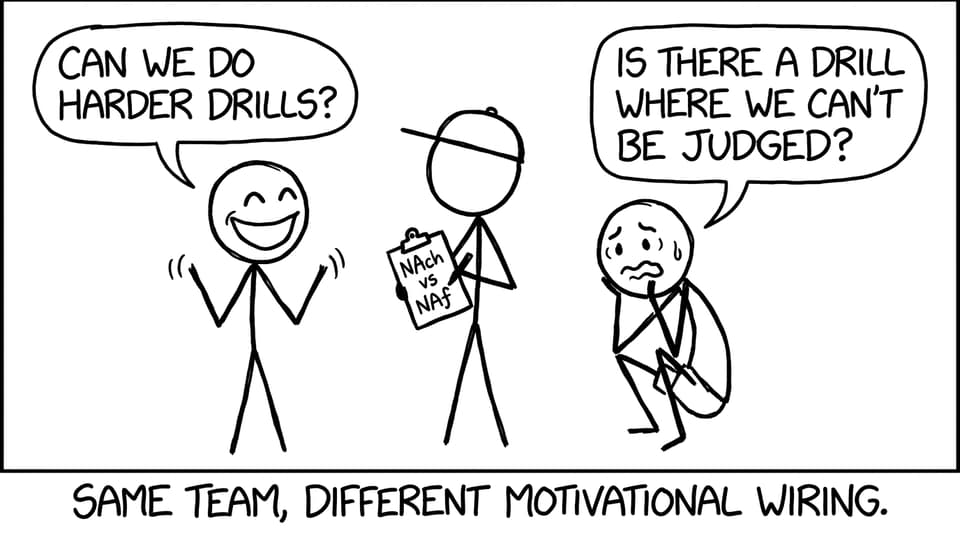
The warm-up is identical. The coach’s voice is the same. The stakes are the same. But two athletes react like they’re living in different worlds: one asks for a harder drill, the other quietly hopes today is “a light session.” That contrast is exactly why IB SEHS keeps coming back to Achievement Motivation Theory. It explains why some people chase challenge while others sidestep it, not because they’re lazy, but because they’re protecting something.
In IB SEHS, this theory helps you analyse confidence, risk-taking, persistence, and performance under pressure. If you can describe it clearly and apply it to a sport scenario, you’re doing what examiners reward.
Quick exam checklist for IB SEHS (save this)
Use this mini-structure whenever a question mentions achievement motivation in IB SEHS:
-
Define the theory: approach success vs avoid failure.
-
Name the traits: Need to Achieve (NAch) and Need to Avoid Failure (NAf).
-
Link traits to task choice (moderate vs very easy/very hard).
-
Explain performance effects (effort, persistence, anxiety under pressure).
-
Apply to a specific sport moment (competition, selection trial, skill learning).
For broader context, connect it to motivation basics in What Is Motivation in Sport? and the bigger SEHS psychology picture in Sports Psychology in SEHS.
Achievement Motivation Theory in IB SEHS: the core idea
Achievement Motivation Theory is built around a simple tug-of-war:
-
the desire to achieve success
-
the fear of failing and being judged
In IB SEHS, you’ll often describe how athletes balance these forces in competitive settings. When the “approach” side dominates, athletes lean into challenge. When the “avoidance” side dominates, athletes protect themselves with safer choices.
If you want syllabus-aligned notes for this unit, start with C.3 Motivation and the focused page C.3.1 Achievement motivation notes.
Need to Achieve (NAch): the “show me the challenge” athlete
High NAch athletes tend to interpret difficulty as information: “If this is hard, it’s worth doing.” In IB SEHS terms, their motivation is driven by success, competence, and improvement.
Common IB SEHS links you can state in answers:
-
they prefer challenging tasks
-
they take calculated risks
-
they persist after mistakes
-
they show higher confidence
Applied example: a gymnast chooses a routine that is demanding but realistic because success would feel meaningful and prove competence.
Need to Avoid Failure (NAf): the “don’t let me look bad” athlete
High NAf athletes aren’t unmotivated; they’re motivated by threat. In IB SEHS, describe this as fear of negative evaluation, embarrassment, or criticism.
Typical patterns:
-
they avoid challenge when judgment feels high
-
they experience more competitive anxiety
-
they reduce risk-taking
-
they may disengage after setbacks
Applied example: a footballer avoids taking penalties in training games because missing feels “public,” even if it’s a normal part of learning.
To connect this to other motivation content you might revise alongside it, see Intrinsic vs Extrinsic Motivation and the syllabus note set B.2.2 types of motivation.
Task choice: why moderate difficulty matters in IB SEHS
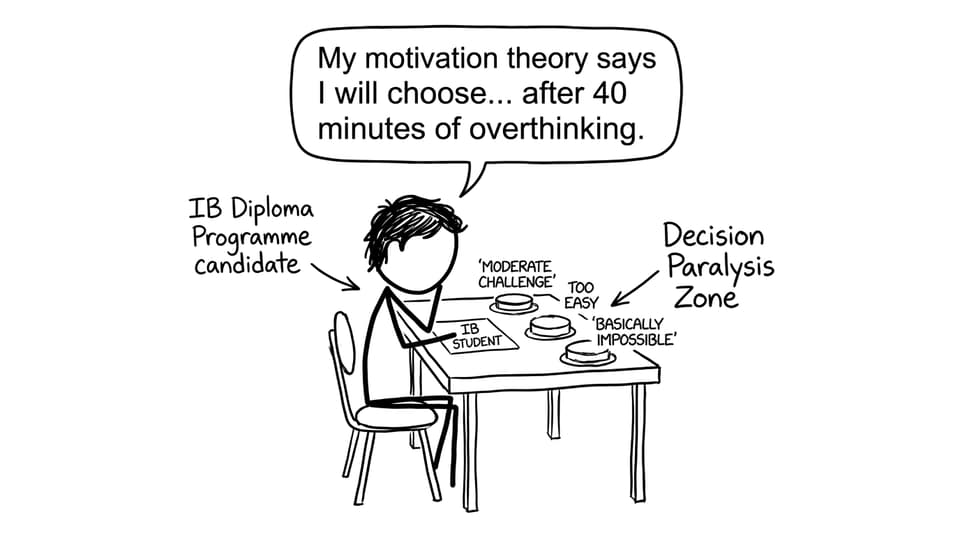
This is the exam-friendly hinge point: Achievement Motivation Theory predicts different preferences.
-
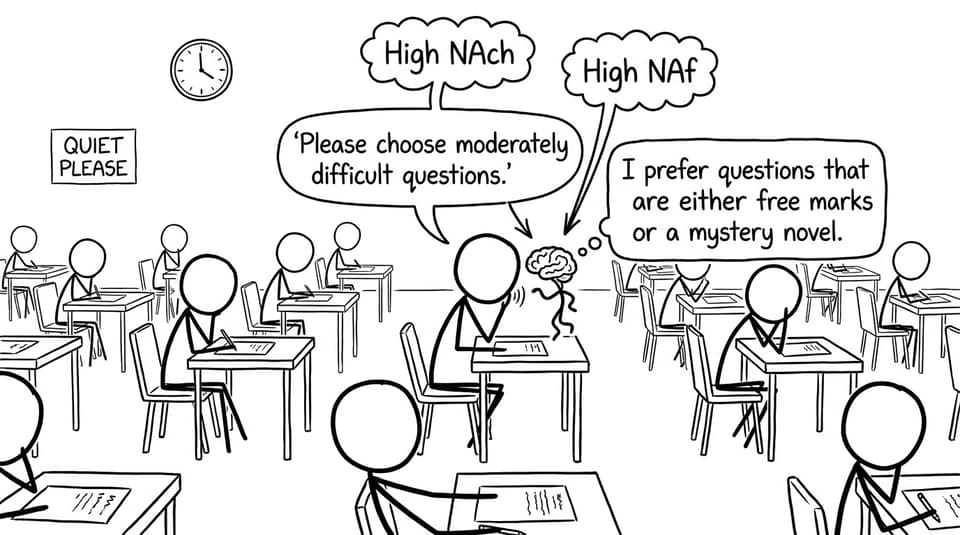
High NAch athletes prefer moderately difficult tasks.
-
High NAf athletes prefer very easy tasks (safe success) or very hard tasks (failure has an excuse).
That “moderate difficulty” detail is gold in IB SEHS because it lets you explain behaviour with precision, not vague personality talk.
For students who like a slightly more model-based explanation, RevisionDojo’s notes on Atkinson’s model of achievement motivation are a strong extension, and you can practise exam-style items in the B.2.4 questionbank.
How to turn the theory into marks (not just definitions)
In IB SEHS, the difference between mid and high marks is usually application. Try this sentence frame:
“Because the athlete shows high NAch/NAf, they are likely to choose ____ difficulty tasks, which affects ____ (risk-taking/persistence/anxiety), leading to ____ performance outcome.”
Then add one coaching implication (optional but impressive): set tasks that feel attainable and provide feedback that reduces fear of failure.
If you want structured practice, RevisionDojo’s Questionbank, Study Notes, and Flashcards make this topic feel automatic. When a definition is shaky, AI Chat can clarify in seconds, and the Grading tools help you tighten PEEL paragraphs for longer responses. When you’re closer to exams, Mock Exams and Predicted Papers help you apply IB SEHS psychology under time pressure.
Bring it home with RevisionDojo
Achievement Motivation Theory isn’t just a tidy diagram for IB SEHS notes. It’s a lens for reading behaviour: who leans into discomfort, who protects themselves, and how pressure changes decision-making. If you want this topic to feel usable in timed responses, build a loop: learn it once in Study Notes, test it in the Questionbank, lock it in with Flashcards, then apply it in Mock Exams with feedback.
When you’re ready, start with the IB SEHS motivation hub: C.3 Motivation.