


The quiet reason some businesses win
In IB Business Management, lean production can sound like a neat definition you memorize the night before an exam. But in real organisations, it’s often the difference between a business that steadily improves and one that slowly bleeds cash through tiny, invisible losses.
Picture a cafe that’s always “busy” but never profitable. Staff keep walking back and forth for supplies. Sandwiches are made before demand actually shows up. A few orders are wrong, so refunds pile up. Nothing is catastrophic. That’s the point. Lean production is built for the slow leaks.
What is lean production?
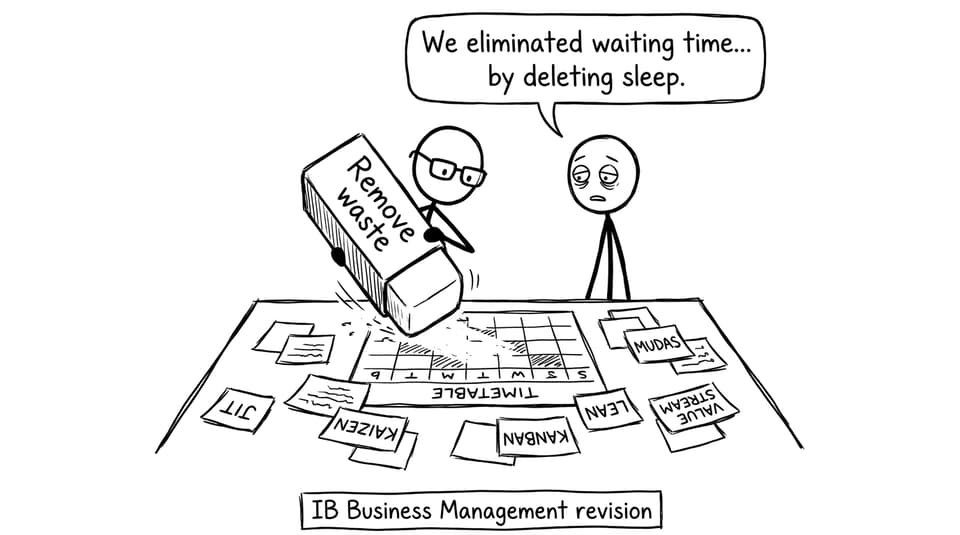
Lean production is an operations strategy focused on reducing waste (non-value-added activities) while maximising value for the customer. The aim is not “produce more.” It’s “produce smarter” with fewer resources, fewer delays, and fewer defects.
If you want the syllabus-aligned wording for IB Business Management, RevisionDojo’s topic hubs help you lock in definitions and applications:
A quick lean production checklist (exam-ready)
Use this mini-checklist when lean production appears in a case study:
-
What waste exists? (waiting, defects, overproduction, excess inventory, unnecessary motion)
-
Which method fits? (JIT, Kaizen, TQM, quality circles, 5S, automation)
-
What’s the benefit? (lower costs, faster throughput, better quality, flexibility)
-
What’s the risk/trade-off? (supplier disruption, low buffer stock, training costs, resistance)
For broader context, connect lean to operations foundations:
Why do businesses use lean production?
Waste reduction turns “busy” into “productive”
In IB Business Management, waste is anything that consumes resources without adding customer value. Lean production hunts this waste systematically: fewer reworks, fewer delays, fewer unnecessary steps.
Efficiency improves speed and reliability
Streamlined workflows reduce bottlenecks. Output becomes more predictable, which improves delivery reliability and planning. That reliability matters in competitive markets because customers remember late deliveries more than catchy advertising.
Better quality through systems, not speeches
Lean production supports quality by preventing defects rather than fixing them later. This is where methods like TQM and continuous improvement matter.
A useful extension link for exam evaluation is:
Flexibility when demand shifts
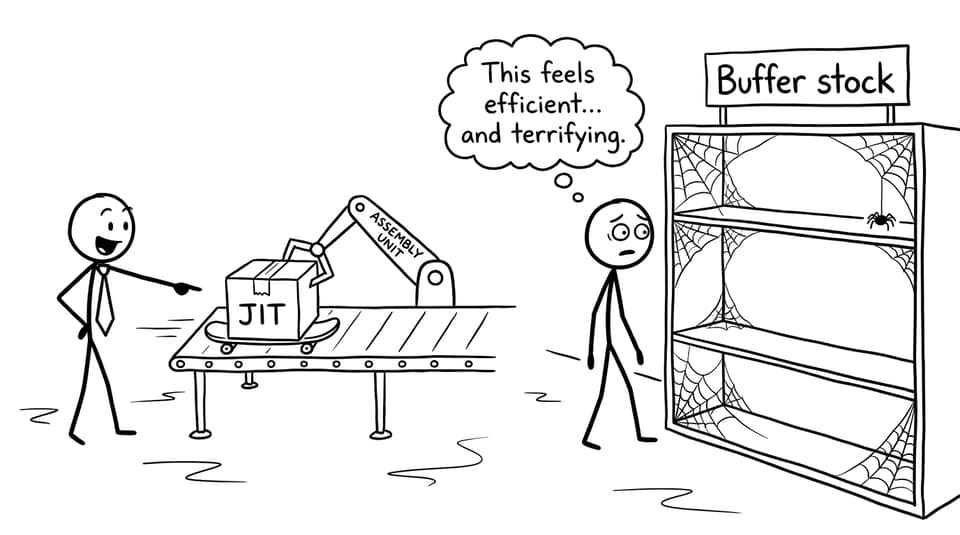
Lower inventory and clearer processes can make the business more responsive. When trends change quickly, lean production helps firms adjust without being trapped by warehouses full of the “old” version.
Lower costs (and better margins)
Less waste typically means lower unit costs: reduced storage, fewer defective items, less idle time. In IB Business Management exam answers, you can link this to improved profitability or the ability to compete on price.
Employee empowerment (when done properly)
Lean often encourages employees to identify problems and propose improvements. Done well, it builds a culture where quality is everyone’s responsibility, not just the job of inspectors.
How to revise lean production efficiently with RevisionDojo
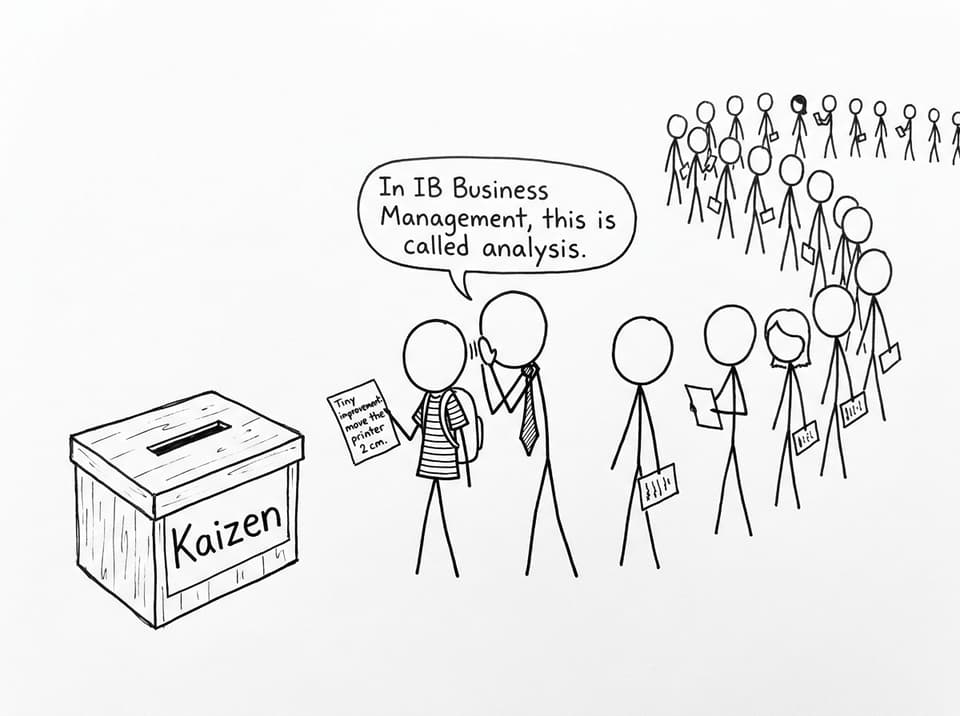
Lean production is easiest to learn by applying it repeatedly in unfamiliar scenarios. RevisionDojo is built for that style of practice:
-
Use the IB Business Management resources hub to move between Study Notes, Flashcards, and Lessons.
-
Drill exam-style prompts with the IB Business Management Questionbank and the dedicated 5.3 Questionbank.
-
Strengthen terminology with the IB Business Management glossary.
RevisionDojo also supports the rest of your prep loop: Flashcards for definitions, AI Chat to test understanding, Grading tools to improve written responses, Predicted Papers and Mock Exams to simulate pressure, plus a Coursework Library and Tutors when you want targeted feedback.
Conclusion: learn lean production the way businesses use it
Lean production is popular because it fixes the small inefficiencies that quietly drain time, money, and morale. In IB Business Management, it’s also a reliable way to build high-quality analysis: identify waste, choose a lean method, explain benefits, then evaluate risks.
If you want to turn the concept into exam performance, use RevisionDojo’s Questionbank, Study Notes, Flashcards, AI Chat, and Mock Exams to practise lean production across lots of case studies until the structure becomes automatic.


