
A parent can hear the word philosophy and picture one of two extremes: students casually exchanging opinions, or teenagers disappearing beneath books filled with impossible language. IB Philosophy is neither.
So, what is IB philosophy like in practice? It is a rigorous, writing-intensive Group 3 subject in which students examine difficult questions, understand competing positions, construct arguments, and evaluate those arguments clearly. Knowledge matters, but repeating what a philosopher believed is not enough. Students must learn to think with the material.
That distinction is reassuring because success does not depend on arriving with a library of philosophical knowledge. It depends more on curiosity, careful reading, willingness to revise an argument, and the discipline to practise analytical writing.
IB Philosophy at a glance
For a parent deciding whether the subject suits their child, the essentials are:
- Philosophy belongs to Group 3: Individuals and Societies.
- It is available at Standard Level (SL) and Higher Level (HL), subject to school availability.
- Every student studies the compulsory core theme Being human.
- SL students study one optional theme; HL students study two.
- Every student closely studies one prescribed philosophical text.
- HL includes an extension called Philosophy and contemporary issues.
- Both levels complete a 2,000-word philosophical analysis of a non-philosophical stimulus.
- Assessment primarily rewards knowledge, analysis, evaluation, argumentation, and clear written communication.
Students and parents wanting a broad starting point can explore the complete IB Philosophy course guide before comparing the two levels.
What students actually study
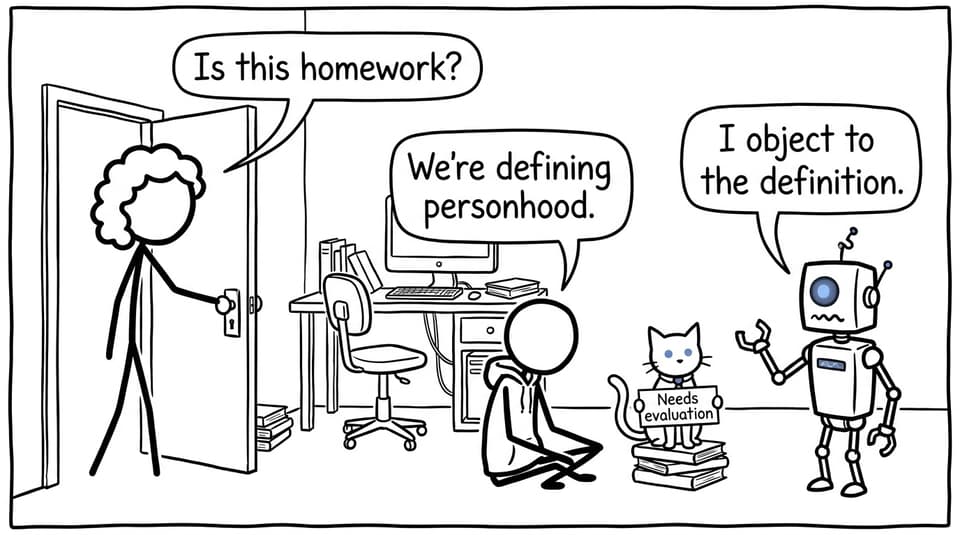
The compulsory theme, Being human, considers questions surrounding identity, consciousness, personhood, freedom, the self, and human nature. These are abstract ideas, but the course repeatedly connects them to recognisable problems. Could a machine qualify as a person? Are people genuinely free if their choices are shaped by biology and society? What makes someone the same person over time?
The Being Human study area offers parents a useful preview of how these broad questions become organised syllabus topics.
Schools also select from seven optional themes:
- Aesthetics
- Epistemology
- Ethics
- Philosophy of religion
- Philosophy of science
- Political philosophy
- Social philosophy
The exact classroom experience therefore varies. One student might spend substantial time discussing moral responsibility and justice, while another studies knowledge or the nature of scientific inquiry. This makes it important to ask the school which themes and prescribed text it teaches rather than judging the course from its title alone.
What an IB Philosophy lesson feels like
A typical lesson may involve close reading, teacher explanation, discussion, argument mapping, short written analysis, or planning a response to a philosophical question. Teaching style varies, but the intellectual pattern is consistent: identify a claim, uncover its assumptions, consider objections, and decide whether it survives them.
This is not debate in the sense of speaking confidently until someone gives in. A strong contribution needs reasons. Students gradually learn that saying, “I disagree,” begins the work rather than completes it.
They also discover that philosophical writing differs from simply expressing an opinion. A defensible response usually needs:
- a precise interpretation of the question
- relevant philosophical concepts and arguments
- a clear line of reasoning
- objections or alternative perspectives
- sustained evaluation
- a justified conclusion
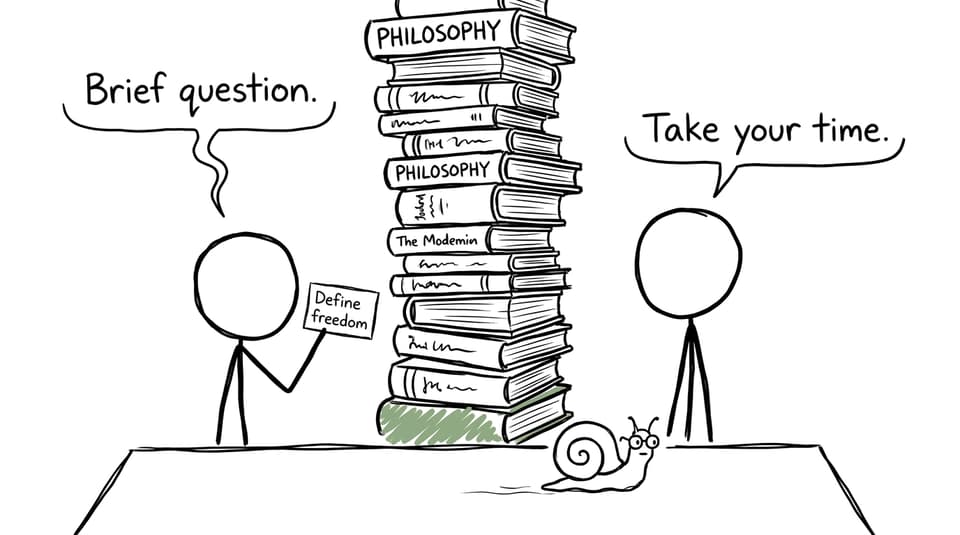
The challenge is intellectual compression. A student may understand a complex debate but still need to express it accurately under time pressure. That is why regular essay planning and short analytical practice are often more useful than repeatedly rereading a textbook.
IB Philosophy SL vs HL
Among IB HL and SL subjects, the difference is usually one of breadth and additional demands rather than “serious” versus “easy.” IB recommends 150 teaching hours for SL courses and 240 for HL courses. In Philosophy, both levels share the core theme, one optional theme, one prescribed text, and the internal assessment.
HL adds a second optional theme and Philosophy and contemporary issues, which explores questions involving technology and the environment. HL students also sit Paper 3, responding to an unseen philosophical text about a contemporary issue.
| Course element | SL | HL |
|---|---|---|
| Being human | Required | Required |
| Optional themes | One | Two |
| Prescribed text | One | One |
| Contemporary issues extension | Not required | Required |
| Written examination papers | Two | Three |
| Recommended teaching time | 150 hours | 240 hours |
The better level depends on the student's complete diploma. HL may suit someone who enjoys sustained reading, conceptual discussion, and analytical essays, especially when these strengths align with future study. SL can be the wiser choice when the student's other Higher Level subjects already create a demanding workload.
For a closer comparison, see the IB Philosophy SL and HL overview.
How IB Philosophy is assessed
The current course, first assessed in 2025, uses the following structure.
| Assessment | SL | HL |
|---|---|---|
| Paper 1 | 1 hour 45 minutes; 50% | 2 hours 30 minutes; 40% |
| Paper 2 | 1 hour; 25% | 1 hour; 20% |
| Paper 3 | Not taken | 1 hour 15 minutes; 20% |
| Internal assessment | 2,000 words; 25% | 2,000 words; 20% |
Paper 1 covers Being human and the selected optional themes. SL students answer one core stimulus-based question and one thematic essay question. HL students answer the core question and two thematic essays across their two options.
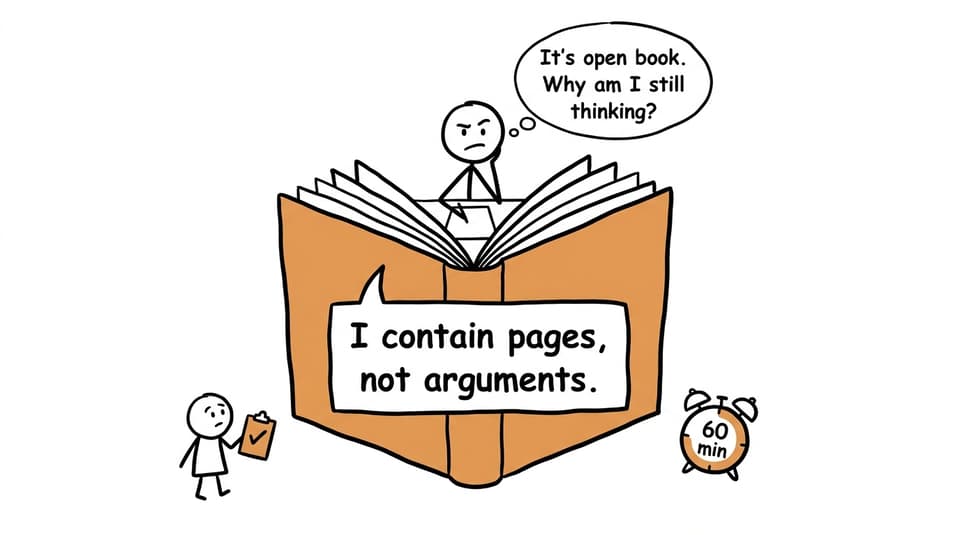
Paper 2 assesses the prescribed philosophical text. It is open book under the current course, and students may take a non-annotated copy of the selected text into the examination. This reduces the value of memorising isolated passages, but it does not make the paper effortless. Students still need to locate relevant ideas quickly and evaluate them within a coherent argument.
HL Paper 3 requires a response to an unseen text of approximately 800 words concerning a contemporary issue. The internal assessment at both levels is a philosophical analysis of a non-philosophical stimulus, which could be drawn from material such as a film, poem, or painting.
Students can explore the prescribed philosophical texts learning area to see how close reading connects with examination preparation.
Which students tend to suit the subject?
IB Philosophy often suits students who enjoy asking what an argument assumes, not only what it concludes. They should be reasonably comfortable with reading and willing to write frequently. They do not need to be naturally outspoken, and quiet students can excel through precise written reasoning.
A student may find the subject rewarding if they:
- enjoy questions without immediate, fixed answers
- can distinguish evidence from assertion
- are interested in language, politics, ethics, science, or human identity
- accept that first drafts of arguments are rarely final
- prefer analysis and evaluation to learning large collections of disconnected facts
It may feel less natural to someone who strongly prefers one correct procedure, avoids extended writing, or becomes frustrated when reasonable positions remain contested. That does not make success impossible. It simply means the student may need more deliberate structure when reading and planning essays.
Parents comparing Group 3 choices may also find the guide to choosing an IB Group 3 subject helpful.
What parents should watch for
The most common difficulty is not a lack of intelligence. It is mistaking recognition for mastery. A student may recognise a philosopher's name and understand class discussion, yet struggle to reconstruct the argument independently.
Another warning sign is descriptive writing. An essay can contain accurate knowledge but earn less credit than expected because it reports several views without evaluating them. Philosophy asks students to move from “Philosopher A argues this” to “This argument is persuasive under these conditions, but this objection exposes a weakness.”
Parents can help without becoming philosophy teachers. Useful questions include:
- “What is the strongest objection to that position?”
- “Can you explain the argument without your notes?”
- “Which assumption is doing the most work?”
- “What would change your conclusion?”
These questions invite reasoning rather than interrogation. They also reveal whether the student truly understands the material.
How students should revise for IB Philosophy
Effective IB revision tips for Philosophy follow a simple sequence: understand, retrieve, apply, and review.
First, students need concise, syllabus-aligned explanations. Next, they should retrieve concepts and argument structures without looking. Then they need to apply them through essay plans and exam-style questions. Finally, they should review where their reasoning became vague, descriptive, or unsupported.
Flashcards are useful for definitions, distinctions, objections, and the steps within an argument. They cannot replace essay practice. A student who can define utilitarianism still needs to decide whether it answers the exact question being asked.
A practical weekly routine might combine:
- one topic review using structured notes
- short flashcard sessions for active recall
- one or two timed essay plans
- a full paragraph or response completed without notes
- feedback followed by a rewritten argument
The broader guide to IB study techniques that work explains why retrieval, application, feedback, and correction should replace passive rereading.
Letting parents see the support before committing
The easiest way to understand the support available is to look at it directly. RevisionDojo's IB Philosophy resource hub brings the subject into one visible structure rather than leaving families to imagine what “revision support” means.
Parents can preview the IB Philosophy revision notes, open topic pages, and examine how complex ideas are divided into manageable sections. Students can then use Flashcards to retrieve key concepts and the Questionbank to practise applying them. The Being Human practice questions show how knowledge becomes an assessed response.
As preparation develops, RevisionDojo also connects students with AI Chat, Grading tools, Predicted Papers, Mock Exams, a Coursework Library, and Tutors. These tools are most valuable when used as a feedback loop: learn the idea, attempt the argument, identify the weakness, and try again.
A thoughtful subject, not a mysterious one
IB Philosophy is demanding because it asks students to make their thinking visible. They cannot hide behind memorised terminology or unsupported opinions. They must explain, analyse, challenge, and conclude.
Yet that is also the subject's appeal. It gives students a disciplined way to approach questions that already surround them: freedom, identity, justice, knowledge, technology, and what people owe one another.
For IB Diploma parents, the next step is practical. Ask the school which themes and prescribed text it teaches, consider how Philosophy fits the student's overall HL and SL workload, and then preview RevisionDojo's notes, Flashcards, and practice questions together. Once the structure is visible, the subject usually feels far less mysterious.