


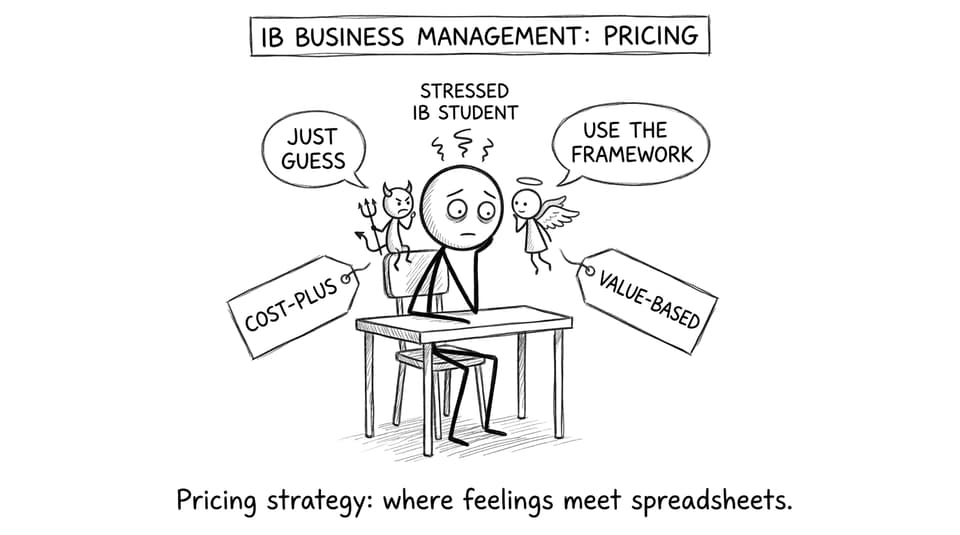
Pricing is the moment a business stops daydreaming and starts committing. You can have a brilliant product, a clean brand, and a persuasive promotion plan, but the number on the price tag is where customers either lean in or walk away. In IB Business Management, pricing strategy is rarely “pick a number.” It is a structured decision that balances costs, customer perception, competition, and long-term aims.
The quick checklist (exam-friendly)
When a question asks how businesses choose a pricing strategy, move through this short IB Business Management checklist:
-
Costs: fixed, variable, contribution, break-even
-
Customer demand: willingness to pay, price elasticity, perceived value
-
Competition: market structure, substitutes, price leadership
-
Product factors: uniqueness, branding, product life cycle stage
-
Marketing objectives: market share vs profit maximisation vs premium positioning
-
External constraints: economic conditions, regulation, taxes, ethics
For a fast refresher on pricing language (so your analysis sounds precise), keep the IB Business Management Key Definitions close.
Cost: the floor you can’t fall below
A business can only price confidently when it understands its cost structure. Cost-plus pricing is popular because it feels safe: calculate unit costs, add a mark-up, and you are done. But in IB Business Management, the deeper insight is that cost is only the minimum acceptable price, not the “best” price.
This is where break-even analysis becomes a pricing reality check. If price falls, contribution per unit usually falls, and the break-even output rises. If price rises, break-even output can drop, but demand might shrink. RevisionDojo’s notes on effects of price changes on break-even are ideal for linking pricing to profitability in your evaluation.
Customer demand: the ceiling set by perceived value
Some prices fail not because they are “wrong,” but because they clash with how customers interpret value. Demand-based methods (premium pricing, dynamic pricing, psychological pricing) focus on willingness to pay.
In IB Business Management, you can score analysis marks by explaining why a target market is price-sensitive: low disposable income, many close substitutes, or weak brand loyalty. Conversely, a differentiated product can justify a higher price because the customer is buying status, trust, convenience, or reduced risk.
If you want the bigger framework around price inside the wider plan, connect pricing to the marketing mix using How the marketing mix helps businesses create value.
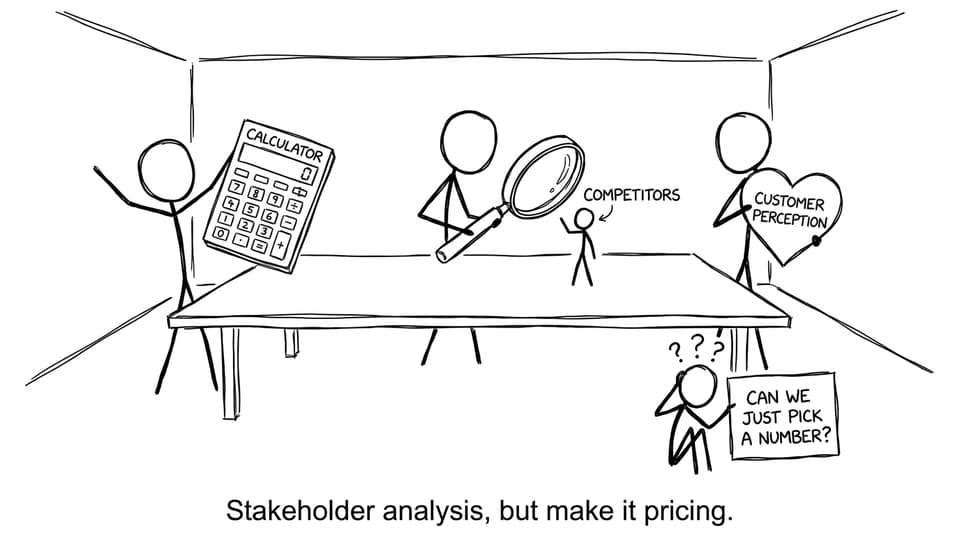
Competition: pricing is also a message to the market
Competitor-based pricing can be strategic, but it is never automatic. A business with higher costs cannot sustainably match a low-cost rival for long. A business with strong differentiation might price above the market to reinforce quality perception.
To strengthen your IB Business Management evaluation, mention risks:
-
Pricing too high may push customers to substitutes.
-
Pricing too low can trigger a price war, damage brand image, or squeeze cash flow.
For HL students, you can link competitive pricing to strategic position using Porter’s generic strategies notes (cost leadership vs differentiation vs focus).
Product nature and life cycle: timing changes the “right” price
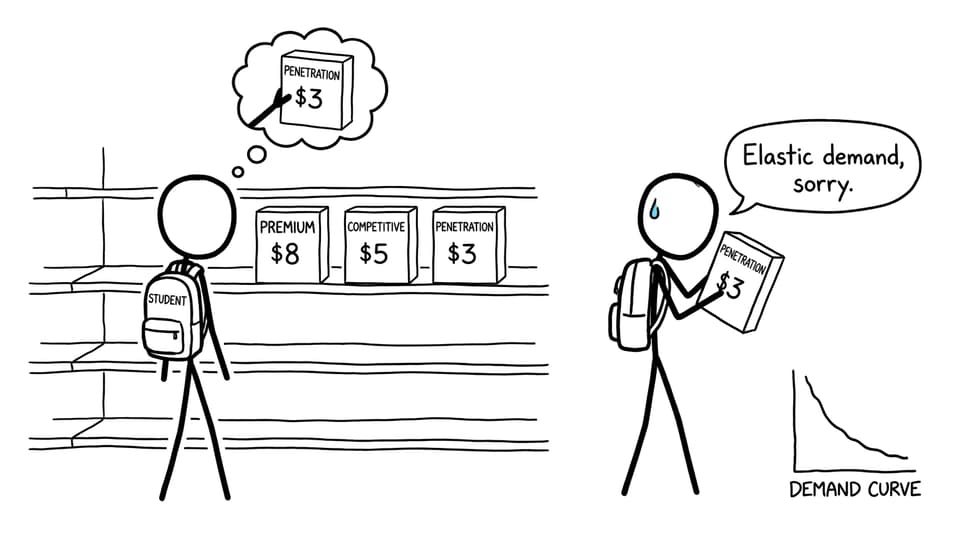
A pricing strategy that fits an innovative product might be a disaster for a mature one. New, unique products may use price skimming to recover development costs and signal premium positioning. Mass-market products often use penetration pricing to build volume, gain market share, and benefit from economies of scale.
This is also a clean place to reference the “Price” element inside the 7Ps, especially for services. Use Unit 4 Marketing Management to keep your terminology aligned with the syllabus.
Objectives and external factors: strategy first, number second
A business chasing market share may accept lower short-term margins. A brand trying to appear exclusive must price consistently with that identity, or the message collapses.
External factors also press on pricing decisions: inflation can raise costs, recessions increase price sensitivity, and regulations can restrict certain pricing tactics. In IB Business Management, you can pick up evaluation marks by discussing ethics too (for example, fairness during shortages).
To practise writing this under time pressure, RevisionDojo’s IB Business Management Questionbank is built for exam-style application. When your responses are ready, use RevisionDojo’s AI Chat and Grading tools to tighten definitions, improve chains of analysis, and sharpen your final judgement. If you want full exam simulation, the platform’s Mock Exams and Predicted Papers help you rehearse decision-making like the real thing.
Final takeaway: use a framework, not a gut feeling
The “right” pricing strategy is the one that fits the business’s costs, customer demand, competitors, product context, and objectives, all at the same time. That is the heart of IB Business Management: structured decision-making under constraints.
If you want to turn pricing theory into exam marks, use RevisionDojo to revise with Study Notes and Flashcards, practise application with the Questionbank, stress-test your judgement with Mock Exams and Predicted Papers, and refine writing with AI Chat and Grading tools. When you need human guidance, RevisionDojo Tutors can help you build evaluation that sounds calm, balanced, and examiner-ready.


