


If you have ever opened a classmate’s IA and thought, This is so much smarter than mine, there’s a good chance you were reacting to presentation rather than what actually earns marks.
High-scoring IA work has a quieter signature. It doesn’t rely on a flashy topic, a mountain of data, or a “perfect” writing voice. It reads like someone who knows what they’re trying to show, and keeps proving it, calmly, repeatedly, on purpose.
That’s good news for exam-season students: the same habits that make an IA score well also make your thinking sharper for papers.
The high-scoring IA checklist (steal this)
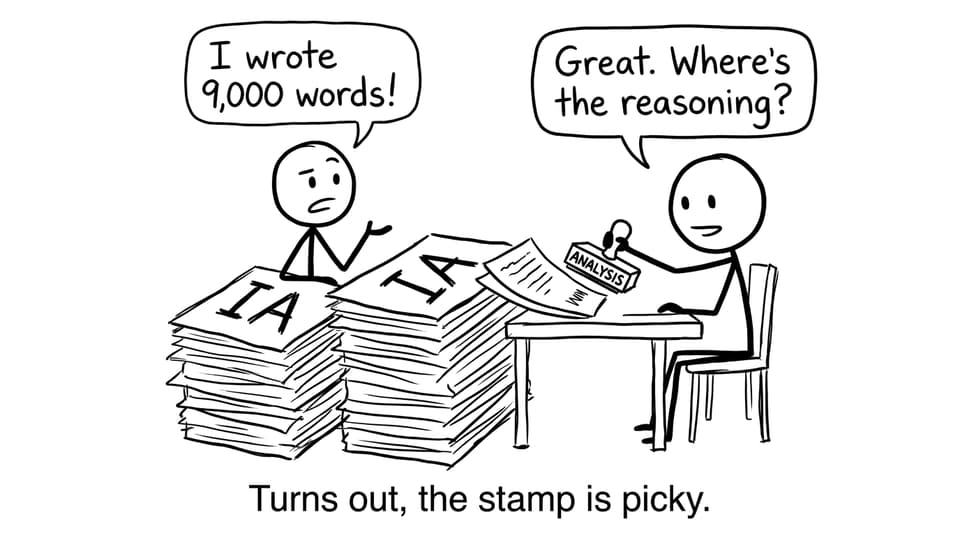
Before you edit another paragraph, run this quick checklist. A strong IA usually has:
-
A research question or aim that can be stated in one breath
-
Evidence chosen for relevance (not for quantity)
-
Analysis that answers “so what?” on every page
-
A structure that makes marks easy to award
-
Evaluation woven throughout, not dumped at the end
For subject-specific expectations, start with the IB IA Guides hub.
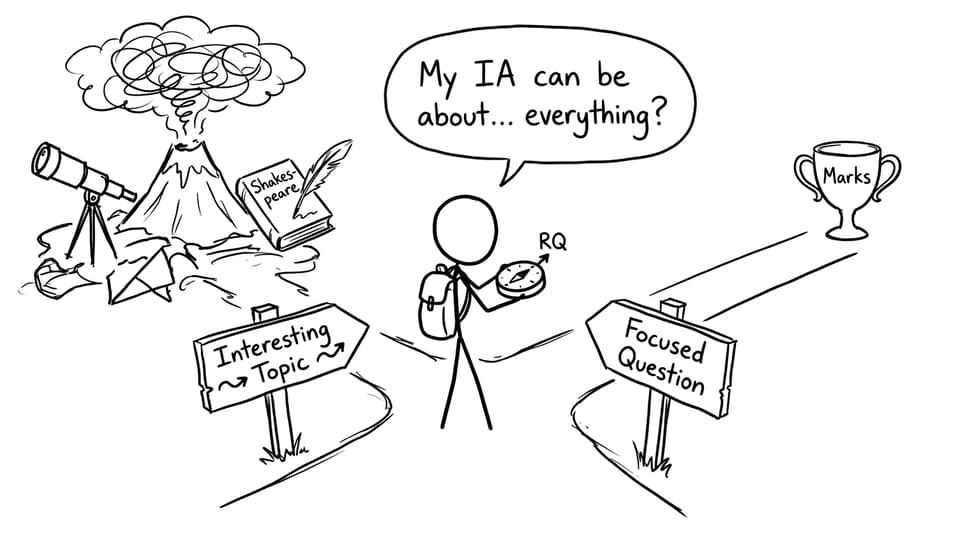
Clear focus: one question, held tightly
Across subjects, the best IA projects feel “narrow” in a satisfying way. Not boring; controlled.
A focused IA does three things early:
-
Defines exactly what is being investigated
-
Signals why that slice of the topic matters
-
Sets boundaries (what you will not cover)
If you’re still refining your wording, use Refine Your IA Research Question for Clarity and Focus as a filter. And if you need examples that show how simple high-scoring questions often are, browse Coursework Exemplars.
Analysis beats description in every IA
Most mid-range IA drafts have a hidden pattern: they explain a lot, but interpret very little.
High-scoring IA writing is different. It moves quickly from what happened to why it matters.
Try this test: underline every sentence that is purely descriptive. If the majority of your IA is description, your marks will cap no matter how “correct” it sounds.
To train your eye for what examiners call analysis, keep What Real Analysis Looks Like in an IB IA open while you revise.
Structure that makes marking easy
Examiners don’t “discover” your good thinking. They reward what you make visible.
A strong IA structure is basically a series of signposts:
-
Here is my question
-
Here is my method or approach
-
Here is the evidence I chose (and why)
-
Here is what it means
-
Here is what that means for the question
If you want a big-picture refresher on how the IB frames the IA across subjects, read IB Internal Assessment: A Complete Guide.
Evaluation is a thread, not a final paragraph
Top IA work evaluates like a scientist, even in the humanities: it notices constraints, explains impact, and proposes realistic improvements.
What separates strong evaluation from weak evaluation is specificity.
Instead of “my sample size was small,” high-scoring IA students write something closer to: Because my sample was limited to X, the conclusion mainly applies to Y; in a follow-up I would… That level of honesty is not a risk. It’s often what earns the credit.
To see what examiners prioritize, use What IB Examiners Look for in a Strong IA.
Evidence is selected, not collected
Strong IA students don’t try to impress with volume. They curate.
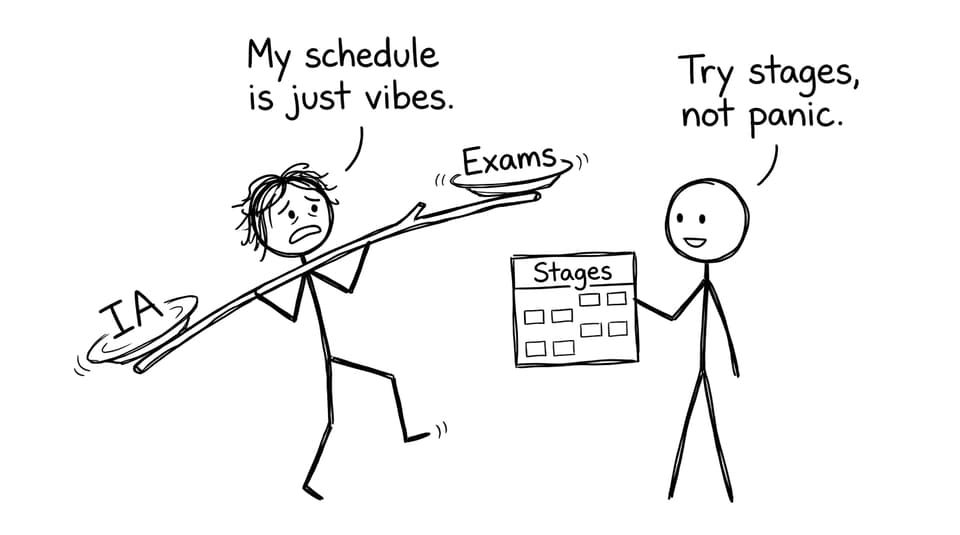
They pick the few data points, quotations, calculations, or examples that allow them to do the clearest analysis. If you’re unsure how to present visuals cleanly, Tips for Organizing Graphs and Tables in Your IA is a quick win.
How RevisionDojo helps you build a high-scoring IA faster
The easiest way to improve an IA is to shorten the feedback loop.
RevisionDojo is built for exactly that:
-
Use the Coursework Guides and IA Guides to align your structure to the rubric.
-
Compare your draft against Coursework Exemplars so you’re not guessing what “good” looks like.
-
Upload to the IB Coursework Grader for rubric-aware feedback you can act on immediately.
-
When you’re stuck, lean on AI Chat for clarification, and keep your exam prep moving with Questionbank, Study Notes, Flashcards, Predicted Papers, Mock Exams, and Tutors inside RevisionDojo.
If you want the fastest all-in-one routine that protects your IA and your exam revision, How to Plan an IB IA Without Falling Behind is the right next step.
Final thoughts: the best IA feels easy to mark
A high-scoring IA isn’t louder than everyone else’s. It’s clearer.
When your IA holds a tight focus, prioritizes analysis, uses evidence strategically, and evaluates with honesty, you make it easy for a marker to say “yes” again and again.
If you want that clarity without wasting weeks guessing, start with RevisionDojo’s IB IA Guides, calibrate with Coursework Exemplars, and tighten your draft with the IB Coursework Grader. Your IA will improve, and your exam writing will quietly improve with it.


