A forecast feels like a promise (until real life shows up)
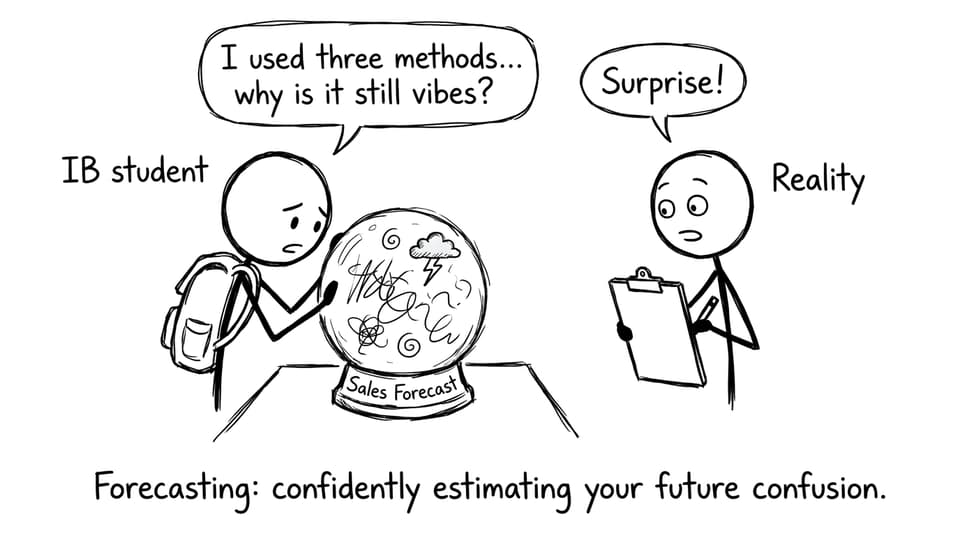
In IB Business Management, sales forecasting looks neat on paper: take data, spot a trend, estimate future demand. Then you watch a real business try it, and you realize forecasting is really an argument with the future. A manager might build a plan, a budget, and a production schedule around one number. But that number depends on people, markets, and surprises behaving consistently, which they rarely do.
If you can explain why sales forecasting is difficult, you can evaluate forecasts properly in exam answers: not just “it might be wrong,” but what makes it unreliable and what managers should do about it.
Quick exam checklist: why sales forecasts go wrong
Use this checklist in IB Business Management responses when asked about limitations of sales forecasting:
-
Customer preferences shift faster than data updates
-
Competitors change the rules (price, promotion, new entrants)
-
Historical data is missing, biased, or outdated
-
Macro conditions (inflation, interest rates, confidence) swing demand
-
Seasonality gets disrupted by unusual events
-
External shocks hit supply, distribution, or consumer behaviour
-
Internal decisions (pricing, marketing spend, channels) change outcomes
For syllabus-aligned support, keep RevisionDojo’s 4.3 Sales Forecasting topic page open while you revise.
What factors make sales forecasting difficult for businesses?
Changing customer behaviour (demand is not loyal)
Customers don’t announce when they’re about to change their minds. Trends, new technology, social media influence, and shifting tastes can make last year’s “best seller” feel irrelevant today. In IB Business Management, this is a strong evaluation point: forecasts often assume preferences remain stable, but markets are dynamic.
If you want to practise framing this as a limitation + consequence, try the Sales Forecasting Questionbank and focus on how you would explain the impact on budgeting and capacity planning.
Competition and substitutes (your forecast ignores their next move)
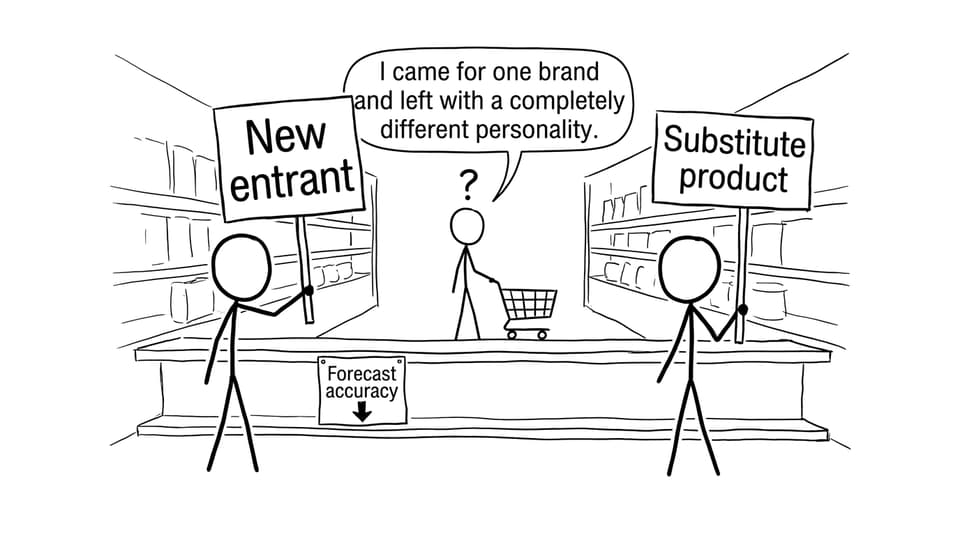
Even if your customers stay consistent, competitors might not. A rival could cut prices, launch a better product, or intensify promotion. A substitute might suddenly become “good enough” and steal market share. That means demand for your product becomes partly determined by someone else’s strategy.
To connect forecasting to the wider marketing unit in IB Business Management, revise through Unit 4: Marketing Management and notice how forecasting depends on pricing, promotion, and market research.
Limited or low-quality data (the past might be missing)
Forecasting is only as strong as the information underneath it. New businesses often lack historical sales figures, and even established firms may have data that no longer matches the current environment (different customer segments, different prices, different channels). Poor data collection, inconsistent record-keeping, or one-off “spikes” can distort the trend.
In IB Business Management, this is where you can add sophistication: “Forecasts rely on assumptions from historical data; if the data is unreliable or unrepresentative, the forecast becomes guesswork.” For quick recall, use 4.3 Sales Forecasting Notes and turn each limitation into a one-sentence consequence.
Economic conditions (the environment moves the goalposts)
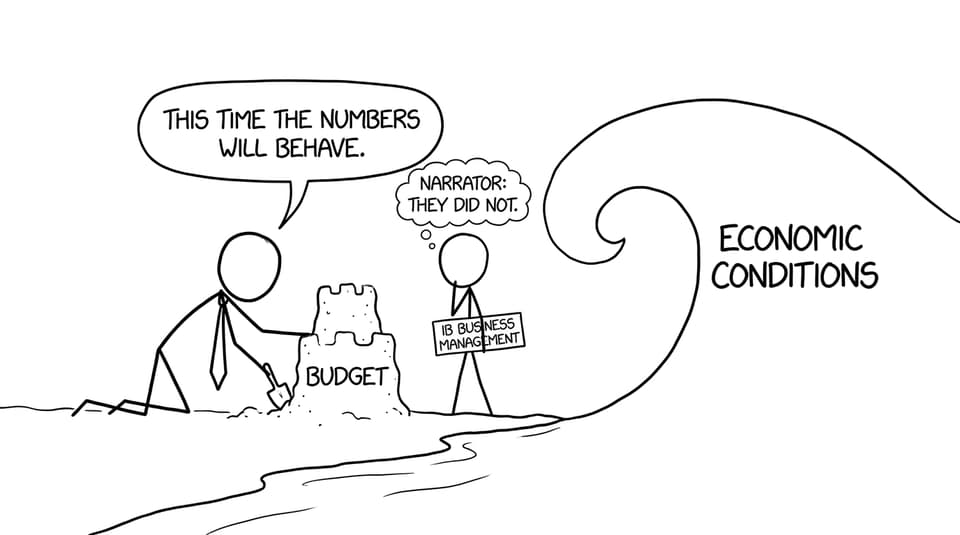
Inflation, interest rates, unemployment, and consumer confidence affect spending power and willingness to buy. A forecast created during a stable period can become outdated quickly if the economy shifts. This matters because firms might over-order inventory, over-hire staff, or over-invest in capacity based on demand that never arrives.
Seasonality and external shocks (patterns break)
Seasonal patterns are useful until they aren’t. Weather anomalies, changes in holiday behaviour, logistics problems, political disruption, or global events can interrupt demand and supply at the same time. In IB Business Management, these are excellent evaluation points because they show you understand uncertainty and contingency planning.
How to turn this into higher-mark exam evaluation
A strong IB Business Management paragraph doesn’t stop at listing factors. It shows judgement:
-
Explain the limitation (what causes forecast error)
-
Link to a business consequence (cash flow, inventory, capacity use)
-
Add a realistic fix (update forecasts frequently, use more than one method, invest in research)
For exam technique, RevisionDojo’s How to Maximize Your IB Business Management Score helps you phrase analysis and evaluation under time pressure.
Bring it home with RevisionDojo
Sales forecasting is difficult because the world is noisy: customers move, competitors react, data lies, and the environment changes. In IB Business Management, your advantage is being able to explain that noise clearly, then evaluate what managers should do next.
To sharpen your exam answers, use RevisionDojo’s IB Business Management Resources hub, drill application using the IB Business Management Questionbank, and lock in definitions with the 4.3 Sales Forecasting Flashcards. When you can explain why forecasting is hard, you start writing like a manager, not a memoriser.



