
Tourism rarely grows because of one big reason. It grows because lots of small reasons line up at the same time.
Think of the last place you wanted to visit. The idea probably started as a feeling: a beach, a city skyline, a mountain trail. But underneath that feeling sits a chain of conditions that made the trip possible. In IB Geography, that chain is exactly what examiners want you to explain: the connected factors influencing tourism growth, not just a list.
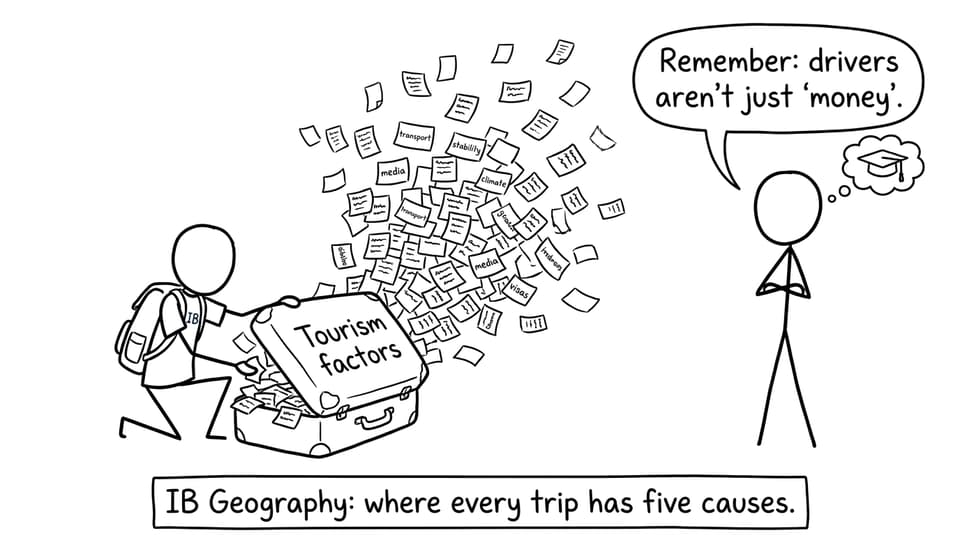
A quick IB Geography checklist (drivers of tourism growth)
Use this quick structure to plan any short answer or 10-marker in IB Geography:
-
Economic: disposable income, paid leave, exchange rates
-
Technological/transport: cheaper flights, faster connections, better infrastructure
-
Social/demographic: lifestyle changes, ageing populations, youth travel trends
-
Political: safety, stability, visas, border policy
-
Environmental: climate and landscapes (plus climate risk)
-
Globalisation + marketing: online booking, social media, destination branding
For syllabus-aligned revision, anchor these ideas in IB Geography Option E: Leisure, Tourism and Sport and then drill questions using the Option E Questionbank.
Economic development: when travel becomes “normal”
The most reliable engine of tourism growth is money and time. As countries develop, households tend to gain disposable income and more predictable leisure time. Paid holidays matter because tourism is not only about desire--it’s about permission from your schedule.
In IB Geography, you can link economic growth to both domestic tourism (more people travelling within their own country) and international tourism (more outbound trips as budgets rise). If you want a smart evaluation line, add that growth can be uneven: income gains often concentrate in cities, so tourism participation differs by region and social group.
Transport and technology: making distance feel smaller
Tourism grows when friction drops. Budget airlines, improved rail links, expanded airports, and better roads reduce the “cost” of distance in both time and money. Accessibility is a core idea in IB Geography because it shapes which places become hotspots and which stay peripheral.
Also mention digital technology: online booking platforms, reviews, and map apps reduce uncertainty. In exam terms, technology increases connectivity and can shift flows quickly toward newly “discoverable” destinations.
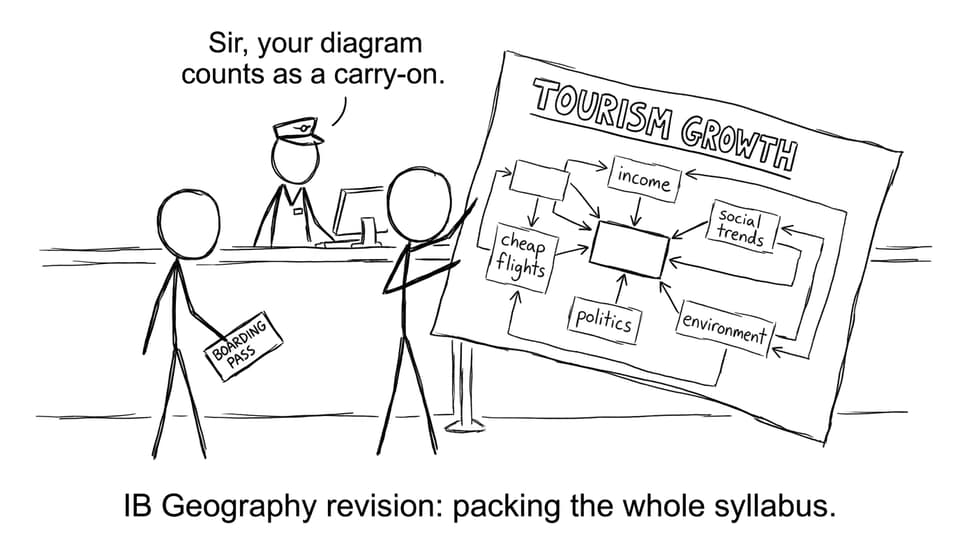
Social and demographic change: who travels, and why
Tourism demand changes as societies change. Smaller family sizes, dual-income households, and experience-focused lifestyles can increase travel frequency. Ageing populations may travel more in off-peak seasons because they have time flexibility and savings.
For IB Geography, a strong move is to connect this to changing tourism types: adventure tourism, city breaks, festival travel, and ecotourism. Media and social platforms also shape perceptions--sometimes a destination “grows” because it becomes a story people want to step into.
If you’re building case studies, use the structure in IB Geography Case Studies: A Comprehensive Exam Guide.
Political stability and policy: the invisible gatekeepers
Tourism is sensitive to risk. Political stability, low crime, and good international relations can support steady growth, while conflict or unrest can shrink visitor numbers fast.
Policy matters too: visa rules, border controls, and agreements that allow freer movement can increase flows. In IB Geography, this is a good place to add evaluation: political conditions can change suddenly, making tourism economies vulnerable.
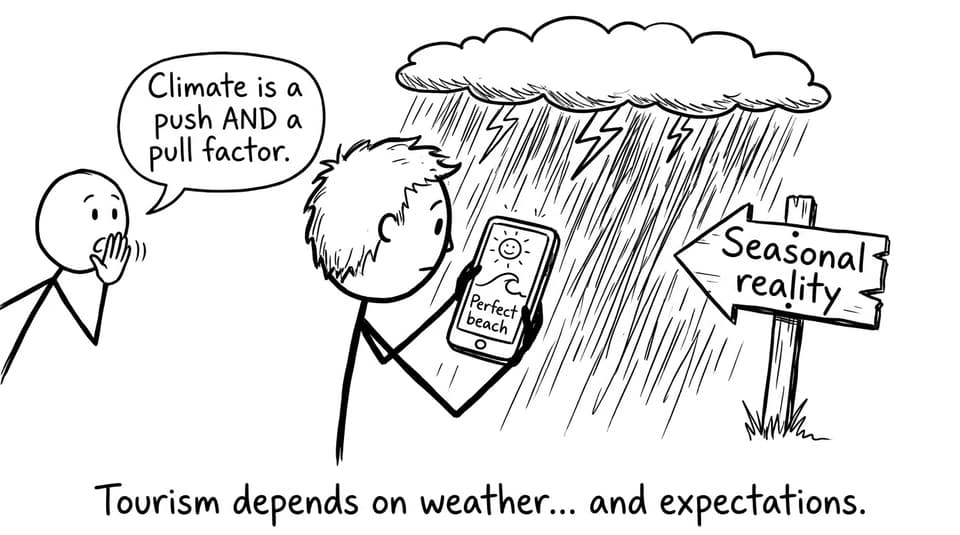
Environment and climate: the pull factor that can also push back
Climate and landscapes create the original attraction: beaches, snow seasons, wildlife, mountains, heritage settings. But environmental quality is also fragile. If ecosystems degrade, the tourism product weakens.
Climate change adds a twist you can use for higher marks in IB Geography: it can reshape seasonality, increase hazard risk, and threaten coastal or alpine destinations.
To extend your answer into management, connect drivers to sustainability using IB Geography: Managing Tourism Sustainably for the Future and the syllabus coverage in E.4.2 Sustainable Tourism and Ecotourism Notes.
Conclusion: make the chain visible
Tourism growth is the outcome of a chain: rising incomes, easier transport, shifting lifestyles, political stability, attractive environments, and globalised marketing all reinforcing each other. In IB Geography, your job is to make that chain visible, clearly and quickly, under time pressure.
If you want to lock this topic in, revise the syllabus points in E.2 Tourism and sport at the local and national scale, practise with RevisionDojo’s Questionbank and Mock Exams, and keep your drivers sharp with Flashcards and Study Notes. That’s how IB Geography turns a messy real-world trend into marks.
