

Tourism has a funny way of loving places to death.
One summer, a beach town can feel like a hidden secret. The next, it is a queue for sunsets, a line for coffee, and a reef that looks tired. In IB Geography, that tension is the point: tourism can lift incomes and fund services, but it can also strain ecosystems, culture, and infrastructure. Sustainable tourism management is the attempt to keep the good parts without quietly spending the future.
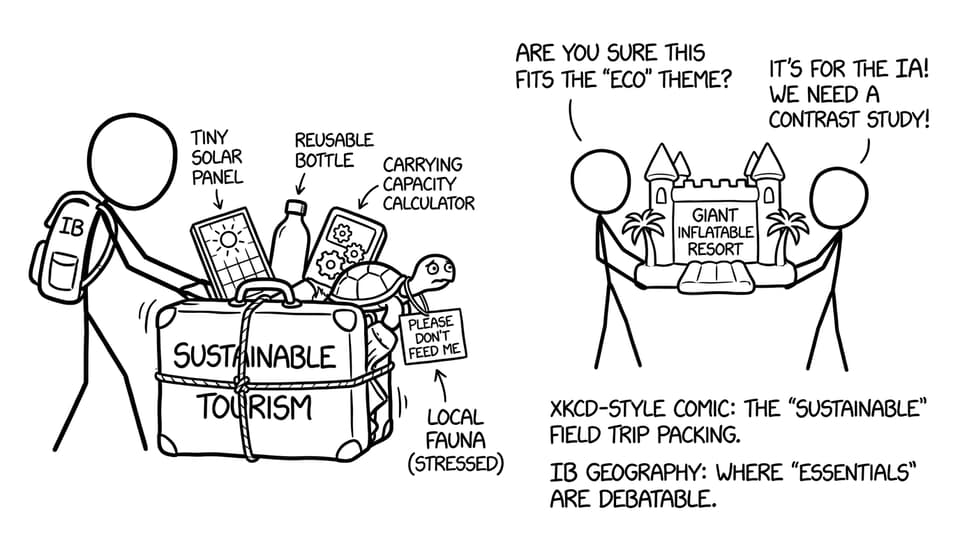
IB Geography checklist: what “sustainable tourism” really means
Use this quick lens for exam answers in IB Geography (especially Option E):
-
Environmental: protect biodiversity, reduce pollution, manage water and waste.
-
Economic: reduce leakage, create stable local jobs, fund long-term maintenance.
-
Social/cultural: keep communities involved, protect heritage, reduce conflict.
If you can evaluate tourism through this “triple bottom line,” you are already writing like an examiner.
Manage scale first: carrying capacity and visitor controls
The simplest sustainable tourism management tool is also the most uncomfortable: limits. In IB Geography, you can frame this as carrying capacity (the maximum visitors a place can support without unacceptable decline).
Practical strategies include:
-
Visitor caps in fragile environments
-
Timed entry systems to smooth peaks
-
Zoning to separate high-impact and low-impact areas
These approaches reduce erosion, wildlife disturbance, traffic, and overcrowding. They also make impacts easier to monitor, which matters for evaluation.
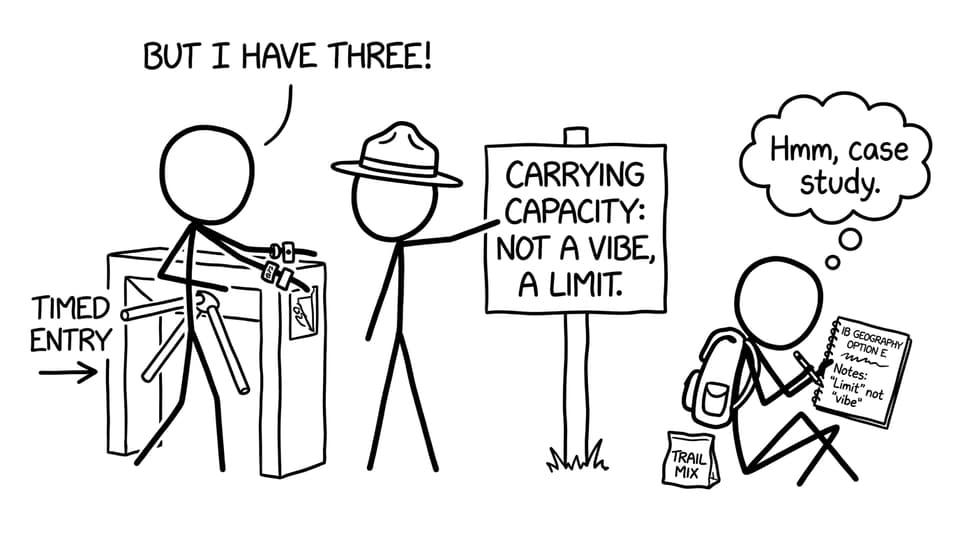
To tighten your case-study language, pair “visitor limits” with terms like “honeypot sites,” “peak load,” and “management thresholds.”
Protect what tourists come to see: conservation and standards
Sustainable tourism management is often just good environmental governance with tourism-specific rules. Governments and park authorities can:
-
Create protected areas and buffer zones
-
Restrict construction in sensitive coastal, alpine, or coral environments
-
Enforce standards for waste, sewage, energy, and water conservation
For IB Geography, explain why these policies matter over time: they reduce cumulative impacts (the small damage that adds up), and they protect the destination’s brand value. If the landscape degrades, demand drops, and the “tourism dividend” disappears.
For a clean set of exam-ready definitions and examples, use E.4.2 Sustainable Tourism and Ecotourism Notes.
Keep benefits local: reduce leakage and empower communities
A destination can be “busy” and still feel poor. That is usually leakage: profits flowing to foreign airlines, hotel chains, or tour companies.
Sustainable tourism management in IB Geography often stresses:
-
Hiring and training local workers
-
Sourcing local food and materials
-
Supporting locally owned accommodation and guides
-
Community-based decision-making so residents keep control
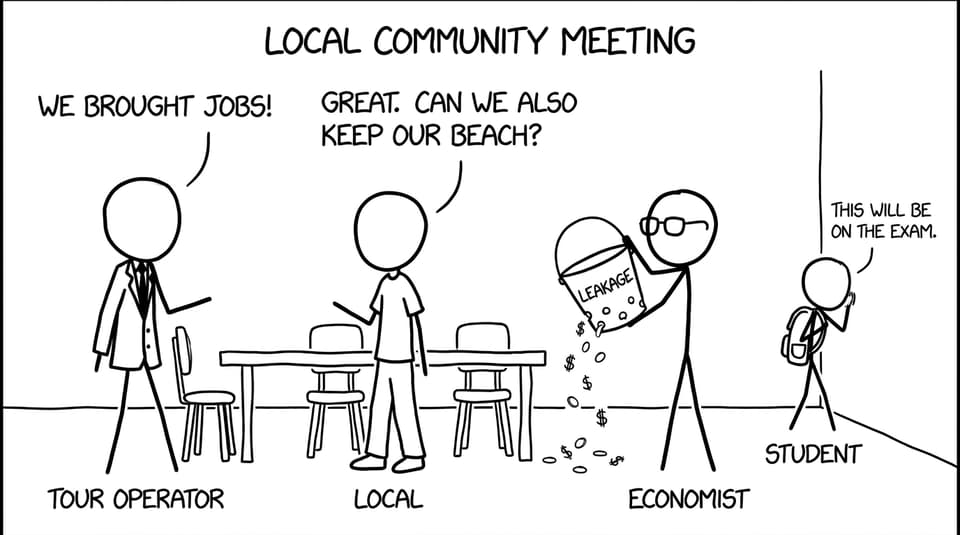
If you can link “economic multiplier” with “leakage,” you are showing evaluation rather than description.
Regulate and educate: planning, impact assessments, and tourist behavior
In IB Geography, strong answers show that sustainability is not a vibe, it is a system.
-
Land-use planning steers development away from flood-prone coasts or fragile dunes.
-
Environmental impact assessments (EIAs) flag problems before construction.
-
Tourist education (signage, guides, codes of conduct) reduces littering, reef damage, and cultural disrespect.
-
Tourism levies can fund conservation, waste systems, and local services.
Want the syllabus context for how this fits into Option E? Start at IB Geography Option E: Leisure, Tourism and Sport.
How to revise this in RevisionDojo (fast)
Sustainable tourism management is a high-return topic: definitions, processes, and evaluation all appear across question styles in IB Geography.
-
Drill exam prompts with the Option E Questionbank and get instant feedback.
-
Lock in key terms using Option E Flashcards.
-
Build broader essay links from E.4.3 Future Trends in International Tourism Notes.
-
For overall planning, browse IB Geography Resources and targeted reading via All IB Geography Posts.
Conclusion: write your answer like a manager, not a tourist
Sustainable tourism management in IB Geography is really about one question: how do you keep a place worth visiting after millions of visits? Control scale through carrying capacity, protect ecosystems with standards and conservation, keep benefits local by reducing leakage, and make rules stick through planning, EIAs, and education.
When you are ready to turn these ideas into marks, RevisionDojo makes IB Geography feel manageable: Questionbank practice, Study Notes, Flashcards, AI Chat, Grading tools, Predicted Papers, Mock Exams, a Coursework Library, and Tutors that help you sharpen evaluation under time pressure.