
Quality of life is one of those ideas in IB Geography that seems obvious until you try to write it under time pressure. In real life, you can feel when a place is “working” for people. In an exam, you have to prove it with indicators, examples, and evaluation.
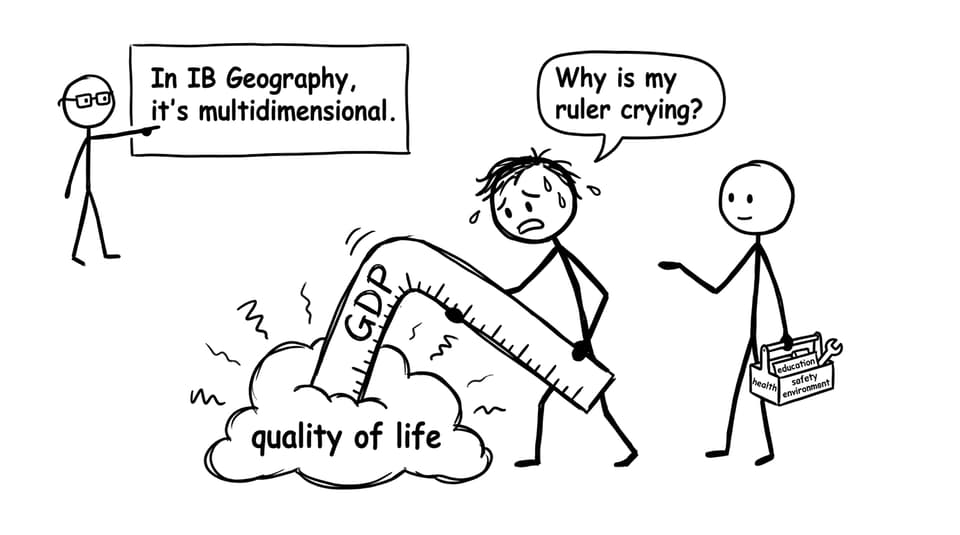
In the Human Development and Diversity unit, quality of life means overall well-being and life satisfaction. It goes beyond income to include health, education, security, environment, and freedom. And because those pieces interact, the best answers in IB Geography explain the links, not just the list.
A quick IB Geography checklist for quality of life
Use this as a fast plan for 6-10 mark responses in IB Geography:
-
Health (access, outcomes, risk)
-
Education (skills, opportunity, empowerment)
-
Income and employment (security, affordability, inequality)
-
Environment (pollution, hazards, liveability)
-
Social and political conditions (safety, rights, cohesion, governance)
-
Indicators: include at least one quantitative and one qualitative measure
For HL Topic 5 structure, keep RevisionDojo’s hub open: Human Development and Diversity.
Health: the foundation of quality of life in IB Geography
Health shapes what people can do with their days. If life expectancy is low or preventable disease is high, school attendance drops, productivity falls, and families spend more time and money coping.
In IB Geography, you can strengthen this section by naming indicators, not just outcomes. For example, HALE, IMR, MMR, and access to sanitation are commonly used measures of health disparities. RevisionDojo’s notes help you lock these into precise definitions: Disparities in Health Indicators Notes.
Education: the multiplier effect
Education tends to improve quality of life indirectly and repeatedly. More schooling often increases income potential, but it also links to better health choices, lower dependency pressures, and stronger participation in civic life.
When you write about education in IB Geography, avoid vague lines like “education is important.” Tie it to measurable change (literacy, mean years of schooling, expected years of schooling) and then evaluate who benefits and who is left out.
To connect education to composite development measurement, use: Measuring Human Development Notes and the supporting explainer: How Is Human Development Measured?.
Income and employment: necessary but not sufficient
Income matters because it buys choices: housing, transport, healthcare, safer neighbourhoods. But IB Geography rewards you for adding the next sentence: income does not automatically equal quality of life.
High living costs, insecure work, and inequality can reduce well-being even in high-GNI contexts. Conversely, targeted services and strong safety nets can raise quality of life in places where incomes are lower.
If you want a strong urban angle (useful for Paper 2 essays), connect income to deprivation and service access via: Poverty, Deprivation, and Informal Activity Notes.
Environment: liveability, risk, and mental space
Clean air, safe water, green spaces, and hazard resilience all shape daily life. Environmental degradation increases health risks and can trap communities in cycles of vulnerability.
In IB Geography, environmental factors also let you scale your argument: local pollution affects a neighbourhood; climate risk can affect entire regions. If you’re building out broader examples and evaluation lines, RevisionDojo’s case-study support is useful: IB Geography Case Studies: A Comprehensive Exam Guide.
Social and political conditions: the invisible infrastructure
Some of the biggest differences in quality of life are hard to photograph. Safety, freedom of expression, discrimination, and trust in institutions shape how secure people feel and what opportunities they can realistically access.
This is where IB Geography loves nuance: governance and social cohesion can amplify the benefits of health and education investment, while instability can erase them quickly.
To practise writing this with evaluation (strengths and limitations), use RevisionDojo’s resources and timed practice: IB Geography Resources and Topic 5 Questionbank.

Exam tip: measure quality of life with both kinds of evidence
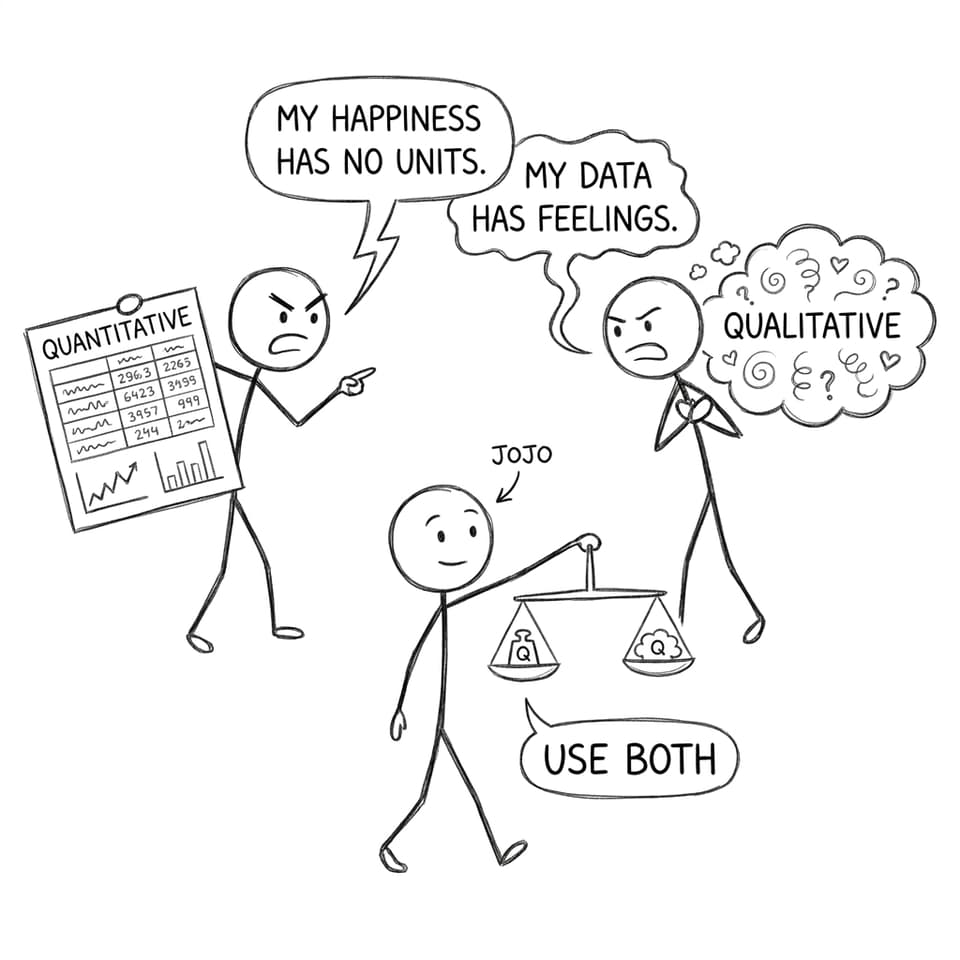
A great IB Geography paragraph often follows this pattern:
-
Start with one indicator (quantitative)
-
Explain what it suggests about lived experience
-
Add a qualitative angle (perception, satisfaction, security)
-
Evaluate limitations (averages hide inequality; culture changes survey responses)
For quick retrieval, build active recall using: Geography Flashcards and link definitions to practice responses via the Questionbank feature.
Closing: make quality of life easy to write under pressure
In IB Geography, quality of life is less about memorising a definition and more about learning a repeatable way to explain complex reality: multiple factors, uneven outcomes, and indicators that never tell the whole story.
If you want that structure to feel automatic, RevisionDojo helps you practise it end-to-end: Study Notes for clear definitions, Flashcards for recall, Questionbank and Mock Exams for exam conditions, AI Chat and grading tools for feedback, plus Predicted Papers, a Coursework Library, and Tutors when you need extra support. Build one strong paragraph frame now, and your next quality-of-life question becomes familiar instead of frightening.