



A legitimacy crisis rarely starts with one big moment
A government almost never wakes up and “loses legitimacy” in a single day. It usually happens the way trust disappears in a friendship: first a small disappointment, then a pattern, then the quiet realization that promises don’t mean much anymore. In IB Global Politics, that slow shift matters because it helps you explain protest, instability, and regime change without oversimplifying.
Legitimacy is the widely held belief that authority is rightful and should be obeyed. You can revise the core definition in What Is Political Legitimacy? and then build exam-ready analysis from there.
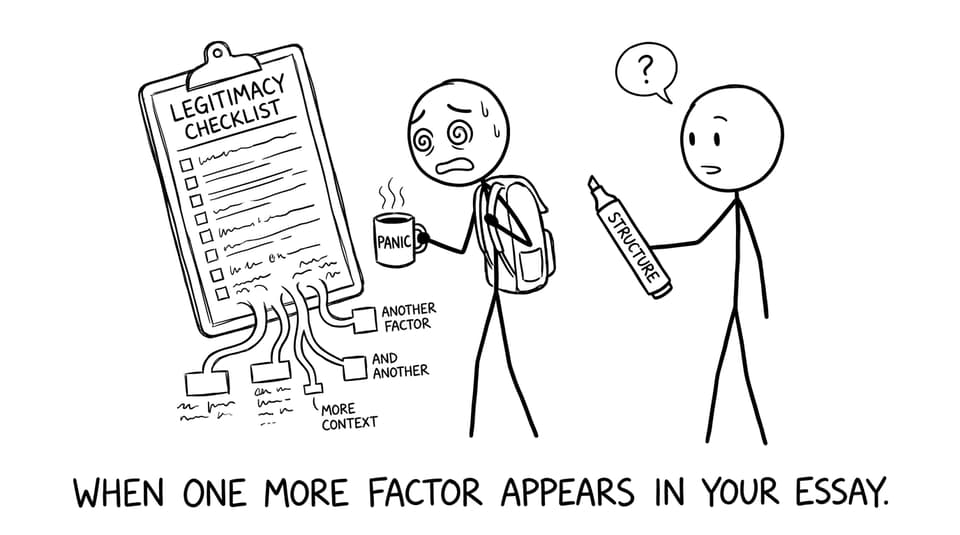
The IB Global Politics checklist: five common causes
Use this as a fast planning tool for Paper 1 or Paper 2 in IB Global Politics:
-
Poor performance (output legitimacy fails): insecurity, failing services, economic decline
-
Corruption: leaders use office for private gain, institutions weaken
-
Repression and rights abuses: force replaces consent
-
Low accountability and participation: elections, courts, and opposition are undermined
-
International rejection: isolation, sanctions, or loss of recognition damages authority
For structured revision by concept, keep IB Global Politics Resources open as your home base.
Failure to govern: when “results” stop arriving
One of the fastest routes to legitimacy loss is simple: the state stops delivering. If a government cannot provide security, stable prices, basic healthcare, or functioning education, citizens begin to question why they should comply at all. In IB Global Politics, this is often described as output legitimacy: people accept rule because it produces order and welfare.
Notice the exam skill here: don’t just say “the economy was bad.” Explain the mechanism. Economic decline can weaken tax revenue, reduce services, increase crime, and trigger protest. Each link in that chain is evidence of legitimacy eroding.
Corruption: the feeling that rules are only for ordinary people
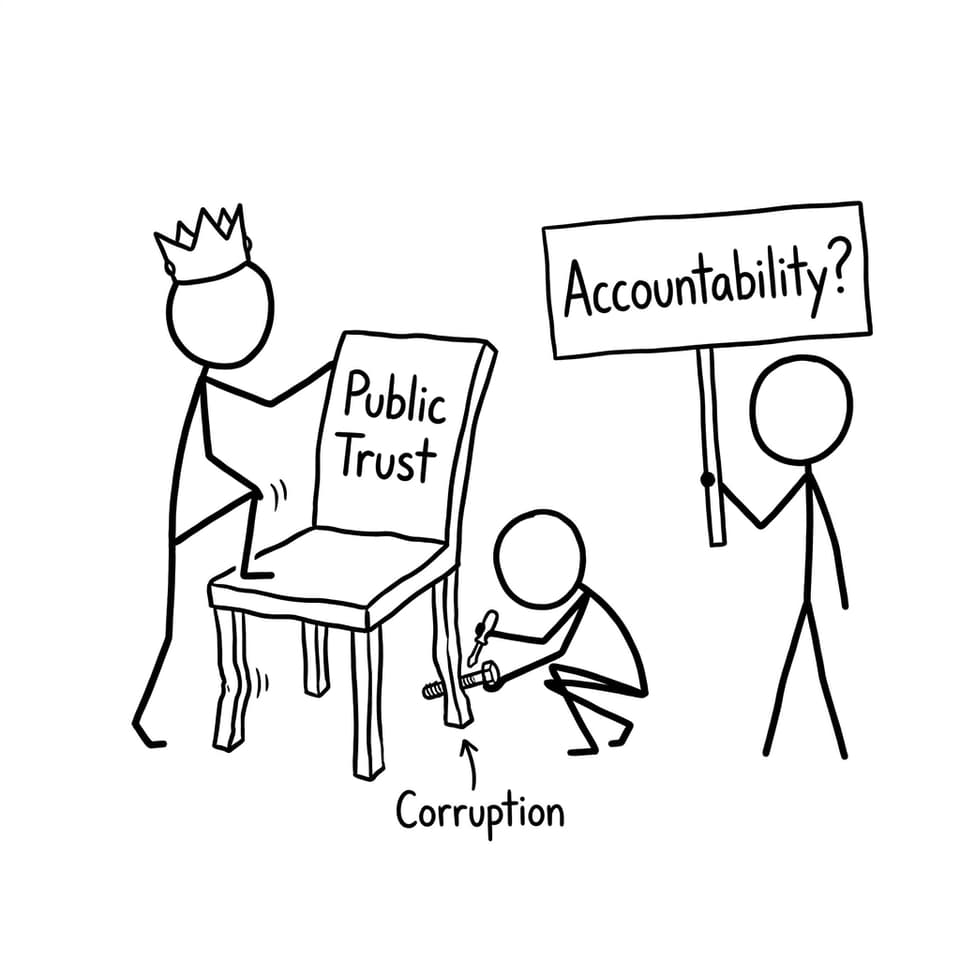
Corruption harms legitimacy because it turns public authority into a private asset. Even if a government won an election, widespread bribery and impunity make the system feel rigged. Citizens stop believing in fairness, and international actors may also reduce support.
In essays, corruption works best as a “multiplier” cause: it worsens inequality, weakens institutions, and makes performance failures look intentional rather than accidental. To practice applying this in exam-style prompts, use the IB Global Politics Topic Legitimacy Questionbank (SL/HL).
Repression: control is not the same as consent
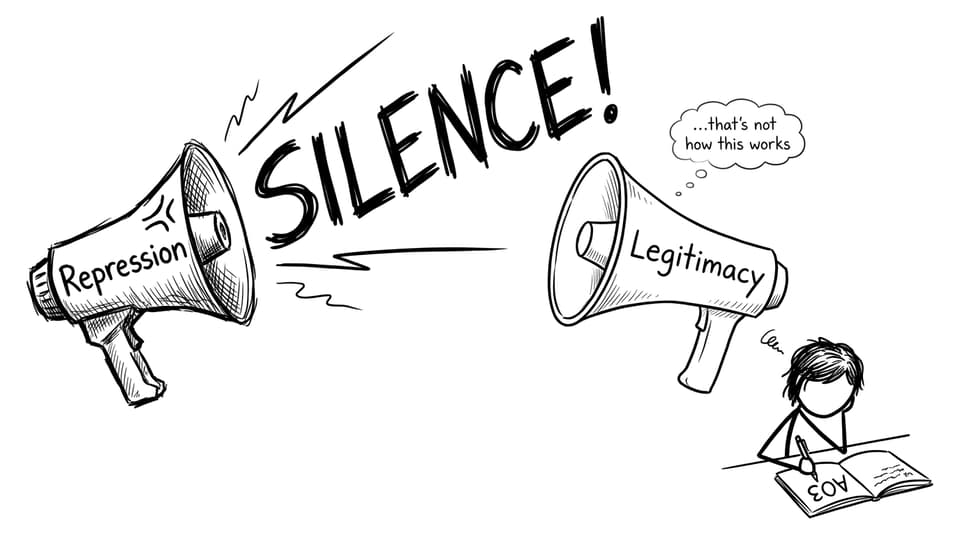
Governments can maintain power through coercion, but coercion is not legitimacy. When authorities restrict expression, target minorities, or use excessive force, they may gain short-term compliance while losing long-term acceptance. In IB Global Politics, this distinction can earn you evaluation marks: repression can be “effective” at control while being destructive to legitimacy.
If you want to link legitimacy to wider debates about norms and rights, Notes for Concepts of rights and justice - IB helps you frame the moral and legal dimensions.
Accountability and participation: when the “process” stops feeling real
Even non-democratic systems need some sense of rules, predictability, and restraint. When courts are captured, elections are manipulated, opposition is silenced, or decision-making becomes opaque, legitimacy declines because citizens feel excluded from political life.
For exam writing, translate “lack of accountability” into concrete institutions: judiciary independence, media freedom, credible electoral bodies, and meaningful checks on executive power. Then show how weakened institutions increase protest risk and make compromise harder.
International legitimacy: recognition, norms, and the external echo
Domestic legitimacy and international legitimacy interact. If a government violates international law, breaks treaties, or behaves aggressively, it may face sanctions, diplomatic isolation, or reduced recognition. That external rejection can intensify domestic dissatisfaction by harming the economy and signalling that the regime is “outside” global norms.
To deepen that external angle, revise Notes for External challenges to state legitimacy - IB and connect it to a case study you can evaluate.
A final exam-ready way to phrase it
When you’re writing IB Global Politics answers, treat legitimacy like a bank account: performance deposits trust, corruption withdraws it, repression burns it, and international isolation makes it harder to earn back. If you want to practise turning that idea into top-mark paragraphs, revise the concept in IB Global Politics Legitimacy, then test yourself with the Questionbank, Flashcards, and AI Chat on RevisionDojo. The goal is calm structure under pressure: multiple causes, clear mechanisms, and evaluation that sounds like you mean it.